

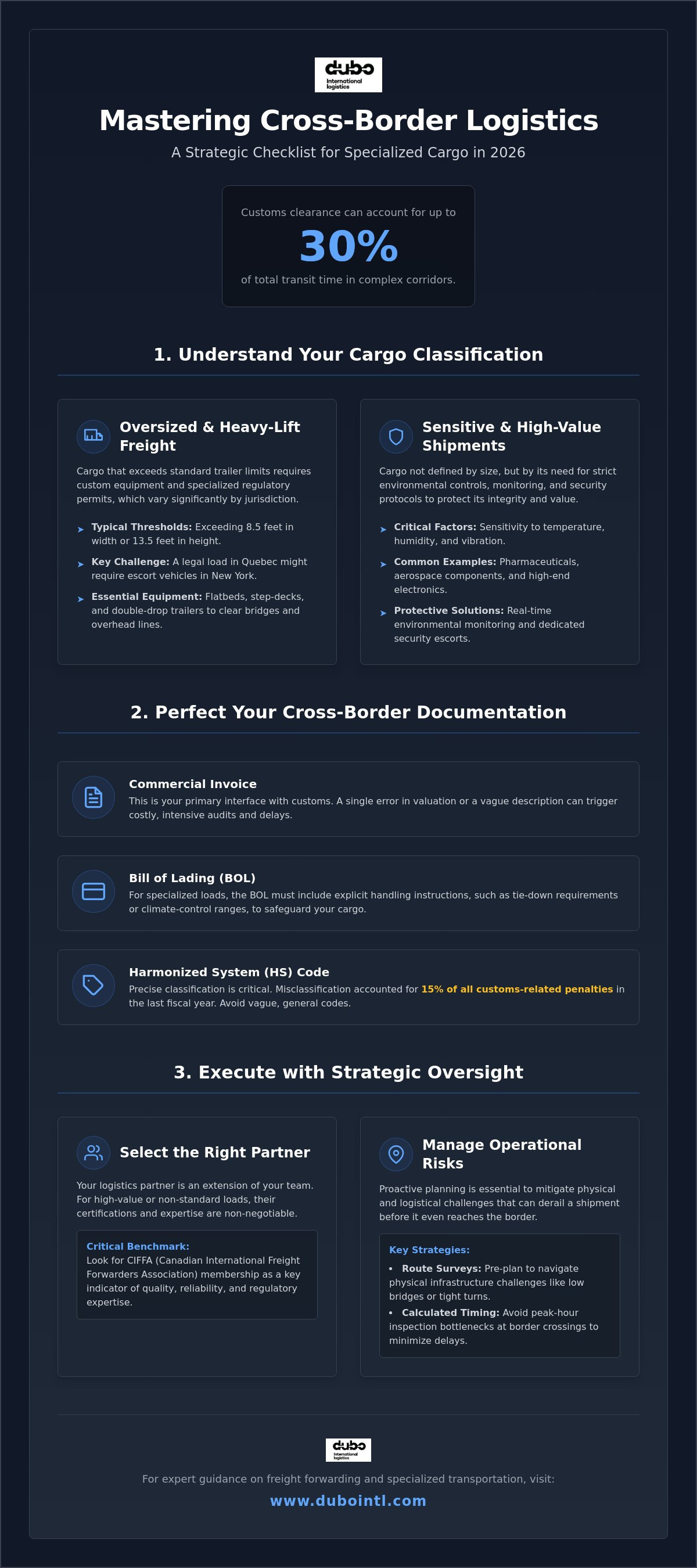
Did you know that customs clearance now accounts for nearly 30 percent of total transit time in complex trade corridors? For businesses shipping specialized cargo across border routes, this statistic represents more than just a delay; it signifies a direct threat to project timelines and cargo integrity. You likely recognize that moving non-standard freight requires more than just a standard carrier. It demands a sophisticated level of foresight to manage the unpredictable nature of border crossings and the high stakes of transporting sensitive, high-value goods.
Our goal is to replace that uncertainty with a sense of quiet confidence and partnership. By following our strategic logistics checklist for 2026, you will master the complexities of shipping specialized cargo across border crossings, ensuring your shipments arrive safely and without a single day of unnecessary delay. This guide outlines the essential steps for maintaining full regulatory compliance, securing complex permits for oversized loads, and protecting your most sensitive assets throughout their journey. For expert guidance on freight forwarding and specialized transportation, visit www.dubointl.com to explore how we serve as a protective steward for your global interests.
Key Takeaways
- Understand the technical characteristics that define specialized freight and why these unique traits demand a strategic regulatory approach at the border.
- Master the documentation standards required for shipping specialized cargo across border routes to prevent costly audits and ensure total regulatory compliance.
- Recognize why CIFFA membership is a critical benchmark when selecting a transportation partner for high-value or non-standard loads.
- Use route surveys and calculated timing to navigate physical infrastructure challenges and avoid peak-hour inspection bottlenecks.
- Access professional logistics consulting and specialized transportation resources at www.dubointl.com to ensure your cargo moves with precision and peace of mind.
Defining Specialized Cargo in a Cross-Border Context
Shipping specialized cargo across border routes is a high-stakes endeavour that transcends the simple transport of goods. While standard freight follows predictable patterns, specialized cargo is any freight requiring custom equipment or specific regulatory permits. This distinction is vital because treating a massive industrial turbine or a delicate pharmaceutical shipment like a standard pallet is a recipe for disaster. Effective logistics at this level is about managing a complex project rather than merely booking a truck.
The North American border presents a unique tapestry of challenges for these non-standard loads. You aren't just dealing with federal customs; you're managing a web of regional infrastructure and local laws. A shipment moving from Ontario to Texas must satisfy Canadian federal requirements, U.S. Customs and Border Protection, and the specific road safety departments of every province and state along the transit path. This complexity requires a logistics architect who understands how these systems interact.
Oversized and Heavy-Lift Freight
When dimensions exceed standard trailer limits, typically 8.5 feet in width or 13.5 feet in height, specialized handling becomes mandatory. Oversize load regulations vary significantly across North America; a weight limit that's acceptable in Quebec might require a specific permit or an escort vehicle in New York. Success depends on selecting the right equipment. Flatbeds are common for machinery, but step-decks or double-drop trailers are often necessary for equipment that must sit lower to the ground to clear bridges and overhead wires safely. Precision in these measurements is non-negotiable to avoid structural damage or legal penalties.
Sensitive and High-Value Shipments
Not all specialized cargo is defined by its physical size. Sensitivity to temperature, humidity, or vibration often dictates the logistics strategy for high-end electronics, aerospace components, or pharmaceuticals. High-value industrial parts also require rigorous security protocols to prevent theft or tampering during necessary border inspections. By utilizing specialized transportation services, businesses can implement bespoke solutions like real-time environmental monitoring and dedicated security escorts. Our team at www.dubointl.com understands that these shipments represent significant capital investments. We act as a protective steward, ensuring that the integrity of your cargo is maintained from the moment it leaves your facility until it reaches its final destination. Shipping specialized cargo across border lines requires this level of meticulous coordination to ensure a seamless delivery.
The Essential Cross-Border Documentation Checklist
Precision is the hallmark of professional logistics. When shipping specialized cargo across border routes, your documentation serves as the primary interface between your business and customs authorities. A single error in valuation or a vague description on a Commercial Invoice can trigger an intensive audit, especially given the increased vetting procedures and importer accountability standards introduced in mid-2026. This level of scrutiny reflects broader trends in U.S. transborder freight data, where the rising volume of high-value industrial movement requires meticulous oversight to maintain security and compliance.
Accuracy extends to the Bill of Lading (BOL). For non-standard loads, the BOL must go beyond basic shipping details to include explicit specialized handling instructions. Whether it's a specific tie-down requirement for heavy-lift machinery or a climate-control range for sensitive electronics, these details ensure every party in the supply chain understands their specific responsibilities. Clear instructions on the BOL act as a safeguard, protecting your cargo from physical risk during transit.
Selecting the correct Harmonized System (HS) Code is equally critical for industrial components. Misclassification of goods was responsible for 15 percent of all customs-related penalties in the previous fiscal year. For unique equipment, general codes rarely suffice; you need the precise classification to ensure compliance and avoid the steep penalty floors established by recent executive orders. If you are uncertain about the technical classification of your goods, our logistics consulting services can provide the strategic foresight needed to secure your shipments.
Pre-Arrival Systems (PARS and PAPS)
Modern border crossings rely on digital-first ecosystems. The Pre-Arrival Review System (PARS) for Canadian entry and the Pre-arrival Processing System (PAPS) for shipments entering the USA allow customs to review documentation while the freight is still in transit. These systems require real-time communication between the carrier and the customs broker to ensure the cargo is cleared before the driver reaches the booth. Any breakdown in this digital handshake can lead to significant bottlenecks at the port of entry.
Specialized Permits and Certificates
Oversize and overweight (OSOW) loads require a layer of regional permitting that standard freight does not. These permits must be secured for every jurisdiction the shipment traverses, from the point of origin to the final destination. Permit lead times are the #1 cause of specialized cargo delays. Additionally, ensure you have valid Certificates of Origin under USMCA to benefit from duty-free treatment. Accurate digital records are now the primary factor in 95 percent of automated compliance audits, making your digital trail as important as the physical cargo itself.
This emphasis on data accuracy is a global trend; for instance, specialized firms like Unicca Inteligência Aduaneira focus on customs intelligence to help businesses maintain compliance across diverse regulatory environments, ensuring that every digital record aligns perfectly with international trade standards.
Selecting a Specialized Transportation Partner
Choosing the right partner for shipping specialized cargo across border routes is the most critical decision in your supply chain strategy. This selection process should move beyond simple cost comparisons; it requires a deep dive into technical competence and industry standing. CIFFA membership serves as a non-negotiable indicator of professional standards. It ensures that your provider adheres to a rigorous code of ethics and possesses the technical literacy required to manage the complexities of 2026 trade regulations. When you partner with an accredited professional, you are securing a stabilizing force for your international operations.
Evaluation must also focus on the physical capabilities of a carrier network. Access to a diverse fleet of specialized equipment, such as double-drop trailers or multi-axle heavy-lift units, is essential for managing specialized freight North America. A truly integrated partner provides end-to-end management, acting as a single point of accountability from the initial pickup to the final delivery. This completeness in service minimizes the risk of communication gaps that often lead to border delays or cargo damage. At www.dubointl.com, we prioritize this level of meticulous coordination to ensure your high-value assets move with absolute precision.
The Role of Logistics Consulting
Strategic logistics consulting Canada offers a proactive shield against unforeseen costs and infrastructure bottlenecks. A consultant acts as a logistics architect, identifying route constraints like bridge weight limits or seasonal road restrictions long before the cargo leaves your facility. They perform a vital cost-benefit analysis to determine if it is more efficient to utilize specialized equipment or to modify the freight itself for standard transport. This foresight is what separates a successful project from a logistical failure.
Experience in Project Cargo Logistics
Vetting a partner's history with project cargo logistics Canada reveals their ability to handle non-standard moves that defy routine handling. You need a partner who understands that project cargo is a bespoke project, not a transaction. This includes a thorough verification of insurance coverage. Standard carrier liability is rarely sufficient for specialized cargo values; therefore, your partner must ensure that the insurance limits are specifically tailored to the replacement value of your industrial components. This commitment to dependability creates the sense of security required for complex global trade.
Operational Risk Management for Non-Standard Freight
Managing the physical movement of non-standard loads is a discipline rooted in engineering and strategic foresight. While the documentation establishes the legal framework, operational risk management ensures the physical integrity of the shipment. Shipping specialized cargo across border routes requires a proactive approach to identify potential hazards long before the wheels begin to turn. This process begins with a comprehensive route survey. Unlike standard freight, specialized loads cannot simply follow GPS coordinates; they require a verified path that accounts for low bridges, narrow turns, and active construction zones that could trap an oversized vehicle.
Cargo securement is another pillar of operational safety. Every shipment must strictly adhere to the North American Cargo Securement Standards to prevent shifting or damage during transit. This is particularly vital for high-value industrial components where even a minor movement can lead to mechanical failure. Additionally, timing the border crossing is a strategic art. By avoiding peak traffic hours at major ports of entry, drivers can minimize the time spent in idling queues, reducing the risk of fatigue and ensuring that customs officers have the necessary time to conduct complex inspections without the pressure of a backlog.
Route Planning and Infrastructure Analysis
Identifying 'super-load' routes is essential when moving freight that exceeds standard weight or dimension thresholds. These routes are specifically designated by provincial and state authorities to accommodate massive equipment while protecting public infrastructure. Success often requires coordination with local authorities for police escorts or utility companies to lift overhead wires. You must also account for seasonal variables; for instance, the Spring thaw in Canada and the Northern United States triggers significant weight restrictions on secondary roads. Ignoring these seasonal limits can result in immediate impoundment and heavy fines.
Communication and Visibility
Transparency is the antidote to the inherent stress of high-stakes logistics. Utilizing 24/7 tracking for sensitive or high-value project cargo allows all stakeholders to monitor progress in real-time. Standardized reporting protocols ensure that the shipper, the forwarder, and the receiver are always aligned on the shipment's status. Proactive cross-border freight forwarding Canada USA reduces anxiety through transparency, providing you with a clear window into every stage of the journey. If you require a partner who prioritizes this level of meticulous visibility, visit www.dubointl.com to learn how our specialized transportation services can secure your supply chain.
Seamless Cross-Border Execution with Dubo International Logistics
Dubo International Logistics acts as a sophisticated bridge between local business ambitions and the complexities of international trade systems. We provide a stabilizing force for enterprises shipping specialized cargo across border routes, ensuring that every movement is governed by precision rather than chance. Our methodology integrates high-level logistics consulting with meticulously executed specialized transportation services. This integrated approach ensures that every project is anchored by professional process and strategic foresight. We recognize that non-standard freight is often the lifeblood of a project, and we treat every shipment with the quiet confidence and dependability of a seasoned expert.
Our commitment to excellence is reflected in our ability to manage the grand scale of global movement while remaining focused on the minute details of your specific needs. We don't just move freight; we coordinate a narrative of end-to-end support that feels cohesive and well-planned. By positioning ourselves as a protective steward of your interests, we allow you to navigate the shifting regulatory environment of 2026 with peace of mind. This steady authority is what makes us a preferred partner for businesses that value longevity and consistency in their supply chain operations.
Your Partner for Specialized Freight
Our persona as a logistics architect allows us to craft bespoke solutions that address the unique physical and regulatory requirements of your cargo. We understand that moving oversized or sensitive freight isn't a routine transaction; it's a precision-engineered project that requires specialized equipment and technical literacy. By focusing on the specific nuances of both Canadian and US regulations, we eliminate the friction that often characterizes cross-border movement. This dedication to completeness reduces operational stress, allowing you to focus on your core business while we handle the complexities of the journey. Visit www.dubointl.com to consult with a logistics architect who understands how to balance technical handling with regulatory foresight.
Commitment to Excellence and Compliance
Excellence in logistics is defined by consistency and a deep-seated commitment to regulatory compliance. As a CIFFA-certified member for 2025-2026, Dubo International Logistics adheres to the highest professional standards, providing you with a reliable partner in an increasingly scrutinized trade environment. We leverage our expertise to navigate the rising border fees and enhanced vetting procedures of 2026, ensuring your shipments remain in good standing with all authorities. Our strategic foresight prevents the bottlenecks that often derail less-prepared supply chains. Contact us today at www.dubointl.com for your next project involving shipping specialized cargo across border lines and secure a partner dedicated to your success.
Mastering Your Cross-Border Logistics Strategy
Success in shipping specialized cargo across border routes in 2026 hinges on a marriage of technical precision and regulatory foresight. You've seen that meticulous documentation and proactive route surveys are not just best practices; they're essential safeguards against the significant delays often found at customs. By prioritizing these strategic elements, you transform a complex logistical challenge into a predictable, managed project. This level of preparation ensures that your most sensitive assets arrive exactly when and where they're needed.
As a CIFFA-certified freight forwarder specializing in complex North American project cargo, Dubo International Logistics provides the steady authority your business requires. Our strategic logistics consulting identifies cost optimization opportunities while ensuring your high-value goods remain protected throughout their journey. We invite you to consult with a specialized logistics expert at Dubo International Logistics to refine your transport plan for the coming year. Your most critical shipments deserve the attention of a dedicated logistics architect, and we're ready to help you move forward with absolute confidence. Visit www.dubointl.com to explore our full range of services.
Frequently Asked Questions
What qualifies as specialized cargo for cross-border shipping?
Specialized cargo is any freight that exceeds standard dimensions, weight, or requires specific environmental controls for safe transport. This category includes oversized industrial machinery, overweight heavy-lift components, and sensitive electronics or pharmaceuticals that demand climate-controlled environments. If your shipment requires custom equipment like double-drop trailers or specific regional permits to move, it is classified as specialized cargo rather than standard freight.
Do I need a different customs broker for specialized freight?
You don't necessarily need a new broker, but you must ensure they have specific expertise in complex industrial classifications. Specialized cargo often involves higher bonding requirements and intricate HS code selection that standard brokers might overlook. A partner experienced in project cargo will ensure your high-value movements comply with the June 2026 executive order on importer accountability and tangible asset disclosures.
How much lead time is required for oversized cargo permits?
Permit lead times typically range from five to ten business days for standard oversized loads. However, for "super-loads" requiring utility line lifts or police escorts, you should plan for at least three to four weeks of preparation. Securing these regional permits is the primary cause of delay when shipping specialized cargo across border routes, making early application a non-negotiable part of your strategy.
What are the common causes of specialized cargo delays at the border?
Documentation errors and permit expiration are the most frequent causes of transit interruptions. Customs clearance currently accounts for nearly 30 percent of total transit time in complex trade corridors. Delays often occur if the digital PARS or PAPS filing doesn't match the physical load or if the carrier arrives during peak hours without having their documentation pre-cleared by the customs broker.
Can specialized cargo be shipped via Less-than-Truckload (LTL)?
Shipping specialized cargo via LTL is rarely advisable due to the sensitive or oversized nature of the freight. Specialized cargo usually requires dedicated equipment like flatbeds or climate-controlled units that don't support co-loading with other goods. For high-value items, a dedicated truck minimizes handling and reduces the 15 percent risk associated with misclassification and physical damage during the consolidation process.
Is USMCA certification different for specialized industrial equipment?
The certification process follows standard rules, but the "Rules of Origin" are often more complex for multi-component machinery. You must verify that every specialized component meets the specific regional value content requirements to qualify for duty-free status. Accurate digital records are now the primary factor in 95 percent of automated compliance audits, making precise USMCA documentation vital for successful cross-border entry.
What insurance coverage do I need for high-value specialized cargo?
You require "All-Risk" cargo insurance that covers the full replacement value of the goods rather than relying on standard carrier liability. Given the high stakes of shipping specialized cargo across border lines, standard limits are almost always insufficient. Ensure your policy includes specific clauses for mechanical derangement and environmental sensitivity if those risks are applicable to your particular industrial components.
How do provincial and state weight limits differ for cross-border moves?
Weight limits are governed by local infrastructure and seasonal variables such as the Spring thaw. A weight that is legal in Ontario might be restricted in Michigan, requiring a different axle configuration or a specific overweight permit for that jurisdiction. Our experts at www.dubointl.com provide the strategic foresight needed to navigate these regional variations and organize your route before your shipment ever leaves the facility.

