

A remote freight delivery can be disrupted long before cargo reaches its destination. With freight shipping to remote Canadian locations, distance is only one factor. Carrier access, seasonal routes, changes between transport modes and final-mile handoffs all affect what is practical. Depending on the destination, access may involve seasonal roads, marine transport or air freight, each with different planning requirements.
Before dispatch, you need clear answers about which route can serve the destination, how the shipment should move and where coordination is needed between transport legs. The right approach depends on the cargo’s dimensions, handling requirements and delivery window, not simply on choosing the fastest or most familiar option.
This guide covers the planning steps to take before freight moves, how to compare service approaches and what to account for when routes or handoffs may change. Dubo International Logistics coordinates freight forwarding and specialized transportation across Canada, bringing route, cargo and transition requirements into a tailored movement plan. Learn more at www.dubointl.com.
Key Takeaways
- Plan freight shipping to remote Canadian locations around route access, transfer points and consignee readiness, not distance alone.
- Build a shipment profile with accurate dimensions, weight and handling requirements to guide service planning.
- Compare transport approaches by shipment size, urgency, route access and handoff complexity. LTL freight shipping may suit some shipments, but not every route.
- Prepare packaging, handling instructions and delivery details, including site access, unloading arrangements and appointment requirements.
- Dubo coordinates freight forwarding and specialized transportation across Canada, aligning cargo and route requirements in a tailored plan. Learn more at www.dubointl.com.
Freight shipping to remote Canadian locations: what makes planning different?
Distance alone doesn’t determine whether a freight destination is remote. The practical questions are how cargo can reach its intended delivery point, which transport options serve the route and what coordination is needed along the way. A destination may be remote because carrier access is limited, service is less frequent or freight must transfer between transport providers before final delivery.
That distinction matters before dispatch. A route that works for one shipment may not suit another with different dimensions, handling requirements or timing. Delivery-site conditions also shape the plan. Access, unloading arrangements and the consignee’s availability help determine whether the movement can proceed as intended. Remote does not mean inaccessible; it means the route and delivery requirements need to be assessed for the specific shipment.
Remote freight planning connects a shipment’s route, cargo requirements and handoffs from dispatch through final delivery. Treating these elements as one movement helps identify constraints early, rather than leaving them to be resolved at a transfer point or destination.
What can make a Canadian freight destination remote?
Access can depend on the available route, service frequency and whether more than one transport leg is needed. Seasonal conditions may also affect which routes are usable. For example, ice roads are one type of seasonal access route, with conditions and operating periods that can shape planning. These factors vary by destination, so a route-specific assessment is more useful than assuming every remote shipment faces the same constraints.
Consider whether the destination has regular carrier service, whether freight needs to transfer between modes or carriers, and what the receiving site can accommodate. These details help distinguish a long but straightforward journey from a movement that needs closer coordination.
Why do handoffs matter in remote freight shipping?
The linehaul is the main journey between points on the transport route. Final delivery is the last stage, when freight must reach the consignee’s specified site. If a shipment transfers between carriers or transport legs, communication and handling instructions need to stay clear at each transition. Otherwise, delivery details can become separated from the cargo’s movement plan.
Provide a named consignee contact and precise delivery instructions. Record who will receive the shipment, how the site can be accessed and what arrangements are needed for unloading or arrival. Keeping these details with the shipment plan gives each party a clear reference as freight moves along its route.
How to plan freight shipping to a remote Canadian destination
A reliable plan starts with accurate information about the shipment and destination, then connects those details to a workable route and delivery arrangement. For freight shipping to remote Canadian locations, a route or carrier that suits one load may not suit another. Cargo size, handling requirements, access conditions and transfer points all shape the movement, so assess them together before dispatch.
Before route coordination begins, gather an accurate cargo description, dimensions, weight, packaging and handling requirements, along with pickup and destination access details, delivery constraints and a named consignee contact.
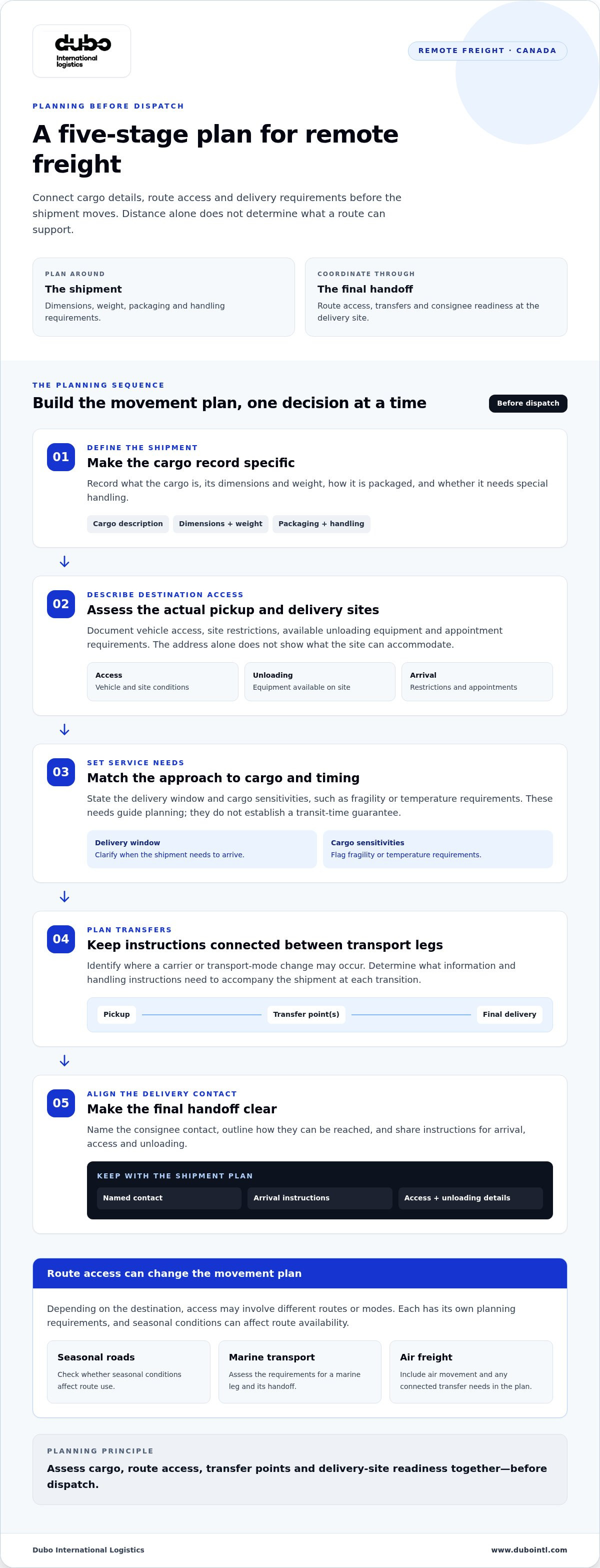
- Define the shipment. Record what the cargo is, its dimensions and weight, how it is packaged and whether it needs special handling. Accurate measurements help determine suitable equipment and how freight can be moved or transferred.
- Describe destination access. Document pickup and delivery site conditions, including vehicle access, available unloading equipment, site restrictions and appointment requirements. Route suitability depends on the actual access points, not just the destination address.
- Set service needs. State the delivery window and any cargo sensitivities, such as fragility or temperature requirements. These needs help shape the transport approach, but they do not establish a transit-time guarantee or mean every route can support the same service.
- Plan transfers. Identify where a carrier or transport-mode change may occur and what information must accompany the shipment. Clear handling instructions help maintain consistency between legs.
- Align the delivery contact. Name the consignee contact, outline how they can be reached and share instructions for arrival, access and unloading. A clear contact process helps avoid uncertainty at the final stage.
What shipment information should be gathered first?
Make the cargo record specific enough to guide decisions. Include the package count, measurements, total weight, packaging type and any orientation, lifting or handling instructions. Note fragile components, unusual shapes or environmental sensitivities. At both ends of the route, describe practical access and equipment needs. Record the delivery window, appointment process and consignee contact method so the plan reflects site conditions.
How should route and handoffs be coordinated?
Map the intended movement from pickup through final delivery. Mark potential transfers and define who will communicate shipment milestones, relay handling instructions and share updates if the route or delivery arrangement changes. This gives each party a clear role without assuming a particular carrier, mode or schedule. For a wider perspective on coordinated North American freight movement, the article “Professional Freight Forwarding in North America: A Strategic Guide for 2026” provides useful context.
Dubo International Logistics coordinates freight forwarding and specialized transportation around shipment requirements, including cargo, route and handoff needs. For complex movements, logistics consulting can bring those planning details into one coordinated approach. Learn more at www.dubointl.com.
Which freight shipping approach fits a remote Canadian shipment?
Choose a service approach by matching the shipment to the route, rather than relying on a label such as “standard” or “expedited.” For freight shipping to remote Canadian locations, shipment size, urgency, handling requirements and transfer complexity all affect what is practical. A route may also limit the available transport options, so assess air, rail, road or a combination against the specific destination and cargo.
The comparison below is a starting point, not a route guarantee. Suitability depends on access and shipment details.
| Approach | Shipment and urgency | Handling, access and transfers |
|---|---|---|
| LTL freight shipping | May suit compatible freight that can move within a planned delivery window. | Shared trailer capacity requires route access and transfer arrangements to fit the shipment. |
| Dedicated expedited transport | May merit assessment for time-sensitive cargo when urgency is a central requirement. | A dedicated movement can be considered alongside site access, handling needs and route suitability. |
| Specialized transportation | Relevant to cargo such as oversized machinery, fragile equipment or temperature-sensitive products. | Equipment, handling instructions and transfer points need to reflect the cargo’s specific requirements. |
| Air, rail or combined movement | May be considered based on the shipment’s timing and characteristics. | Mode availability and handoffs depend on the route and destination access. |
When might LTL freight shipping be suitable?
LTL freight shipping means multiple shippers share trailer capacity. It may suit freight that can travel with other compatible shipments and has a delivery window that allows for planned handling and transfers. Shared capacity is not automatically suitable for every remote route. Access, service frequency, cargo handling requirements and transfer points all affect the assessment.
Coordination across each transport stage is central to this decision. The article “End-to-End Freight Management: A Strategic Guide for Canadian Businesses” explores that broader coordination context.
When should specialized or expedited transport be considered?
Specialized planning deserves attention when cargo is oversized, fragile or temperature-sensitive, or when its handling requirements go beyond standard freight needs. For time-sensitive freight, a dedicated expedited approach can be assessed against the route, delivery window and handoffs. Urgency alone doesn’t determine the right approach. Cargo security and handling requirements matter too.
Dubo coordinates specialized transportation to match shipment needs with the movement plan. For shipments where dedicated expedited transport fits the requirements, explore Dubo Expedited transport services as part of the service assessment.
How to prepare cargo and delivery details for a remote freight shipment
Clear preparation gives everyone involved a shared reference for handling cargo and completing delivery. Before freight shipping to remote Canadian locations begins, assemble shipment and receiving details in one record, then make sure the instructions reflect the actual cargo and destination. This helps prevent avoidable gaps, such as unclear handling directions or a consignee who isn’t ready to receive the load.
Use this pre-dispatch checklist:
- Cargo description: Identify the goods and note fragile components, unusual shapes or other handling sensitivities.
- Measurements and weight: Record accurate dimensions, total weight and package count to support transport and equipment planning.
- Packaging: Describe how the freight is secured and identify any packaging considerations relevant to handling.
- Handling instructions: State orientation, lifting or other cargo-specific requirements clearly, where applicable.
- Delivery requirements: Document receiving hours, access instructions, unloading arrangements, appointment needs and the consignee’s contact details.
Sensitive cargo needs particular attention before dispatch. Document environmental requirements, such as a required temperature range, and agree how those conditions will be maintained and monitored during transit. Include instructions for transfers as well as delivery so relevant handling information stays with the shipment throughout its journey. Don’t assume that a receiving site or transport leg will infer requirements that haven’t been clearly recorded.
What should the consignee prepare before delivery?
The consignee should provide accurate site access instructions, receiving hours and a responsible contact who can be reached about arrival arrangements. Identify site restrictions and available unloading equipment, then establish whether an appointment is required. Agree how the parties will communicate a change in access or a delivery issue, including who should receive the update and who can respond with revised instructions.
How can businesses reduce disruption during transit?
Set delivery expectations based on the route assessment rather than applying a generic timeline to every destination. Decide who receives tracking updates, who monitors shipment milestones and who acts if an exception affects the plan. For cargo-specific considerations, “Specialized Freight North America: A Strategic Buyer’s Guide for 2026” offers further context on aligning transport planning with handling needs.
Where service level agreements (SLAs) apply, record the agreed expectations in writing. These are contractual commitments that define service performance, delivery windows or equipment availability. Specify communication responsibilities and relevant delivery commitments, then keep contact details and instructions consistent across shipment documents and handoffs. A clear record helps the coordination team respond to changes with the right information, while realistic expectations support continuity between dispatch and receipt.
For tailored freight planning that brings cargo requirements and delivery arrangements together, coordinate your shipment with Dubo. Visit www.dubointl.com to learn about freight forwarding and specialized transportation across Canada.
How Dubo coordinates freight shipping to remote Canadian locations
Remote freight planning involves connected decisions about cargo, carrier arrangements and delivery requirements. Dubo International Logistics works as a logistics partner, coordinating those elements around each shipment rather than treating transport as a single booking. The movement plan reflects the cargo’s needs and the route-specific information available for the destination.
This coordination brings carrier capabilities and shipment instructions into the planning process. Dubo’s carrier vetting process and tracking systems support specialized transport coordination and shipment visibility. They inform the plan, while route conditions and delivery arrangements remain specific to each movement.
What does coordinated freight forwarding add?
Freight forwarding organizes domestic cargo movement across carriers and route stages. A forwarder helps keep shipment requirements connected as those stages are arranged, including how cargo should be handled and what destination access may mean for delivery. This coordination gives businesses a clear point of reference as movement plans take shape.
For a broader view of this coordination role across North America, see “Professional Freight Forwarding in North America: A Strategic Guide for 2026.”
How can Dubo support specialized remote shipments?
Project-cargo expertise can be useful for oversized machinery, fragile equipment and temperature-sensitive products, where handling requirements call for deliberate planning. Dubo coordinates specialized transportation using a network of carriers and tracking systems to support visibility during specialized transport deliveries.
Each shipment’s cargo and route details inform the movement plan. This brings relevant requirements together without assuming every destination or shipment follows the same pattern.
If you’re planning freight shipping to remote Canadian locations, discuss your cargo, destination and handling requirements with Dubo. Visit Dubo Expedited to learn about dedicated expedited transport, or go to www.dubointl.com to discuss your shipment with the Dubo team.
Move your remote shipment forward with a clear plan
Your next step is to turn the shipment’s requirements into a coordinated plan before dispatch. A route-specific discussion can bring cargo details, access needs and delivery expectations into focus, giving your team a sound basis for organizing the movement. For complex freight, a logistics partner can help keep those decisions connected as plans take shape.
Dubo International Logistics is a member of the Canadian International Freight Forwarders Association (CIFFA), reflecting its commitment to professional freight forwarding. Its team works with businesses to coordinate freight and specialized transportation around each shipment’s needs.
Start planning with the details you have, such as cargo type, destination and handling considerations. You don’t need every operational question resolved before beginning the conversation. Plan your remote freight shipment with Dubo and take the next step with a knowledgeable logistics partner. A considered start can help your team move forward with greater clarity and confidence.
Frequently Asked Questions
Can LTL freight shipping reach remote Canadian locations?
It can, if the route and shipment requirements support shared trailer service. LTL freight shipping combines compatible shipments in one trailer, so delivery planning may involve additional handling or transfers compared with a dedicated movement. For example, a palletized shipment with flexible receiving arrangements may be easier to plan than cargo requiring specialized handling or a narrow delivery window. Route access and final delivery arrangements determine suitability.
Does freight shipping to a remote Canadian destination always require air transport?
No. Air transport is one possible option, not a universal requirement. Depending on the route and shipment, planning may consider road, rail, air or a combination of modes. A shipment’s dimensions, urgency, handling requirements and destination access help shape the assessment. For example, a heavy load may call for a different plan than a small, time-sensitive package. Mode availability depends on the specific route.
What details should I provide when arranging remote freight shipping?
Provide a clear description of the goods, package count, dimensions, weight and packaging, along with any handling or environmental requirements. Include pickup and delivery access details, receiving hours, unloading arrangements and appointment needs. A delivery window and named consignee contact help clarify the receiving plan. If the shipment has an unusual shape or fragile components, explain those characteristics so the transport approach can account for them.
How can I reduce missed deliveries to a remote destination?
Prepare the receiving site before the shipment is dispatched. Give the consignee accurate arrival instructions, confirm that someone responsible can receive the freight and make sure the required unloading equipment will be available. Provide a direct contact method and agree who will communicate any change to access or receiving hours. If the site has a gate, restricted entry or an appointment process, include those details in the delivery instructions.
Can fragile or temperature-sensitive freight be shipped to remote Canadian locations?
Yes. Such freight can be coordinated through specialized transportation, with handling and environmental requirements included in the shipment plan. Describe the sensitivity clearly, including any packaging, orientation or temperature conditions that apply. Dubo International Logistics coordinates specialized transport for fragile equipment and temperature-sensitive products. Match the route and handling plan to the cargo’s requirements rather than assuming standard freight practices will be suitable.
Will tracking show every handoff during a remote freight shipment?
Not necessarily. Tracking systems can provide shipment visibility, but don’t assume every transfer between carriers or transport stages will appear as a separate update. Before dispatch, establish which milestones will be reported, who receives updates and how exceptions will be communicated. This gives your team a practical way to follow progress without relying on a particular scan or update at every handoff.
What does a freight forwarder do for remote Canadian shipping?
A freight forwarder coordinates cargo movement by organizing relevant transport stages and carrier arrangements around the shipment’s needs. For a remote destination, this can mean considering route access, cargo handling and delivery requirements as connected planning factors. Dubo International Logistics provides freight forwarding and logistics consulting for shipments across Canada. To discuss your shipment, visit www.dubointl.com.
