
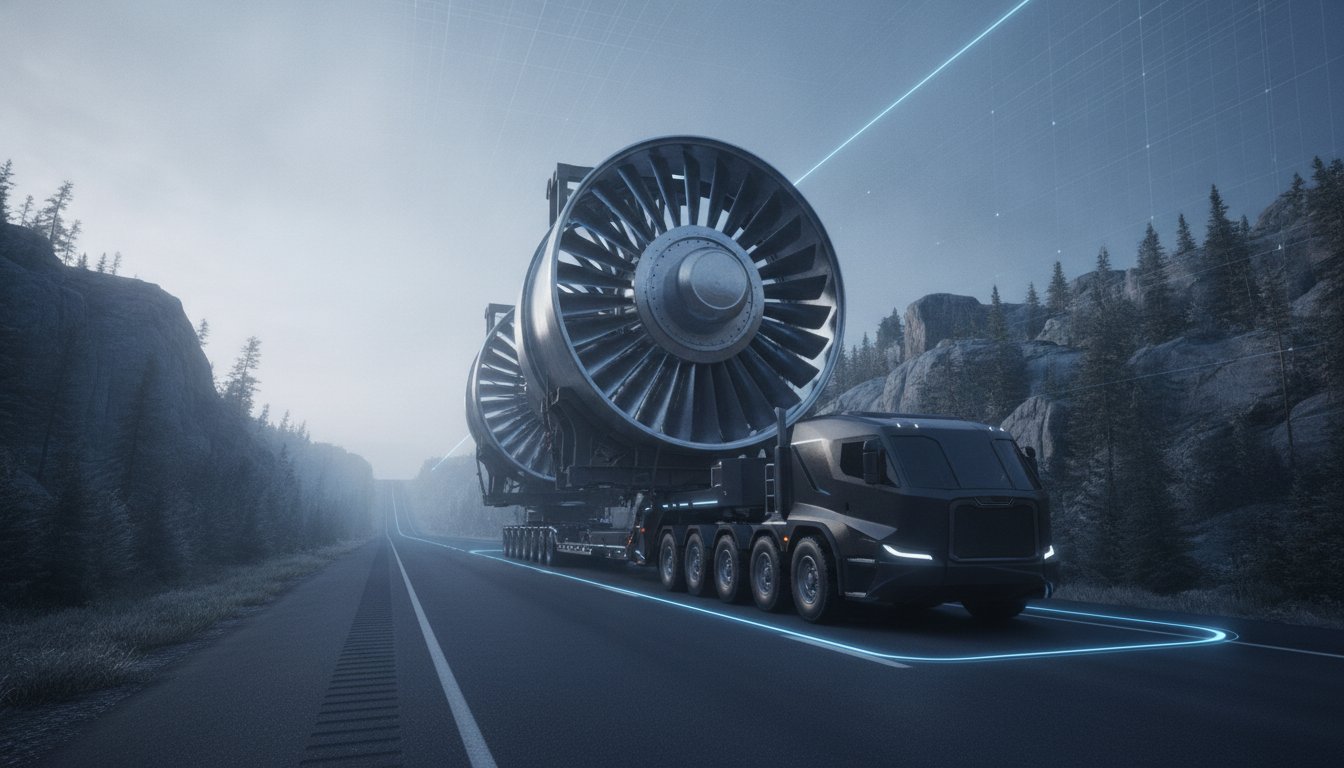
The most expensive mistake in heavy-lift transport isn't a mechanical failure; it's a gap in the strategic consulting phase. You likely recognize the mounting pressure of moving sensitive, high-value equipment across a landscape where Ontario's 2.6-metre width limits and complex provincial escorts create constant friction. Successfully managing project cargo logistics Canada has become increasingly sophisticated as the 2026 legislative reforms to the Canada Transportation Act introduce new layers of regulatory oversight and trade corridor designations.
It's understandable to feel the weight of these unpredictable costs and compliance risks. We believe that true peace of mind comes from meticulous pre-planning rather than reactive problem-solving. This strategic guide provides the clarity you need to master oversized transport through the lens of logistics architecture. We'll explore how to mitigate damage risks, maintain seamless compliance across all jurisdictions, and protect your margins against rising diesel costs. By the end of this resource, you'll have a roadmap for a risk-mitigated transport plan that treats your equipment with the protective stewardship it deserves.
Key Takeaways
- Understand how a logistics architect utilizes strategic consulting to realize complex supply chain goals while maintaining rigid cost controls.
- Master the complexities of project cargo logistics Canada by implementing bespoke transport plans that account for the country's distinct geography.
- Identify the most effective multi-modal combinations to integrate rail, road, and sea transport for the seamless delivery of specialized freight.
- Learn to manage the intricacies of provincial and municipal permitting to ensure your project remains in full compliance with evolving Canadian regulations.
- Recognize the value of end-to-end coordination as a stabilizing force that protects your high-value equipment throughout its entire journey.
What is Project Cargo Logistics in the Canadian Context?
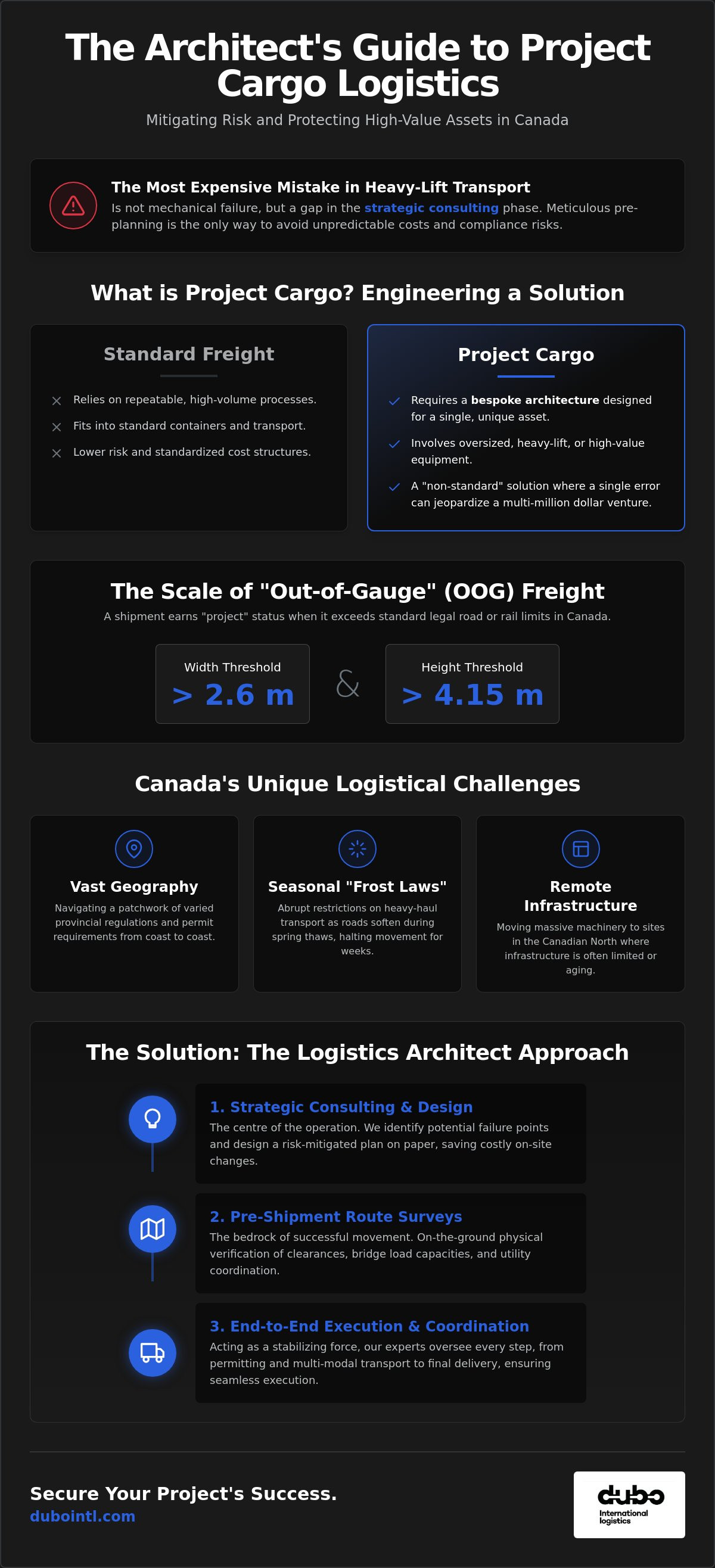
Project cargo isn't just about moving freight; it's about engineering a solution for assets that simply won't fit into a standard box. At its core, Project cargo involves the transport of oversized, heavy-lift, or high-value equipment that requires specialized handling and strategic oversight. In the context of project cargo logistics Canada, this means managing the movement of wind turbines, mining excavators, or modular refinery components across some of the most demanding terrain on earth. Standard freight relies on repeatable, high-volume processes, but project cargo requires a bespoke architecture designed specifically for the individual asset. It is a "non-standard" solution where the cost of a single error can jeopardize an entire multi-million dollar venture.
Several critical sectors drive the demand for these sophisticated services across the country:
- Energy: Transporting massive components for hydroelectric dams, wind farms, and oil and gas facilities.
- Mining: Moving heavy-duty machinery to remote sites in the Canadian North where infrastructure is often limited.
- Large-scale Infrastructure: Delivering bridge girders, tunnel boring machines, and modular building components for urban expansion.
Once these massive components reach their destination, the focus often shifts to facility maintenance and aesthetics. For high-end industrial or commercial finishing on an international scale, you can visit NovoTech to learn more about their professional painting and renovation solutions.
The Scale of Specialized Cargo
A shipment earns "project" status when it exceeds standard legal road or rail limits, often referred to as "out-of-gauge" (OOG) freight. In many Canadian jurisdictions, thresholds are triggered when a load exceeds 2.6 metres in width or 4.15 metres in height. These shipments cannot be moved by traditional means and require a higher professional register of oversight. Every centimetre of the route must be meticulously surveyed to ensure the equipment clears overpasses and navigates tight turns without incident.
Why Canada Presents Unique Challenges
Canada's vast geography introduces variables that few other nations face. Moving a transformer from a port in British Columbia to a site in Northern Ontario involves navigating a patchwork of varied provincial regulations and permit requirements. Timing is everything. Seasonal "frost laws" can abruptly restrict heavy-haul transport as roads soften during the spring thaw, effectively halting movement for weeks at a time. Mastering project cargo logistics Canada requires an intimate understanding of these regional nuances. Strategic end-to-end cargo coordination is the only way to avoid these bottlenecks and ensure a seamless delivery that protects both the equipment and the client's timeline.
The Logistics Architect: Integrating Strategy and Consulting
Success in heavy-lift transport is rarely the result of brute force. It's the product of meticulous design. We operate as a logistics architect, acting as a partner who understands that moving a 100-tonne transformer is a sophisticated engineering feat rather than a simple delivery. This philosophy places logistics consulting Canada at the centre of the operation, ensuring every variable is accounted for before the first strap is tightened. By prioritizing the consulting phase, you gain control over the unpredictable elements that often lead to budget overruns in project cargo logistics Canada. It's about creating a stabilizing force in a complex environment where precision is the only currency that matters.
Strategic planning mitigates risks by identifying potential failure points during the conceptual stage. It's far more cost-effective to modify a transport plan on paper than it is to reorganize a crane crew at a remote site because a trailer couldn't clear a specific turn. We act as a protective steward of your interests, utilizing industry-literate methodologies to anchor broad promises with professional process. This level of commitment ensures that your high-value equipment moves with a sense of security and quiet confidence. Our role is to lower your stress by positioning our expertise as the foundation of your project's success.
Pre-Shipment Route Surveys
Physical route verification is the bedrock of any successful heavy-haul movement. Our team conducts on-the-ground surveys to measure height and weight clearances, ensuring the chosen path can support the specific dimensions of your cargo. Engineering plays a vital role here, as we must often calculate axle load distributions for aging bridge infrastructure or coordinate with utility companies to lift low-hanging wires. A route survey is a mandatory risk-mitigation tool for oversized loads. By verifying these details in advance, we eliminate the guesswork and ensure the smoothness of the journey across provincial boundaries.
Strategic Supply Chain Foresight
Consulting allows us to identify inefficiencies in the multi-modal chain long before they become expensive problems. This foresight involves integrating logistics strategy with your broader business objectives, such as site readiness or project financing milestones. We maintain a high-professional register of compliance, which is especially vital in 2026 as authorities increase enforcement against industry misclassification models and refine Canadian transportation regulations. This approach reduces operational friction and uncovers hidden costs that standard forwarders might overlook. If you're ready to move beyond simple shipping, our specialized transportation services offer the strategic integration your project requires.
Evaluating Multi-Modal Solutions for Specialized Freight
The seamless delivery of oversized assets depends on the intelligent integration of diverse transport modes. It's rarely a matter of choosing one path; instead, it's about how rail, road, and sea work together to overcome geographic constraints. In the landscape of project cargo logistics Canada, we realize complex supply chain goals by selecting the exact equipment needed for each leg of the journey. This might involve utilizing flat racks for out-of-gauge sea freight, open-top containers for overhead loading, or modular heavy-haul trailers that distribute weight across dozens of axles. Each choice is a deliberate step in a larger architecture designed to protect your investment.
For projects involving cross-border movement, a specialized freight North America approach is essential. The transition between Canadian and U.S. jurisdictions requires more than just paperwork; it demands a unified strategy that accounts for differing equipment standards and border clearances. We act as a stabilizing force during these transitions, ensuring that the specialized nature of the cargo doesn't lead to unnecessary delays at the frontier. By viewing the continent as a single, integrated network, we maintain the steady pace your project schedule requires.
Road vs. Rail for Heavy-Lift Cargo
Choosing between road and rail is a primary decision in the consulting phase. Rail offers immense capacity for weight and is often the most cost-efficient mode for long-haul transport of heavy turbines or transformers. However, it's limited by the fixed nature of the tracks and the specific dimensions of rail tunnels. Road transport provides the flexibility needed to reach remote sites, though it's subject to the strict permitting and escort requirements discussed previously. As a general framework, loads exceeding 100 tonnes often require rail for the primary transit, while road transport handles the critical "last-mile" delivery where infrastructure is most restricted.
Air and Sea Charters
When project volumes are high or timelines are compressed, full vessel or aircraft charters provide the necessary control. Sea charters allow us to bypass the limitations of scheduled liner services, providing direct access to specialized terminals managed by members of the Association of Canadian Port Authorities. For mobile heavy machinery, "Roll-on/Roll-off" (RORO) services offer a secure and efficient method for loading and unloading without the need for heavy-lift cranes. Coordinating this specialized equipment at the port ensures that the transition from sea to land is handled with the same precision and care as the rest of the voyage.
Navigating Permitting, Compliance, and Risk Management
The perceived "red tape" associated with heavy-lift transport is often the primary concern for project managers. While the regulatory environment may seem restrictive, it's actually a vital framework designed to ensure the safety of the public and the integrity of your high-value assets. Successfully managing project cargo logistics Canada requires a sophisticated understanding of how to transform these regulatory hurdles into a structured, predictable process. By treating compliance as an integral part of the logistics architecture, we eliminate the uncertainty that often leads to costly delays at provincial borders or international crossings. For projects involving movement between nations, our expertise in cross-border freight forwarding Canada USA provides the necessary context to maintain regulatory alignment at every mile.
Securing the right permits is only one part of the equation. True compliance involves a deep integration of safety protocols, equipment standards, and environmental considerations. We act as a protective steward of your interests, ensuring that every load meets the specific requirements of the jurisdictions it traverses. This level of oversight provides the peace of mind that your project is moving within a secure and legally sound framework, avoiding the unpredictable costs associated with poor pre-planning or regulatory fines.
Provincial and Federal Regulations
Realizing full compliance across Canada's varied provincial transport laws is a complex undertaking. A load that is legally compliant in Alberta may require entirely different permitting or escort configurations once it crosses into Saskatchewan or Manitoba. We coordinate every detail, from securing municipal permits for local road access to arranging the necessary pilot cars and police escorts for ultra-wide loads. This meticulous preparation extends to your documentation, which must be ready for regulatory audits at any moment. Our approach ensures that your project remains a stabilizing force within the transport network, moving with the quiet confidence that comes from total legal readiness.
Mitigating Project Risk
Identifying "single points of failure" is a core component of our strategic consulting. We look beyond the physical movement to evaluate how a single delay in permit approval or a mechanical issue could impact your entire project timeline. Protecting your high-value industrial assets also requires robust cargo insurance tailored to the specific risks of heavy-lift operations. As a member of the Canadian International Freight Forwarders Association (CIFFA), we adhere to the highest professional standards and ethics in the industry. Proactive risk management is the hallmark of a reliable forwarder. If you require a partner who prioritizes the security of your equipment, our freight forwarding services provide the dependable oversight your project demands.
Executing Seamless Project Cargo with Dubo International
Precision in project cargo logistics Canada is not a luxury; it's the standard upon which we build every partnership. As your logistics architect, Dubo International Logistics acts as a stabilizing force in an industry defined by its complexity and high stakes. We understand that your equipment represents a significant investment of both capital and time. Our approach moves beyond simple transportation by providing a level of protective stewardship that ensures your assets are handled with meticulous care. By integrating our deep understanding of international trade with the specific requirements of Canadian infrastructure, we provide a seamless experience that allows you to focus on your core business objectives while we manage the intricate details of movement.
We believe that true excellence is found in the completeness of the work. This means providing end-to-end cargo coordination that bridges the gap between local operational needs and global supply chain systems. Our team doesn't just react to challenges; we anticipate them through strategic foresight and a commitment to dependability. This proactive stance creates a sense of security for our clients, knowing that their most valuable cargo is in the hands of seasoned experts at Dubo International Logistics who prioritize longevity and consistency over short-term gains. We invite you to partner with a team that values the "smoothness" of a well-executed plan as much as you do.
This dedication to a well-executed plan is equally vital in high-end residential development. If you are planning a custom home or renovation in the Greater Toronto Area, you can visit NOORICO to discover their expert construction and design services.
The Dubo Methodology
Our methodology is rooted in steady authority and a methodical approach to shipment handling. We begin by establishing a foundation of trust, followed by the deployment of bespoke freight solutions tailored to the unique dimensions and requirements of your project. Whether it's coordinating heavy-lift rail movements or managing the specialized equipment needed for project cargo logistics Canada at a maritime terminal, we maintain a high-professional register of oversight throughout the project lifecycle. We act as a sophisticated bridge, translating complex regulatory and physical requirements into a clear, actionable plan. This focus on the minute details of individual client needs is what allows us to realize even the most ambitious supply chain goals.
Why Reliability Matters in 2026
The logistics landscape of 2026 presents new hurdles, from legislative reforms to the Canada Transportation Act to the rising operating costs driven by global energy prices. In this environment, a mature and established partner like Dubo International Logistics is essential for maintaining long-term supply chain health. We provide the stability needed to navigate these shifts, ensuring timely delivery through planning that accounts for every variable from seasonal frost laws to shifting permit thresholds. Our role is to lower your stress by providing a reliable framework for success, regardless of the complexity of the task at hand. If you are ready to secure your next major shipment with a team dedicated to precision, consult with our project cargo experts today.
Securing the Future of Your Specialized Shipments
Masterful execution of heavy-lift projects requires more than just equipment; it demands a unified strategy that bridges the gap between engineering and delivery. We've explored how pre-shipment consulting and multi-modal integration serve as the pillars of successful project cargo logistics Canada. By prioritizing route surveys and provincial permitting early, you eliminate the friction that often compromises industrial timelines. It's about building a foundation of trust before the first mile is travelled.
As a CIFFA member with deep strategic logistics consulting expertise, we provide the steady authority needed to manage your high-value equipment across our specialized North American network. We act as a protective steward of your interests, ensuring every detail is meticulously executed. Partner with Dubo International Logistics for your next specialized project to experience the peace of mind that comes from professional logistics architecture. Your most complex transport challenges are within reach when you have a dedicated guide by your side.
Frequently Asked Questions
What exactly qualifies as "project cargo" in Canada?
Project cargo in Canada is defined as the movement of assets that exceed standard legal road or rail dimensions, typically triggered when a load is wider than 2.6 metres or taller than 4.15 metres. These shipments often include high-value, heavy-lift equipment like transformers, wind turbines, or modular industrial units. Because these items don't fit into standard containers, they require bespoke handling and specialized transportation services to navigate the country's diverse infrastructure safely.
How much lead time is required for an oversized shipment?
Most oversized shipments require a lead time of at least four to eight weeks to ensure all strategic consulting and permitting phases are completed. This window allows for physical route surveys, the coordination of pilot cars, and the securing of municipal approvals across multiple provincial jurisdictions. Meticulous pre-planning is the most effective way to manage project cargo logistics Canada and avoid the unpredictable costs of reactive scheduling.
Do I need a route survey for every heavy-lift project?
A physical route survey is mandatory for any heavy-lift project where the cargo dimensions exceed standard infrastructure clearances. This process involves verifying that every overpass, bridge, and utility wire along the chosen path can accommodate the specific weight and height of your equipment. Skipping this step introduces unacceptable risks, as even a few centimetres of miscalculation can lead to significant damage or project delays.
How do provincial "frost laws" affect project timelines?
Provincial "frost laws" are seasonal weight restrictions that occur during the spring thaw to prevent damage to softened roadbeds. These regulations can reduce legal axle weights by up to 50% in certain regions, effectively halting the movement of heavy-lift cargo for several weeks. We integrate these seasonal variables into your transport plan early, ensuring that your equipment moves during windows of peak road stability.
What is the benefit of using a CIFFA-certified forwarder for project cargo?
Partnering with a CIFFA-certified forwarder ensures that your project is managed according to the highest professional standards and ethical codes in the industry. This certification serves as a mark of reliability, indicating that the forwarder possesses the specialized knowledge required for complex global trade. It provides you with the peace of mind that your high-value assets are being handled by a protective steward of your interests.
Can project cargo be moved seamlessly across the Canada-USA border?
Project cargo can be moved seamlessly across the Canada-USA border when a unified strategic approach is applied to the entire journey. This involves aligning Canadian and American regulatory requirements, such as customs documentation and equipment safety standards, long before the cargo reaches the frontier. Mastering project cargo logistics Canada in a cross-border context ensures that transitions between jurisdictions are handled with the steady authority needed to maintain your project's momentum.

