

Your most expensive logistics mistake isn't a single late shipment; it's the absence of a structured system to measure why it happened. In the complex North American landscape, relying on intuition rather than data leaves your supply chain vulnerable to inconsistent performance and escalating hidden costs. You likely feel the daily pressure of managing varying delivery rates while struggling to compare carriers of different scales on a level playing field.
A robust carrier scorecard for logistics serves as a strategic instrument for partnership rather than just a report on past failures. By implementing a clear evaluation framework, you can realize superior reliability and gain significant leverage during the next RFP season. This article provides a comprehensive methodology to help you organize your transport data and build a more predictable operation. At Dubo International Logistics (www.dubointl.com), we believe that strategic foresight is the foundation of every successful shipment. We will guide you through designing a scorecard that prioritizes precision and helps you identify the specialized transportation partners that truly strengthen your business.
Key Takeaways
- Transition from reactive reporting to proactive strategy by establishing a quantitative framework that measures the true reliability of your transport partners.
- Design a bespoke carrier scorecard for logistics using weighted KPIs that prioritize your specific corporate objectives, whether you value speed or cost efficiency.
- Avoid generic evaluation models to ensure your data accurately reflects the nuances of specialized transportation and the unique needs of your cargo.
- Establish a consistent cycle of regular business reviews to turn raw data into actionable insights for improved negotiation leverage and supply chain resilience.
- Partner with the experts at www.dubointl.com to realize the full potential of your performance data through professional logistics consulting and strategic oversight.
Understanding the Carrier Scorecard for Logistics: A Strategic Foundation
A carrier scorecard for logistics is more than a simple spreadsheet; it's a quantitative framework designed to measure the performance of your transport partners with surgical precision. Many businesses operate on habit, choosing carriers based on long-standing relationships or anecdotal successes. This approach creates a "black box" where hidden costs and reliability issues thrive. By transitioning to a data-driven model, you organize your operations around objective facts. This shift moves your logistics from a reactive state, where you're constantly putting out fires, to a proactive, strategic one that anticipates disruption before it impacts your bottom line.
Adopting these rigorous evaluation methods aligns your business with CIFFA-level standards of excellence. It ensures that every link in your supply chain is held to a professional benchmark of dependability. At Dubo International Logistics (www.dubointl.com), we believe a scorecard isn't a weapon used to penalize partners but a bridge that fosters transparency and mutual growth. When dealing with specialized transportation, these metrics become even more vital to ensure unique cargo requirements are met consistently.
The Core Purpose of Carrier Evaluation
Establishing a baseline for "good" performance is essential when managing a diverse carrier base. Without a standardized metric, comparing a small regional trucker to a massive national fleet is nearly impossible. The scorecard creates a common language, allowing both parties to discuss expectations without the cloud of emotional bias. It serves as an early warning system, identifying systemic bottlenecks before they evolve into critical failures that jeopardize your customer relationships. This clarity allows you to:
- Benchmark carriers against industry-literate standards.
- Simplify the RFP process by using historical data to drive negotiations.
- Ensure compliance with safety and operational regulations across North America.
Why Static Reports are No Longer Sufficient
Trade lanes across North America are increasingly volatile. Relying on a quarterly report to assess performance is like looking in a rearview mirror while driving through a storm. Modern logistics requires frequency. You need visibility that reflects the current state of the market to realize real-time optimization. Dynamic scorecards support long-term business resilience by providing the strategic foresight needed to pivot when a specific lane or carrier begins to falter. This continuous feedback loop is what separates a fragile supply chain from one built for sustained growth. By integrating these tools, you transform your logistics department from a cost centre into a competitive advantage.
Essential Metrics: Defining the KPIs that Drive Performance
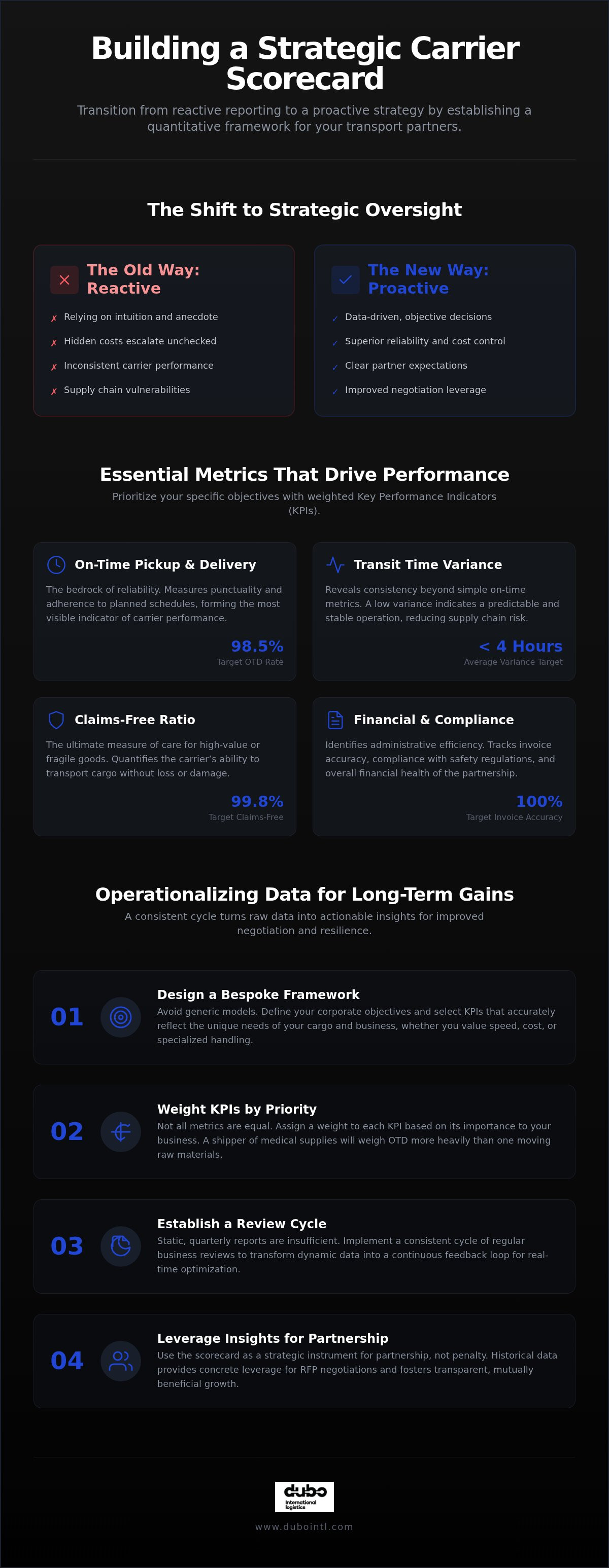
Precision in measurement is the hallmark of a mature supply chain. A carrier scorecard for logistics must reflect your specific operational priorities through weighted Key Performance Indicators (KPIs). Not every shipment carries the same stakes. A shipper moving time-sensitive medical equipment will weigh on-time delivery more heavily than a business moving non-perishable raw materials. Data integrity is paramount; if the figures entering your system are flawed, the resulting strategy will be equally compromised. We recommend a rigorous verification process to ensure that carrier self-reporting matches your internal records. This level of detail is especially critical for specialized transportation, where you must measure handling precision and adherence to specific loading protocols.
Service and Reliability Metrics
These metrics form the bedrock of your carrier relationships. On-Time Pickup (OTP) and On-Time Delivery (OTD) are the most visible indicators, yet they only tell part of the story. You must also measure Transit Time Variance. This reveals whether a carrier is consistently meeting their window or if their success is erratic. A carrier that arrives "on time" by rushing at the last minute may be introducing unnecessary risk. For those moving high-value or fragile goods, the Claims-Free Ratio is the ultimate measure of care. It quantifies the carrier’s ability to move cargo without incident. Our logistics consulting experts often prioritize this metric to ensure that specialized cargo receives the protection it requires.
Financial and Compliance KPIs
Financial metrics identify where administrative friction is eroding your margins. Invoice Accuracy is a frequently overlooked KPI; frequent corrections signal poor internal processes or carrier misalignment. Every manual intervention costs your team time and money. Tracking Freight Spend vs. Budget ensures your logistics projects remain financially viable over the long term. In the North American context, Cross-Border Compliance is a critical differentiator that many generic models ignore. You should measure how efficiently carriers navigate customs and their adherence to regulatory standards. High performance in this area reduces the risk of secondary inspections and ensures a seamless flow across the Canadian and American borders. By focusing on these specific figures, you can realize a more resilient and cost-effective operation.
Designing a Bespoke Scorecard Framework for Your Business
A "one-size-fits-all" carrier scorecard for logistics often fails because it ignores the unique strategic DNA of your business. If your primary corporate goal is market expansion through rapid fulfillment, a scorecard that over-prioritizes cost at the expense of speed will lead to misalignment. You must realize that the design of your framework is a reflection of your organizational values. At Dubo International Logistics (www.dubointl.com), we advocate for a bespoke approach that balances high-level objectives with the practical realities of moving goods across the continent. To avoid data fatigue, select a manageable set of metrics that truly move the needle; tracking too many variables dilutes focus and makes the data difficult to act upon.
For those managing complex shipments, understanding the nuances of Specialized Freight North America is crucial for designing appropriate benchmarks that account for the unique handling requirements of sensitive cargo.
The Logistics Architect Approach to Design
Designing a framework requires mapping the scorecard to the specific stages of the North American cargo journey. This isn't a static process. You need to integrate data from diverse sources, such as GPS tracking, warehouse receipts, and billing systems, to create a 360-degree view of carrier performance. A sophisticated design also accounts for seasonal shifts. For example, a carrier's performance during a Canadian winter or the peak produce season in the Southern United States should be viewed through a lens of seasonal flexibility. This ensures your evaluations remain fair and contextually accurate throughout the year.
Balancing Quantitative and Qualitative Data
Numbers provide the foundation, but they don't capture the entire picture. Soft metrics, such as a carrier's responsiveness during a crisis or their proactive problem-solving ability, are vital components of a healthy partnership. You can quantify this qualitative feedback by implementing standardized surveys for your warehouse and receiving teams. This approach ensures the scorecard reflects the actual colour of the relationship. It transforms the evaluation from a cold statistical exercise into a comprehensive tool that values human excellence and operational commitment alongside raw data. By combining these elements, you create a narrative of performance that supports long-term stability.
Operationalizing Data: How to Realize Long-Term Supply Chain Gains
Data collection represents only the first step in a sophisticated logistics strategy. A carrier scorecard for logistics truly earns its keep when it transforms raw numbers into meaningful operational change. You must move beyond the act of gathering metrics to the art of interpreting them. This process provides the essential leverage needed to negotiate more favourable freight forwarding contracts during RFP season. When you sit at the table with data-backed evidence of a carrier's performance, you're no longer guessing at value. Professional guidance from the seasoned experts at www.dubointl.com can help you refine this transition, ensuring your data leads to tangible, long-term supply chain resilience across North America.
The Review Cycle: From Monthly Checks to Annual Strategy
Establishing a consistent cadence for review is vital to maintaining momentum. For industries with rapid turnover, monthly checks allow you to catch tactical errors, such as recurring pickup delays or minor invoice discrepancies, before they compound. However, the most significant gains are realized during Quarterly Business Reviews (QBRs). These sessions serve as the ideal forum for high-level strategic shifts. They allow you to look at year-over-year trends and identify which partners are genuinely invested in your growth. It's about building a continuous feedback loop. When you provide carriers with long-term performance data, you empower them to improve their service levels and align their operations with your evolving needs.
Fostering Carrier Partnerships through Transparency
Transparency acts as the antidote to the adversarial relationships that often plague the procurement world. Instead of using a carrier scorecard for logistics as a tool for penalization, share the results openly to encourage self-correction. High-performing partners deserve recognition; reward them with increased volume or preferred status on your most critical trade lanes. This approach incentivizes excellence and builds a sense of shared destiny. When underperformance occurs, address it with a professional, data-backed corrective action plan rather than immediate termination. This collaborative focus on growth and mutual success positions your business as a sophisticated partner that values longevity. It ensures your supply chain remains stable even when the broader market is in flux.
If you're ready to turn your logistics data into a competitive edge, contact our strategic consulting team to begin building your custom framework today.
The Consultative Advantage: Why Professional Management Matters
While software can generate a list of numbers, it cannot explain why a carrier failed to meet a deadline during a specific cross-border transition. This is where professional logistics consulting becomes indispensable. A carrier scorecard for logistics is only as effective as the expertise used to interpret it. At Dubo International Logistics (www.dubointl.com), we act as the bridge between raw data and strategic execution. Working with a CIFFA-certified provider ensures that your metrics are viewed through a lens of global standards and rigorous cross-border expertise. We help you identify the "why" behind the numbers, whether the issue stems from a systemic lane failure or a temporary operational bottleneck that requires a tactical shift.
Integrating Scorecards into End-to-End Freight Management
A professional forwarder uses performance data to meticulously curate a reliable carrier network. This vetting process ensures that every partner in your supply chain meets the highest standards of dependability and safety. It provides the peace of mind that comes from knowing your cargo is in the hands of proven professionals who have been evaluated against strict criteria. By maintaining a dynamic carrier scorecard for logistics, we ensure that our carrier network remains agile and responsive to your needs. This integrated approach allows you to focus on your core business while we manage the complexities of movement and carrier accountability.
Strategic Foresight and Logistics Architecture
We move beyond simple historical reporting to embrace predictive supply chain planning. As your logistics architect, Dubo acts as a protective steward of your interests, using data-driven advocacy to ensure your shipments remain on track. We don't just report on what happened; we help you organize your future operations to avoid known pitfalls and realize superior cost efficiency. Whether you require standard freight or Dubo Expedited services for time-critical, specialized cargo, our consultative approach ensures your framework evolves with the market. This forward-looking stance allows you to navigate the complexities of North American trade with quiet confidence. We invite you to optimize your logistics strategy by partnering with a team that values longevity, precision, and the seamless integration of data into daily operations.
Securing the Future of Your Supply Chain Architecture
Building a resilient logistics operation requires a shift from anecdotal decision-making to a disciplined, data-driven methodology. By implementing a bespoke carrier scorecard for logistics, you move beyond simple cost-tracking to realize a higher standard of reliability and operational excellence. You've learned how to define weighted KPIs that align with your specific corporate goals and how to foster transparent partnerships that encourage carrier self-correction. This strategic foresight ensures that your North American trade lanes remain stable, even in a volatile global environment.
Managing the nuances of cross-border movement and unique cargo requirements demands more than just software; it requires a seasoned partner. With CIFFA Certified Expertise and National North American Coverage, Dubo International Logistics provides the Specialized Project Management needed to turn complex performance data into a clear strategic advantage. Ready to realize a more reliable supply chain? Contact Dubo International Logistics today at www.dubointl.com for strategic consulting and freight management. We are committed to acting as the protective steward of your interests, ensuring every shipment moves with precision and purpose.
Frequently Asked Questions
What is a carrier scorecard for logistics?
A carrier scorecard for logistics is a quantitative framework designed to measure and evaluate the performance of your transport partners with objective precision. It moves your operations away from anecdotal evidence and toward data-driven decision-making. By tracking specific metrics like on-time delivery and invoice accuracy, you can identify which carriers truly support your supply chain's health. This structured approach helps you organize your transport data to realize superior reliability and long-term cost efficiency across all trade lanes.
Why is a scorecard essential for Canadian businesses shipping to the USA?
Cross-border shipments introduce unique variables like customs delays and regulatory compliance that require meticulous tracking. A scorecard is essential for Canadian businesses because it quantifies a carrier's ability to navigate these international complexities without introducing unnecessary risk. Measuring cross-border compliance and transit time variance helps you identify partners who maintain seamless movement across the border. This data-driven advocacy ensures your goods reach American markets consistently while minimizing the risk of secondary inspections or administrative friction.
How often should a carrier scorecard be updated and reviewed?
We recommend a dual-cadence approach to ensure your data remains actionable and relevant. You should perform monthly tactical checks to catch immediate issues like recurring pickup delays or minor billing errors before they escalate. For strategic shifts, hold formal Quarterly Business Reviews (QBRs) to analyze long-term trends and partnership health. This regular cycle creates a continuous feedback loop that allows you to realize sustained improvements in carrier performance while maintaining a resilient supply chain throughout the year.
What are the most critical KPIs for specialized or oversized cargo?
When moving oversized or sensitive cargo, the most critical KPIs focus on handling precision and the Claims-Free Ratio. Traditional metrics like speed are often secondary to the safety and integrity of the shipment. You should measure adherence to specific loading protocols and the carrier's responsiveness during complex project management. Tracking these specialized metrics ensures that your unique cargo requirements are met with the highest level of care. Visit www.dubointl.com to learn more about our specialized transportation expertise.
Can a carrier scorecard help reduce my overall logistics costs?
Yes, a well-implemented scorecard identifies hidden inefficiencies that directly impact your bottom line. By tracking invoice accuracy, you can reduce the administrative costs associated with manual corrections and billing disputes. The data also provides significant leverage during RFP season, allowing you to negotiate more favourable contracts based on proven performance rather than empty promises. This strategic oversight helps you organize your freight spend more effectively and realize measurable savings across your entire logistics operation.
How do I introduce a scorecard system to my existing carrier base without damaging relationships?
The key is to position the system as a collaborative tool for mutual growth rather than a tool for penalization. Introduce the scorecard by emphasizing transparency and your commitment to a long-term partnership. Share the results openly with your carriers to encourage self-correction and reward high performers with increased volume or preferred status. This approach fosters trust and ensures that your carrier base understands exactly how to align their service levels with your evolving business needs.
What is the role of a freight forwarder in the scorecarding process?
A professional freight forwarder acts as your logistics architect by meticulously vetting carriers and interpreting complex scorecard data. At Dubo International Logistics (www.dubointl.com), we provide the strategic consulting needed to identify the "why" behind the numbers. We use our national North American coverage to curate a reliable carrier network that meets your specific standards. This consultative advantage ensures that your performance data is transformed into a proactive strategy that protects your interests and supports your growth.
How does CIFFA certification impact carrier evaluation standards?
CIFFA certification ensures that carrier evaluation is conducted according to professional, industry-literate standards of excellence. It signals a commitment to reliability and ethical conduct that protects the interests of Canadian shippers. Working with a CIFFA-certified provider means your logistics framework is built on a foundation of global expertise and rigorous benchmarks. This certification provides the peace of mind that your supply chain is being managed by experts who prioritize precision, compliance, and the seamless movement of cargo.

