

Securing urgent freight forwarding Montreal capacity means choosing between direct Sprinter van transit or dedicated air charters against strict transit time parameters. Border wait times and carrier regulatory compliance decide whether your time-sensitive shipments meet production schedules. You can review complete operational frameworks at www.dubointl.com to coordinate high-priority movement.
Key Takeaways: Secure urgent freight forwarding in Montreal by choosing dedicated hot-shot trucks for regional routes or premium air shipments for long-distance production deadlines.
- Dedicated highway transport often beats air freight timelines on regional cross-border routes from Montreal.
- Skip consolidated LTL when deadlines are strict because hub sorting and re-handling create unpredictable delays.
- Best for plant shutdowns and high-value cargo requiring single-driver dedicated transit to bypass intermediate terminals.
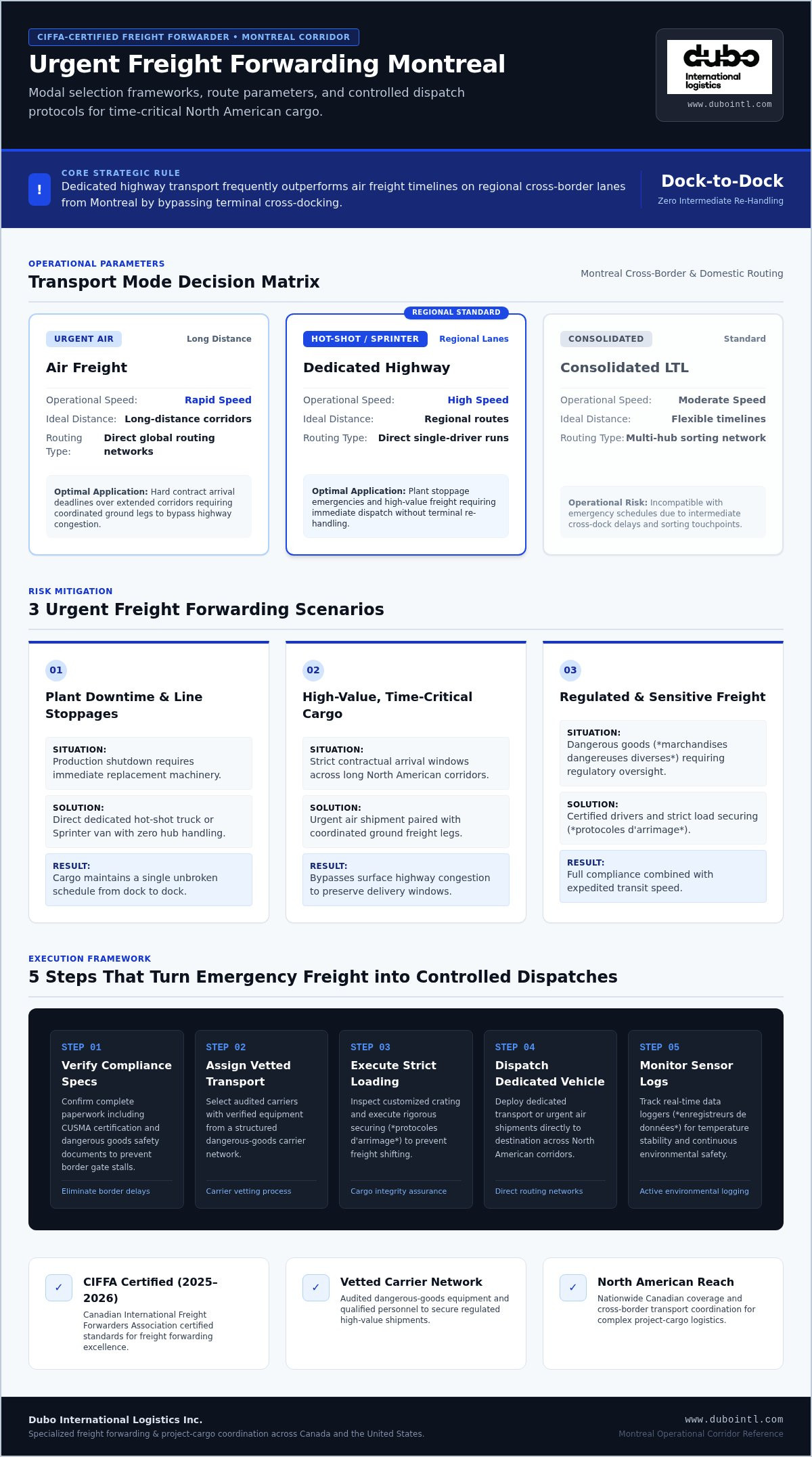
- The article's comparison table shows air freight provides rapid speed while dedicated highway suits regional distances.
Urgent freight forwarding Montreal: 3 scenarios that protect your schedule
Your mode choice for time-critical cargo rests on operational constraints you already know: how far the load must travel, how tight the production window is, and whether the freight is regulated. Match the emergency to the transit method and you protect supply chain continuity instead of gambling on a generic expedite.
Two or three situations show up repeatedly. A plant stoppage on a regional corridor calls for a dedicated hot-shot truck or Sprinter van with no cross-dock. An assembly deadline measured in hours over a long haul calls for urgent air shipments (expédition accélérée premium). Hazardous or delicate freight needs certified drivers and securing the load (protocoles d'arrimage) before speed is even discussed.
Scenario 1: Plant downtime and production line stoppages
When a line is down, you need surface transit that never enters a hub. Premium expedited ground transport uses direct hot-shot trucks or dedicated Sprinter vans, moving replacement machinery from supplier to facility without handling stops. Situation: shutdown. Solution: single-vehicle direct run. Result: the load stays on one schedule from dock to dock.
Scenario 2: High-value, time-critical deliveries
When contract terms lock you to a fast arrival over distance, air freight supplies the velocity you cannot get on the highway. Urgent air shipments move vital cargo on long corridors through specialized global routing networks. Situation: hard deadline, long haul. Solution: direct air with coordinated ground legs. Result: ground traffic is skipped and the contractual window stays intact.
Scenario 3: Regulated and sensitive critical freight
Hazardous materials or delicate components demand regulatory oversight at the same pace as delivery. If you move dangerous goods (marchandises dangereuses diverses), pair certified drivers with precise securing the load. This path fits operations that need compliance and expedited speed in the same move.
Dedicated surface transport fits short regional emergencies; air freight serves long-distance disruptions. Experienced coordination gives you quiet confidence and complete peace of mind on either path.
How transit speed and route parameters decide Montreal outcomes
Your delivery deadline and destination distance decide the mode before any carrier is named. Dedicated air transit covers long corridors quickly; highway trucking covers short-haul regional lanes with fewer variables.
| Transport Mode | Operational Speed | Ideal Distance Parameter |
|---|---|---|
| Air Freight | Rapid speed | Long-distance corridors |
| Dedicated Highway | High speed | Regional routes |
| Consolidated LTL | Moderate speed | Flexible timelines |
Route variables change total transit times across borders. Busy crossings introduce wait times that can stall high-priority cargo, so you plan buffers and alternate gates rather than assuming a fixed clock.
Choosing dedicated transport avoids hub sorting delays. For urgent air shipments, direct routing removes intermediate handoffs. If you move dangerous goods, complete documentation prevents border holds that erase any speed gain. Aligning equipment with route parameters keeps results consistent on sensitive schedules.
If air freight feels automatic for speed, check the map first: dedicated highway transport often beats air timelines on regional cross-border routes. End-to-end freight management preserves cargo integrity and gives you scalable flexibilité with exact execution on each critical shipment. Partnering with a logistics architect for route oversight ties the plan to your timeline constraints without adding extra handoffs. More on this: Reliable Freight Forwarding Services.
5 Steps that turn emergency freight into controlled dispatches
An emergency dispatch from Montreal only works when your logistics provider, the carrier, and border officials share one structured plan. Strategic freight forwarding turns a chaotic request into a controlled, trackable movement.
Emergency dispatches often fail at the loading dock when packaging does not match the structural demands of rapid transit. Verify custom crating before the vehicle arrives.
- Verify compliance specs: Confirm documentation, including CUSMA certificates and safety paperwork for dangerous goods, so the border does not become the delay point.
- Assign vetted transport: Select a carrier with verified equipment from a vetted dangerous-goods carrier network. Safe transport depends on transporters skilled in dangerous cargo, with gear and qualified staff audited before tender.
- Execute strict loading: Oversee securing the load so freight cannot shift during rapid highway or air transit.
- Dispatch expedited vehicle: Deploy dedicated transport, such as urgent air shipments, straight to the destination. Use forwarding coordination to organize rapid transit across North America.
- Monitor environmental data: Track active sensor logs for temperature stability and continuous cargo safety in real time.
Speed only holds when regulatory accuracy holds with it.
Tip: Always verify carrier credentials for dangerous goods handling prior to tendering hazardous cargo.
Why standard LTL fails urgent Montreal timelines
Standard less-than-truckload transit cannot lock a strict delivery window. LTL consolidates cargo from multiple regional shippers on one trailer, which adds hub stops and terminal re-handling. Those transfer points create delays you cannot forecast on busy corridors.
Relying on consolidated hub networks for critical supply chain deadlines is an operational mistake. The financial risk of a line shutdown outweighs the initial saving of shared trailer space. Consolidated transit fits non-urgent, budget-conscious replenishment. Direct urgent air shipments fit time-critical production components that need single-driver dedicated transit.
Multiple cross-dock operations expose pallets to handling damage and extended temps d'attente at regional sorting facilities. Direct cargo movement bypasses intermediate terminals, with securing the load done at origin so chain of custody stays intact. Dedicated logistics assets protect delivery timelines and limit costly disruption. Strategic freight planning matches the transit model to the risk you actually carry. For routing advice on a live shipment, visit www.dubointl.com.
How CIFFA standards separate reliable partners from operational risk
When you evaluate forwarders for urgent air shipments, verified operational standards matter more than brochure speed claims.
A partner with established compliance networks helps critical cargo avoid avoidable transit delays. Standardized operational frameworks, of the kind major carriers apply across borders, keep chain-of-custody tracking continuous from origin to delivery.
Emergency air logistics demands strict regulatory compliance, especially for dangerous goods. Forwarders must enforce carrier vetting and proper cargo protocols, including securing the load. An unvetted provider leaves you with exposure you cannot price after the fact.
CIFFA membership signals strategic foresight and end-to-end freight management built to safeguard emergency supply chains. That association ties day-to-day work to professional standards and specialized expertise. A CIFFA-certified freight forwarder moves high-priority cargo under audited industry standards rather than ad hoc arrangements.
Dubo International Logistics operates under those CIFFA credentials as a stabilizing force on time-critical lanes. Direct operational feedback shows why forwarder reliability decides outcomes when the clock is already short.
Among recent Google reviews, Sun (5★) wrote:
"Great Company, Great staff with great lanes and excellent carrier reps. They are fair organization to work with."
An organized team with strong carrier relationships delivers consistent execution for time-sensitive freight and the peace of mind you need when production depends on the next arrival. Review custom freight options at www.dubointl.com.
Frequently asked questions
What factors influence the price of freight transport in Montreal?
Total operational expenditure depends on cargo dimensions, specialized trailer requirements, route distance, and required speed of dispatch. Fuel surcharges, seasonal capacity shortages, and specialized loading needs like lowbed trailers also adjust the baseline cost. A custom quotation through www.dubointl.com assesses your specific shipment variables accurately.
How fast can an urgent freight forwarding Montreal order be dispatched?
Immediate dispatch times rely on real-time driver availability and rapid carrier assignment. High-priority urgent air shipments can often be mobilized quickly once cargo details and paperwork pass initial safety checks. Delay risk during crucial periods drops when you work with an organized logistics provider.
What specific documentation is required for cross-border emergency shipments?
Cross-border shipments require an accurate commercial invoice, a bill of lading, and proper CUSMA certification documentation to qualify for preferential duty rates. Customs authorities need clear descriptions of all items to clear goods without physical holds. Preparing these documents in advance prevents costly administrative hold-ups at border crossings.
Can hazardous goods be moved under expedited transit service level agreements (SLAs)?
Dangerous goods can move under expedited transit service level agreements (SLAs) when compliant procedures are followed. Carriers with proven dangerous-goods handling experience are selected, and their equipment and trained personnel are verified before the load is tendered. Safety rules take precedence over raw transit speed.
How are door-to-door transit times calculated for high-priority air charters?
Transit times combine ground pickup schedules, airport handling intervals, direct flight hours, and final ground distribution. Unforeseen weather and mandatory driver rest periods will alter these estimates. A CIFFA-certified freight forwarder calculates these timelines using precise flight schedules and ground coordination so you see the full door-to-door picture before the aircraft is booked.
Strategic Freight Coordination in 2026
Urgent freight forwarding Montreal work still turns on the same decisions you faced at the start of this guide: Sprinter versus air, border risk versus schedule, compliance versus improvisation. The CIFFA-certified team manages time-sensitive moves, including urgent air shipments and hazardous materials or dangerous goods. A vetted dangerous-goods carrier network protects operational continuity when the cargo itself carries elevated risk.
Rapid timelines reward proactive planning and specialized transportation services under one end-to-end freight management plan. Reach the advisers at www.dubointl.com for structured Canada quote support matched to your operational requirements in 2026.

