
In 2026, a single clerical oversight on a commercial invoice is enough to trigger a 50% ad valorem tariff or a costly secondary inspection at the border. You've likely noticed that the days of relying on the $800 de minimis exemption are over, leaving many Canadian businesses struggling with increased administrative burdens and rising freight costs. Understanding how freight forwarders streamline cross-border shipping has become a fundamental requirement for any organization looking to maintain a steady supply chain in this volatile environment. At www.dubointl.com, we recognize that the complexity of CUSMA reviews and updated HS codes can feel overwhelming when your primary focus is simply moving goods.
This reference guide will help you master the essential paperwork and compliance frameworks required to realize seamless logistics between Canada and the United States. We will provide a clear checklist of required documents, explain the nuances of pre-clearance systems like PARS and PAPS, and show you how to organize your logistics to reduce stress. By the end of this article, you'll have the strategic foresight needed to turn your shipping documentation from a liability into a competitive advantage. Let's look at the specific frameworks that ensure your cargo remains moving while others are held at the gate.
Key Takeaways
- Realize the critical importance of precise documentation to mitigate the risk of steep 2026 tariffs and avoid costly border inspections.
- Discover how freight forwarders streamline cross-border shipping by integrating PARS and PAPS pre-clearance data into a cohesive logistics strategy.
- Master the essential elements of the Bill of Lading and Commercial Invoice to ensure your cargo meets rigorous regulatory standards.
- Implement a strategic five-step audit process to verify the accuracy of HS codes and compliance frameworks before every departure.
- Learn how partnering with a CIFFA-certified expert at www.dubointl.com provides the professional oversight needed to manage complex international documentation lifecycles.
The Critical Role of Freight Documentation in Canada-US Trade
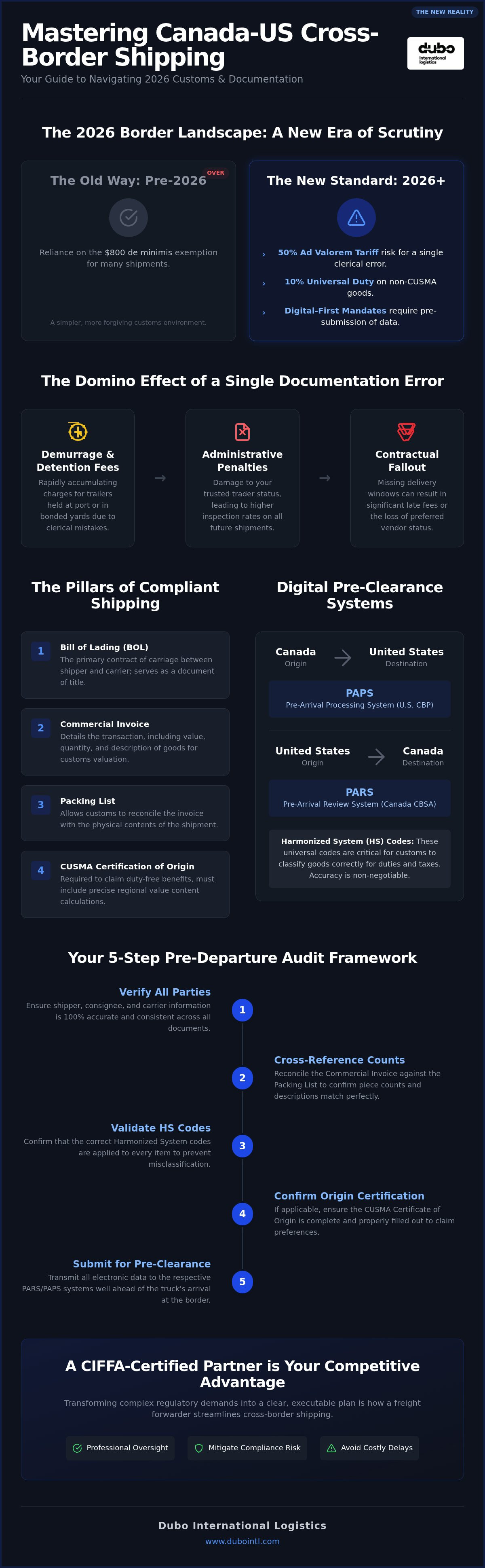
Freight documentation is the legal and regulatory bridge between Canadian and American markets. It acts as the definitive record of what is being moved, who owns it, and how it complies with international law. In 2026, these documents are no longer just administrative requirements; they are the blueprint for a successful shipment. A professional freight forwarder views this paperwork as the primary tool to ensure your cargo moves without friction. With the recent implementation of a 10% universal duty on non-CUSMA goods and the suspension of the $800 de minimis threshold, the margin for error has vanished. This is precisely how freight forwarders streamline cross-border shipping: by transforming complex regulatory demands into a clear, executable plan.
The landscape of trade is shifting toward digital-first mandates from the CBSA and CBP. These authorities now require electronic data submissions long before a vehicle reaches the primary inspection line. Without this digital foresight, your cargo is essentially invisible to the systems meant to clear it. Managing these requirements requires a blend of industry literacy and technical precision that only a seasoned partner can provide.
Understanding the Cost of Non-Compliance
Precision is the only way to realize a frictionless border. A single hour of delay at a port of entry in 2026 can trigger a chain reaction of expenses. Beyond the immediate cost of idle driver time and wasted fuel, shippers face a variety of soft and hard costs that impact the bottom line. Consider these common consequences of documentation errors:
- Demurrage and detention fees: These charges accumulate rapidly when trailers are held for secondary inspections or stuck in bonded yards due to clerical mistakes.
- Administrative penalties: Frequent errors damage your trusted trader status with customs authorities, leading to higher inspection rates and more scrutiny on future loads.
- Contractual fallout: Missing a delivery window at a major distribution centre can result in significant late fees or the loss of preferred vendor status.
The emotional toll of this uncertainty is heavy. Knowing your documents are handled with strategic foresight provides the peace of mind necessary to focus on your core business rather than worrying about a border holdup.
The Partnership Between Shipper and Forwarder
A successful cross-border operation relies on a clear definition of responsibilities. While the shipper is legally liable for the accuracy of the data provided, a professional partner acts as a protective steward of that information. At www.duboexpedited.com, we prioritize the integration of your data into the sophisticated systems mandated by modern customs authorities. This transition from reactive to proactive document management is essential. By auditing files before the truck ever leaves the dock, we help our clients maintain consistency and excellence. You can visit www.dubointl.com to see how our seasoned experts act as your logistics architects, ensuring every detail is meticulously executed for a smooth transit.
The Core Documents for Seamless Cross-Border Shipping
The integrity of your cross-border operation rests upon four pillars of documentation. While we previously established the legal necessity of these records, understanding their specific components is how freight forwarders streamline cross-border shipping for their clients. Each document serves a unique purpose in the eyes of customs officials. The Bill of Lading (BOL) functions as the primary contract of carriage, detailing the terms between the shipper and the carrier while serving as a document of title. Meanwhile, the Packing List acts as the physical bridge, allowing officers to reconcile the itemized invoice with the actual contents of the trailer. To ensure compliance with U.S. import and export regulations, these documents must be perfectly synchronized to avoid discrepancies that trigger manual audits.
The CUSMA Certification of Origin remains a critical tool for realizing duty-free benefits. Simply stating a product is "Made in Canada" is insufficient in 2026. Precise regional value content calculations are required to qualify for preferential treatment, especially given the new 10% universal duty on non-compliant goods. Ensuring these certificates are current and accurate is the only way to protect your business from unexpected tax assessments at the border.
Mastering the Commercial Invoice
Vague descriptions are the primary cause of border inspections. When an officer sees "parts" or "equipment" on an invoice, it signals a lack of precision that invites scrutiny. A professional invoice must include the transaction value, the specific currency (clearly distinguishing between C$ and USD), and the country of origin for each line item. Descriptions should be exhaustive; instead of "metal brackets," use "stamped steel mounting brackets for industrial HVAC systems." This level of detail satisfies both CBSA and CBP requirements, ensuring a smooth transition through primary inspection lines. Avoid common errors by ensuring every single item is accounted for and valued accurately to prevent administrative penalties.
Documentation for Specialized and Oversized Cargo
Specialized transportation requires a level of documentation that exceeds standard freight. Oversized loads often necessitate provincial and state permits that must be linked directly to the BOL. If you're moving sensitive machinery or non-standard cargo, your documentation must reflect the specific regulatory filings required for those goods. This is where the expertise of a "logistics architect" becomes invaluable. Managing the end-to-end lifecycle of these complex files is a core part of our specialized transportation services. For those handling unique cargo requirements, consulting with a professional at www.dubointl.com can help you organize these permits with strategic foresight.
Navigating Pre-Clearance Systems: PARS, PAPS, and HS Codes
The efficiency of a border crossing is often decided long before the wheels of a truck touch the primary inspection line. Modern logistics relies on a sophisticated digital handshake between carriers, brokers, and customs authorities. This digital integration is exactly how freight forwarders streamline cross-border shipping, ensuring that the data arrives well in advance of the physical cargo. The foundation of this system is the Harmonized System (HS) code, a global language of product classification that dictates duty rates and admissibility. In 2026, with the World Customs Organization frequently updating these codes to reflect new technologies, staying current is a matter of financial survival. For those moving goods into the country, the Canadian import guide provides the regulatory baseline, but the practical execution requires a deeper understanding of pre-clearance mechanics.
Two primary systems govern this process: PARS and PAPS. The Pre-Arrival Review System (PARS) is the standard for freight entering Canada, while the Pre-Arrival Processing System (PAPS) serves the same function for U.S. bound cargo. While a customs broker is responsible for the final entry filing, a professional forwarder coordinates the entire data lifecycle. They ensure the carrier has the correct barcodes and that the manifest data is transmitted at least one hour before arrival, as mandated by current enforcement standards. This foresight prevents the "border-side wait" that can derail tight delivery schedules and inflate operating costs.
The Science of HS Code Classification
A single digit change in an HS code can alter your duty obligations from zero to a 50% ad valorem tariff under current 2026 proclamations. Precision in classification is not a one-time task but an ongoing requirement for compliance. Many businesses leverage logistics consulting to audit their catalogues and ensure consistency across all documentation. Using outdated "basket codes" for products that now have specific classifications is a common trigger for customs audits. At www.dubointl.com, we emphasize that your classification strategy must be as robust as your physical supply chain to protect against unexpected administrative penalties.
Pre-Arrival Systems in Practice
The digital link between the carrier and the broker is maintained through a unique cargo control number, typically presented as a barcode on the lead sheet. If the PARS or PAPS data isn't submitted and accepted at least one hour before the truck reaches the gate, the driver will be turned away or sent to secondary inspection. Troubleshooting these failures requires immediate action and a direct line of communication between all parties. By verifying that the eManifest is "matched" in the system before the driver arrives, forwarders eliminate the uncertainty that often plagues cross-border trucking. This methodical approach ensures that the release happens in minutes rather than hours, maintaining the movement-oriented flow your business requires.
A Strategic Framework for Managing Freight Documents
A robust framework also accounts for the long-term nature of trade compliance. In Canada, you are required to organize and maintain records for six years following the date of import; failing to produce these during a CBSA audit can lead to significant administrative penalties. Record keeping is not just about compliance; it's about business continuity. Maintaining these files for the mandatory period protects your trusted trader status and provides a clear audit trail for financial reporting. At www.dubointl.com, we help clients build these archival systems so they remain prepared for scrutiny long after the cargo has reached its destination.
Step-by-Step Document Verification
Every shipment deserves a rigorous five-step audit before it leaves the dock. Start by cross-referencing the Bill of Lading with the Commercial Invoice to ensure that quantities, weights, and descriptions match exactly. Even a minor discrepancy in pallet counts can trigger a secondary inspection. Next, verify the Importer of Record (IOR) details for every cross-border move. Errors here often lead to incorrect duty assessments or shipments being rejected at the gate. Finally, ensure that all required signatures and dates are present and legible. An unsigned document is essentially invalid in the eyes of a CBP officer, and catching these errors at the point of origin is the only way to realize a frictionless transit.
Digital Transformation in the Supply Chain
Digital transformation is no longer a luxury for North American logistics. The rise of e-BOLs and digital certificates has significantly reduced the human error associated with manual data entry. This integration is another way how freight forwarders streamline cross-border shipping, as it allows for the instantaneous transmission of data to customs authorities. Integrating these digital tools into your broader specialized transportation services allows for a more agile response to regulatory changes. By automating the flow of information, you realize a level of precision that manual processes simply cannot match. If you are ready to modernize your documentation process, you can consult with our team to develop a bespoke framework for your business.
Partnering with a CIFFA-Certified Forwarder for Compliance
Choosing a partner to manage your international trade is a decision that impacts your operational stability and your bottom line. In Canada, the gold standard for this partnership is membership in the Canadian International Freight Forwarders Association (CIFFA). This certification isn't merely a badge; it's a commitment to a rigorous code of ethics and a high level of professional excellence. At Dubo International Logistics, our CIFFA membership ensures that we adhere to the highest standards of regulatory compliance and cargo coordination. This professional foundation is central to how freight forwarders streamline cross-border shipping, providing you with the peace of mind that your interests are being protected by a steward who understands the minute details of global movement.
We approach every shipment as a "logistics architect," designing bespoke solutions that account for the unique requirements of your cargo. Whether you're moving specialized machinery or high-volume commercial goods, we manage the end-to-end documentation lifecycle with strategic foresight. By trusting a seasoned expert to navigate the complex logistics architecture of the Canada-US border, you eliminate the stress of potential holdups and administrative penalties. Our focus remains on acting as a stabilizing force for your business in an increasingly complex global environment, ensuring every filing is meticulously executed.
Why Professional Forwarding Outperforms In-House Efforts
Managing cross-border compliance in-house often requires a significant investment in specialized knowledge and constant monitoring of regulatory updates. With the 2026 trade landscape shifting rapidly, the overhead required to maintain this expertise can be prohibitive for many Canadian businesses. Outsourcing these complex tasks to a dedicated team allows you to reduce internal costs while gaining access to the latest industry literacy and technical support systems. For a deeper look at this decision, you can read our guide on Freight Forwarding vs. In-House Logistics: A Strategic Comparison for 2026. This transition allows your team to focus on growth while we handle the intricacies of how freight forwarders streamline cross-border shipping through professional document management.
The Dubo Commitment to Seamless Delivery
Our methodical approach ensures that every document is precise and every carrier is coordinated for a seamless transit. We don't just move freight; we provide the professional oversight needed to realize a frictionless border crossing every time. You can visit www.dubointl.com to learn more about our specialized transportation services and how we can support your unique logistics needs. Additionally, for those with time-sensitive requirements, we offer expedited shipping options that maintain our high standards of document precision even under tight deadlines. By partnering with us, you gain a dedicated guide through the complexities of North American trade, backed by a commitment to reliability and excellence.
Securing Your Supply Chain for 2026 and Beyond
The landscape of Canada-US trade continues to evolve with stricter enforcement and complex digital mandates. Success in this environment requires more than just moving cargo; it demands a meticulous approach to data integrity and strategic foresight. To better protect your sensitive trade data, you can explore ISO 27001 Information Security Management to improve your organizational resilience. By mastering core documents and navigating pre-clearance systems with precision, you protect your business from the costly delays that have become common in 2026. This level of coordination is exactly how freight forwarders streamline cross-border shipping, acting as a stabilizing force between your operations and international regulatory bodies.
As a CIFFA member specializing in North American cargo coordination, Dubo International Logistics provides the expertise in complex cross-border compliance necessary to realize a frictionless border. We invite you to Request a Professional Logistics Consultation at www.dubointl.com to see how our logistics architects can protect your interests and optimize your documentation lifecycle. With the right partner, you can stop reacting to border challenges and start moving forward with quiet confidence. Let's work together to ensure your goods reach their destination without unnecessary friction.
Frequently Asked Questions
What are the most common freight documents required for Canada-US shipping?
The four fundamental documents for any cross-border move are the Bill of Lading, the Commercial Invoice, the Packing List, and the CUSMA Certificate of Origin. These records provide the legal framework for the shipment and the data required for customs clearance. In 2026, ensuring these documents are synchronized is the only way to avoid secondary inspections and terminal storage fees. You can find more details on document organization at www.dubointl.com.
How do I determine the correct HS code for my specialized cargo?
Determining the correct code requires referencing the current 2026 Customs Tariff schedules which reflect the latest global updates from the World Customs Organization. Using a generic code for specialized machinery often leads to audits or the application of the new 10% universal duty. Professional logistics consulting is the most reliable way to audit your product catalogue and ensure each item is classified with strategic foresight to minimize duty exposure.
What is the difference between a Canadian Customs Invoice and a regular Commercial Invoice?
A Canadian Customs Invoice is a specific document required by the CBSA for commercial shipments valued over C$2,500 that do not already have a commercial invoice containing all 25 required data fields. This is one way how freight forwarders streamline cross-border shipping, as they verify that your standard billing documents meet these rigorous Canadian standards. Ensuring these fields are populated correctly prevents your cargo from being held for manual data entry at the border.
Who is responsible for providing the Certificate of Origin under CUSMA?
Under the current CUSMA framework, the certification of origin can be completed by the exporter, the producer, or the importer of the goods. While the exporter typically provides this data, the importer is ultimately liable for the accuracy of the claim when seeking duty-free treatment. It's essential to maintain the supporting regional value content calculations to prove eligibility during a post-clearance audit, especially with the heightened scrutiny seen in 2026.
What happens if there is a mistake on my Bill of Lading at the border?
A mistake on the Bill of Lading, such as an incorrect weight or pallet count, often triggers an immediate secondary inspection and trailer grounding. These errors cause a chain reaction of costs, including driver detention fees and potential administrative penalties from customs authorities. Catching these discrepancies through a pre-departure audit is a core part of how freight forwarders streamline cross-border shipping to ensure a frictionless transit for their clients.
Is a digital copy of freight documents acceptable for customs clearance in 2026?
Digital documentation is now the primary standard for both CBSA and CBP through mandated eManifest systems like PARS and PAPS. While a physical lead sheet with a barcode is still carried by the driver, the actual clearance is processed using the electronic data transmitted by your forwarder or broker. This digital-first environment reduces human error and allows for the seamless movement of goods across the border in minutes rather than hours.
How long should I keep copies of my cross-border shipping documents?
In Canada, you are legally required to maintain all import and export records for a period of six years plus the current year. This includes the Bill of Lading, invoices, and any certificates of origin used to claim preferential tariffs. Organizing these files in a centralized digital centre ensures you can produce them quickly during a customs audit. Dubo International Logistics helps clients establish these robust archival systems to ensure long-term compliance.
Why should I use a CIFFA-certified freight forwarder for my documentation?
CIFFA certification ensures that your logistics partner adheres to the highest professional standards and ethical practices in the industry. This membership acts as a guarantee of industry literacy and reliable service, positioning the forwarder as a protective steward of your interests. Partnering with a seasoned expert at www.dubointl.com provides the peace of mind that your complex cross-border documentation is handled with the precision of a true logistics architect.

