

For most Canadian businesses, freight rates are worth reviewing annually, with earlier negotiations when shipping volumes, routes, or service needs change substantially. Knowing how to negotiate freight rates in Canada starts with timing the review and supporting your position with clear shipment records. High-volume and seasonal shippers may benefit from reviewing terms more often.
A lower quoted rate only helps when the service meets your operating needs. Transit time, delivery requirements, capacity, and additional charges all affect an agreement’s value, so comparing base rates alone can leave important details out of the decision.
This guide explains how to compare carriers and service levels, set a realistic budget, assess capacity, and use volume commitments effectively. You’ll also learn what to review before negotiations and when changing shipment patterns should prompt a fresh discussion, giving you a sounder basis for decisions across Canadian freight lanes.
Key Takeaways
- Compare the full service offer, not just the base rate: transit time, delivery requirements, surcharges and shipment visibility all affect value.
- Review rates annually, and reopen negotiations sooner when your shipping volume, lanes or service needs change substantially.
- Set a realistic budget and bottom line before discussions, using shipment history and a clear view of the charges that may apply.
- Assess carrier performance and available capacity alongside operational fit, including how well the carrier can handle your cargo and route.
- Share forecasts and consider repeat lanes, flexible delivery windows or consolidated shipments to help carriers plan capacity efficiently.
1. Comparing carriers and service levels
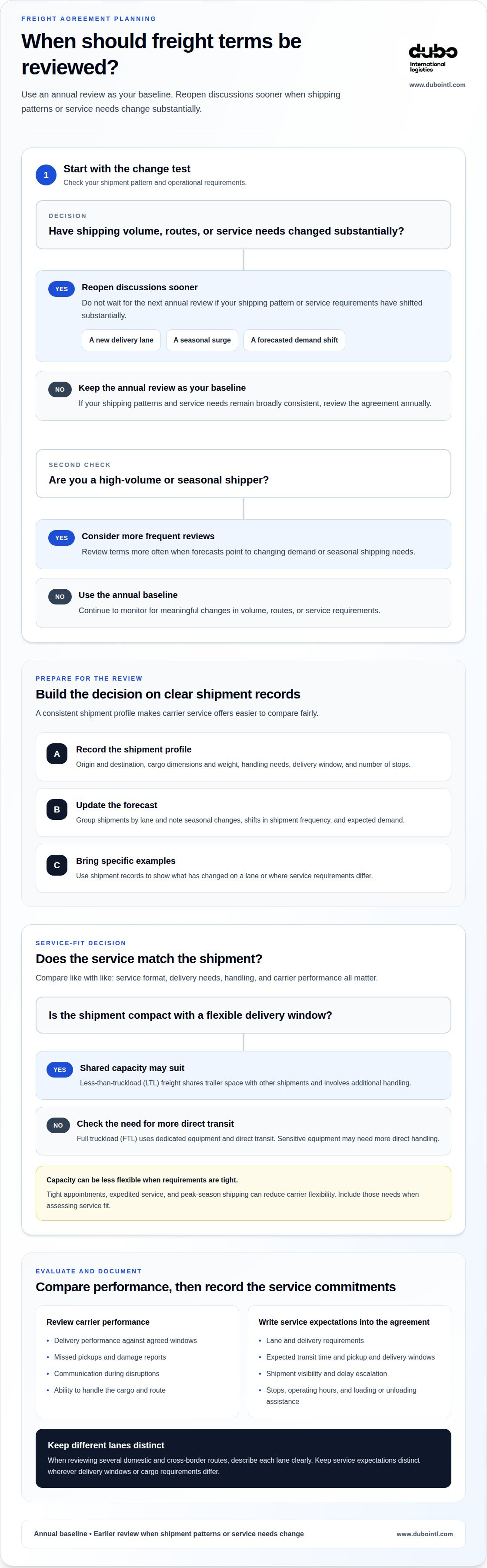
Compare carriers using the same shipment details, not a broad lane estimate. Record the origin, destination, cargo dimensions and weight, handling needs, delivery window, and stops. Freight rates vary by mode, package type, weight, and distance. Low-density, oversized, or awkward freight can take up more trailer space and affect the rate. A consistent shipment profile makes quotes easier to compare fairly.
Match the service to the shipment. Less-than-truckload (LTL) freight shares trailer space with other shipments and involves additional handling. Full truckload (FTL) pricing covers dedicated equipment and direct transit. A compact shipment with a flexible delivery window may suit shared capacity, while sensitive equipment may need more direct handling. Tight appointments, expedited service, and peak-season shipping can reduce carrier flexibility and increase rates.
Compare the full service offer as well as the quoted rate. Ask each carrier to state expected transit time, pickup and delivery windows, shipment visibility, and how delays are escalated. Confirm the number of stops, operating hours at both locations, and whether loading or unloading assistance is available. Put these details in the agreement so you can compare equivalent service commitments, not just differently formatted quotes.
Assess reliability using your own shipment records. Compare each carrier’s delivery performance against agreed windows, along with missed pickups, damage reports, and communication during disruptions. A lower quote may not suit a lane if repeated delays disrupt production or customer appointments. Match the evidence to the shipment: temperature-sensitive products, fragile equipment, and oversized machinery each require appropriate handling capabilities.
Bundled shipping services can also shape negotiations. If your business ships across several domestic lanes and cross-border routes, present those patterns together. Ask carriers to price each lane clearly and explain how service terms apply across the shipment mix. Keep terms distinct where delivery windows or cargo requirements differ. This lets you assess the full agreement without assuming every route should have identical rates or service conditions.
Rail shipments follow a separate Canadian process. According to the Government of Canada, Part III of the Canada Transportation Act governs railway transportation and arbitrations. A Canadian Service Level Arbitration decision sets service terms for one year unless the shipper and railway agree to a different period. This applies to railway service-level disputes, not ordinary negotiations with trucking carriers. For rail freight, distinguish arbitration terms from a carrier’s commercial agreement before comparing service commitments.
2. How often should I negotiate freight rates?
Use an annual review as your baseline. Reopen discussions sooner when shipment volume, routes, or service requirements change substantially. High-volume and seasonal shippers may renegotiate more often, especially when forecasts point to a shift in demand. A new delivery lane or seasonal surge, for example, can change the capacity required under an existing contract. Include review clauses in longer agreements so changing volumes or routes do not leave your terms inflexible.
Review the full charge structure, not just the base rate. Request a detailed breakdown of fuel surcharges, accessorial charges, detention, demurrage, minimum charges, and adjustment clauses. Confirm how often rates can change and what triggers a change. For a recurring lane, compare invoices with the agreed terms and flag any new surcharge or charge absent from the original breakdown.
Put every negotiated term in writing. Specify the lane, base rate, fuel surcharge treatment, accessorials, service requirements, payment terms, and dispute-resolution process. Define how an adjustment is calculated, when it takes effect, and how much notice the agreement requires. If the contract refers to a rate index or another benchmark, name it and specify the exact adjustment method. Do not rely on an informal reference to a market index.
For Canadian railway shipments, the Canada Transportation Act governs railway transportation and arbitrations, according to the Government of Canada. Canadian railways must give 30 days’ notice before increasing a rate in a tariff. These railway provisions differ from ordinary negotiations with trucking carriers, so identify whether the shipment moves by rail or truck before applying a contract term or rule.
Distance, fuel, lane conditions, and shipment size all affect freight rates in Canada. Rates also respond to transportation and insurance costs, demand, market trends, and geopolitical conditions. A remote delivery may involve empty miles, while a larger or awkward shipment can use trailer capacity less efficiently. Compare route, mode, weight, and dimensions before treating two quotes as equivalent.
Small businesses can strengthen negotiations with focused records, even without large shipping volumes. Group invoices by lane, note recurring accessorials, and forecast seasonal changes. Then request clear terms for the routes and services you use most often. Where operations allow, a business with limited volume can offer flexible pickup or delivery windows, helping carriers plan capacity without promising loads it may not ship.
Before renewing, follow a short review process: compare invoices with the current contract, list new or disputed charges, and update the shipment forecast. Bring specific examples, such as a repeated detention charge or a lane with changed frequency, instead of asking generally for a rate reduction. Agree on written adjustment rules and a future review point. This keeps discussions grounded in actual shipment activity and creates a clear record for both parties.
3. Setting a freight-rate budget and bottom line
Set your budget before requesting a revised rate. Separate the amount available for routine shipments from the limit for urgent or specialized moves. Then define the rate and service conditions you can accept. A flexible delivery window, for example, may support a different negotiation than a shipment tied to a production deadline. A clear budget is a practical starting point for learning how to negotiate freight rates in Canada.
Prepare shipment records before requesting Canadian freight quotes. Review six to twelve months of shipping activity, including invoices, accessorial summaries, lane data, and seasonal forecasts. Add shipment weight, dimensions, stops, pickup and delivery details, and special handling instructions. This gives carriers a consistent profile to price and helps you explain where your shipping pattern has changed.
Ask each carrier to identify the base rate and what it covers. Separate core transportation from fuel surcharges, accessorial charges, and other potential adjustments. For example, a quote should clarify whether a delivery appointment or additional stop changes the rate. Compare proposals using identical shipment details, then assess the full agreement rather than treating the base rate as the complete amount billed.
Build a competitive comparison around your operating needs, not a single target figure. Record each proposal’s included services, adjustment terms, payment schedule, and dispute process. If a carrier offers a lower base rate but excludes a service your route requires, the proposals are not equivalent. Set a walk-away point that reflects both your budget and the minimum service conditions your operation needs. These criteria offer a practical framework for deciding how to negotiate freight rates in Canada.
For rail shipments, Canadian railways must give 30 days’ notice before increasing a rate in a tariff. Keep tariff changes distinct from negotiated truck agreements, and note the effective date when reviewing a rail shipment. For any contract, identify how rate adjustments work, what circumstances trigger them, and whether the written terms explain the method clearly.
Risks arise when a quote leaves charges or service obligations unclear. A base rate without a detailed breakdown makes later invoice comparisons difficult, while vague adjustment clauses can lead to disagreement about when a change applies. Before accepting terms, document the shipment scope, payment schedule, included services, and dispute process. Keep the signed agreement and supporting quote together for invoice reviews.
Use a simple decision sequence: confirm the shipment profile, compare the base rate and included services, test the proposal against your budget, and record exceptions in writing. If no proposal meets your bottom line, revise the service window or shipment plan where operations allow. Don’t commit to volume or timing your business can’t support; a competitive agreement must remain workable after the negotiation ends.
4. Assessing carrier performance and capacity
A competitive rate must fit both the carrier’s operating capacity and your shipment requirements. Freight pricing reflects operational risk and efficiency, not distance alone. Before negotiating, compare carrier performance, competing rates, shipment volume, and cargo handling needs. Use lane-specific records rather than an overall service rating. A carrier that performs well on a regular pallet route may not suit an oversized equipment shipment.
Compare actual shipment outcomes with the service you require. Track missed pickups, late arrivals, damage reports, and how promptly the carrier communicates disruptions. If a delivery appointment supports a production schedule, for example, review that lane’s appointment performance separately. Knowing where service falls short helps you discuss a specific remedy, such as clearer escalation steps or a revised delivery commitment, rather than making a general complaint.
Capacity can vary by route and timing. Ask how often freight is available on the lane and whether the carrier can accommodate your planned shipping pattern. A route with regular departures may suit predictable replenishment, while infrequent availability can create scheduling pressure. Compare available equipment with the shipment’s dimensions, weight, and handling needs. These details help distinguish a suitable service from a low rate that cannot meet your operational requirements.
Evaluate the carrier’s ability to manage the shipment’s practical demands. Labour requirements, equipment type, cargo handling, and operating scale all affect how a carrier plans a move. A fragile machine, for example, may need a different handling approach from standard palletized freight. Ask how the proposed service accounts for loading, transit, and delivery conditions. A mismatch can increase operational risk even when the service looks suitable on paper.
Include the consequences of delays in the discussion. Ask whether late delivery leads to a penalty or charge, and document the applicable terms in the agreement. Clarify how the carrier reports a delay, who receives the notice, and what escalation process follows. If a shipment has a narrow delivery window, compare that risk with the carrier’s performance on the same route. This makes reliability a defined part of the negotiation.
Bring evidence to the rate discussion. For each lane, summarize shipment frequency, volume, cargo type, service issues, and competing offers based on comparable requirements. Then identify the operational change you want, such as dependable capacity, suitable equipment, or clearer delay terms. A recurring shipment with stable volume, for example, may support advance capacity planning. Keep requested commitments realistic and record how performance will be reviewed.
Consider carrier capacity and performance together when making the final decision. A rate that fits the budget but leaves a critical route exposed to missed pickups may not serve your business well. Compare the carrier’s capabilities with your shipment profile, then weigh service records and written commitments against operational risk. This gives negotiations a practical basis and keeps service expectations aligned with your freight plan.
5. Volume commitments and consolidation
Repeat lanes can make carrier planning more predictable. Regular shipments help carriers schedule drivers and equipment, which may create room to discuss a lower rate. Start with lane-level records: identify recurring origins, destinations, shipment types, and likely timing. Then ask whether pricing changes when those shipments are planned together. Keep any commitment tied to freight your business can reasonably tender.
Share forecasts showing steady volume as well as seasonal shifts. A carrier that can plan for a predictable increase may organize capacity before demand rises. For example, a manufacturer expecting busier outbound shipments during a seasonal production cycle can share a forecast and discuss the affected lanes. Distinguish firm plans from estimates, and document how forecast changes affect the agreement. Clear expectations help prevent optimistic projections from becoming unrealistic commitments.
Consolidation may make individual shipments more efficient. If several orders move from the same origin to nearby destinations, compare combining them with sending separate loads. Consolidation can improve trailer use, but timing, delivery sequence, cargo compatibility, and handling requirements still matter. A shipment that must arrive promptly may not suit a plan that adds waiting or extra handling.
Flexible delivery windows can also help carriers plan capacity. If your receiving schedule allows a broader window, discuss whether that flexibility supports different terms. A shipment that can arrive over several business days, for instance, may give a carrier more room to match equipment and routing. Record the agreed delivery window and any appointment requirements. Flexibility should not obscure a firm deadline that affects production or customer commitments.
For multiple loads, ask whether a volume discount applies and what conditions govern it. Clarify whether the offer depends on a minimum shipment pattern, specific lanes, or a defined commitment period. Confirm how missed or reduced volume affects the rate. The written agreement should explain the calculation and service terms instead of relying on a general promise of savings.
Build a proposal around evidence. Combine lane history, shipment frequency, forecast changes, and realistic delivery flexibility into a concise plan. Separate consistent freight from seasonal or uncertain demand, then identify which shipments can support a commitment. This gives the carrier a clearer picture for planning and helps you avoid promising volume that may not materialize.
Assess consolidation based on the full shipment outcome, not trailer use alone. Check whether combining loads changes delivery timing, handling steps, or the number of stops. A lower rate per shipment may not suit a time-sensitive order if the revised schedule disrupts operations. Compare the proposed arrangement with your actual delivery needs, then document final volume assumptions and service expectations.
Dubo International Logistics: Freight forwarding
Dubo International Logistics helps businesses coordinate freight forwarding when routes, shipment requirements, or multiple carriers make planning more complex. Its logistics consulting supports reviews of freight needs, service terms, and shipment patterns. Specialized transportation services address cargo with distinct handling requirements, including oversized machinery and delicate equipment.
Consider a logistics partner when rate discussions involve more than a routine shipment or require coordinated planning across Canadian and cross-border routes. Clear shipment details and objectives provide a practical starting point for planning your needs.
For support with freight planning, contact Dubo International Logistics or visit www.dubointl.com.
Make your next freight agreement a planning tool
Give your freight decisions a clear internal owner. Define who can approve a service change, authorize an exception, or weigh a delivery trade-off against production needs. With responsibilities clear, your team can respond consistently instead of making rushed decisions shipment by shipment.
A practical next step in learning how to negotiate freight rates in Canada is aligning the people responsible for procurement, shipping, and operations on the same decision criteria. That alignment helps turn negotiated terms into workable choices across the business.
For support with freight planning, contact Dubo International Logistics. A thoughtful discussion can help you identify a suitable next step for your shipping requirements.
Frequently Asked Questions
How often should I negotiate freight rates?
Start negotiations early enough to complete internal approvals before a new agreement takes effect. The right timing depends on your procurement calendar, renewal date, and the review time your finance and operations teams need. A company with several approvers, for example, can set an internal decision date ahead of renewal. This leaves time to assess proposed terms instead of letting an expiring agreement force a rushed choice.
Are contract rates better than spot rates?
Neither option is automatically better; the right fit depends on how your business manages uncertainty. Consider how each rate structure affects budgeting, shipment authorization, and exposure to unexpected demand. A contract can help plan freight with stable requirements, while spot purchasing may suit shipments outside an established plan. Decide which shipments belong in each category, then align internal approvals accordingly.
How do Canadian shippers negotiate freight rates with carriers?
Canadian shippers can make negotiations more productive by presenting choices, not just asking for a lower rate. Identify essential service conditions and where your operation has flexibility. For example, offer a choice between a firm delivery window and a broader one, with service expectations clearly stated for each. This gives both parties a practical basis for discussing trade-offs without obscuring business priorities.
How can I compare and negotiate quotes from Canadian freight carriers and brokers?
Clarify who is responsible for coordinating the shipment and handling operational questions. A quote from a carrier and one from a broker may describe different responsibilities, even if both cover the same route. Confirm who will communicate shipment updates, coordinate changes, and serve as the contact when an exception occurs. Recording these responsibilities helps your team compare the working arrangement, not just the quoted transportation service.
What accessorial charges should I negotiate in Canadian freight contracts?
For charges tied to events at pickup or delivery, negotiate how the event will be documented. For example, agree on what records support a detention charge and how your team can compare them with the shipment timeline. You can also define whether non-standard services require prior approval. These terms help staff assess unexpected charges and reduce disputes caused by different interpretations of what occurred.
How do fuel surcharges work for freight shipments in Canada?
Ask whether a surcharge can move both upward and downward under the same calculation method. Confirm the reference used, when an adjustment takes effect, and how the calculation appears on shipment invoices. A written method, for example, should let your team trace a surcharge change to its stated basis rather than treating it as an unexplained addition. Review fuel adjustments separately from other contract changes.
How do spot rates compare with contract rates for Canadian freight?
Use a spot quote as a comparison point when reviewing a proposed contract renewal, but compare equivalent service conditions and shipment details. A single quote covers a specific shipment decision, while a contract sets terms for freight within its scope. If they differ, identify whether the gap comes from timing, service requirements, or contract coverage. This helps you assess the proposal without treating one quote as a guaranteed future rate.

