

A machine can fit on a trailer and still be a poor fit for the shipment plan. For Canadian buyers, choosing a freight forwarder for industrial machinery means looking beyond the transport booking to the equipment’s dimensions, handling needs, route and handoffs.
Oversized, delicate or temperature-sensitive machinery can call for careful coordination. Missing details about its configuration, packaging or delivery site can affect carrier arrangements and the plan at each stage. This guide explains how to assess your freight requirements, compare forwarding support and prepare a coordinated shipment.
You’ll find practical steps for documenting machinery dimensions and handling considerations, aligning carriers with transport requirements, and maintaining visibility as the shipment progresses. You’ll also learn what to look for in a forwarding partner beyond general service claims. Dubo International Logistics Inc. coordinates specialized transportation and project-cargo logistics across Canada and North America, using carrier coordination and tracking systems to support shipment planning. Learn more at www.dubointl.com.
Key Takeaways
- Assess dimensions, weight, fragility, packaging and delivery-site conditions before planning transport.
- A freight forwarder for industrial machinery coordinates cargo details, carriers, route planning and shipment information, not just a transport booking.
- Compare forwarding plans by how clearly they address machinery requirements, carrier coordination, shipment visibility and communication.
- Gather accurate measurements, loading details and packaging information to give the shipment plan a clear foundation.
- Dubo coordinates specialized machinery and project-cargo movements across Canada and North America. Learn more at www.dubointl.com.
Why industrial machinery shipments need a freight forwarder
Machinery freight forwarding is the strategic coordination of equipment, carriers and shipment information from origin to delivery. A freight forwarder brings these elements into one plan, taking account of the cargo rather than treating the job as a routine transport booking. For a general overview of the role, see What is a freight forwarder?
The distinction matters because a machine’s dimensions, weight, fragility and delivery conditions can shape how it should move. A booking based only on pickup and destination addresses may not account for the equipment’s configuration, suitable lifting points, packaging needs or access constraints at the receiving site. A freight forwarder for industrial machinery coordinates these details with carrier arrangements and shipment information so the plan reflects the actual cargo.
Good coordination starts with reliable cargo details. Accurate information helps the forwarding team assess transport requirements and identify questions to resolve before the shipment is underway. This is especially useful when a move requires specialized transportation, involves several handoffs or needs to align with an installation or production schedule.
What makes industrial machinery different to ship?
Machinery is not one uniform type of cargo. An oversized unit may need a different transport approach from delicate equipment. A machine’s shape and configuration can also affect how it is positioned, secured and handled. Provide details early about lifting or support points, components that need protection, and any handling restrictions.
Heavy assembly tools and large-scale stamping presses, for example, call for cargo-specific coordination. Their weight and configuration inform carrier and transport planning, while sensitive components and handling instructions need to be communicated across the shipment’s handoffs. The plan should reflect the machinery rather than assume a general freight booking covers every requirement.
When does a machinery shipment need coordinated forwarding?
Coordinated forwarding is particularly useful when equipment requires specialized transportation, passes between multiple carriers or must fit into an installation or production schedule. A shipment moving across Canada or North America may involve several stages. Consistent cargo information and clear handoff arrangements help keep the movement organized.
Share the shipment details early, including dimensions, weight, configuration, packaging and delivery conditions. Explain schedule constraints and what the receiving site needs to know. This gives the forwarder a basis for coordinating carriers, considering route and handling requirements, and tracking the shipment as it progresses. For project cargo, planning the connections between stages is part of the movement, not an afterthought.
How a freight forwarder plans industrial machinery transport
A machinery transport plan takes shape in stages. The forwarder gathers shipment facts, considers the route and equipment requirements, and reviews handling needs, delivery conditions and timing. With those inputs, the forwarder coordinates carriers and handoffs, shares relevant shipment information, and monitors progress through available tracking systems.
Complete cargo information gives the forwarder a reliable basis for matching transport arrangements to the equipment, route and delivery requirements. If a measurement or weight is still an estimate, label it clearly rather than presenting it as confirmed. That distinction helps identify which details need to be verified before carrier arrangements are finalized.
What shipment details should the planning process capture?
Start with the information that describes the cargo and how it will move:
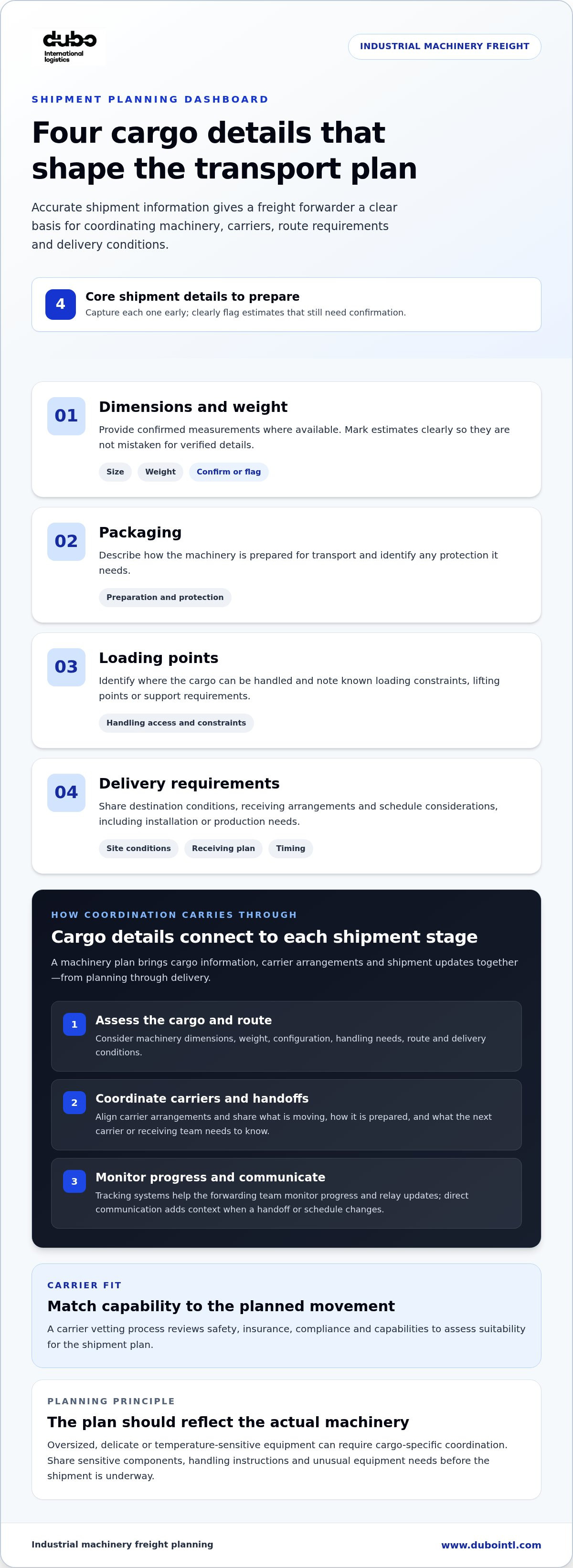
- Dimensions and weight: provide confirmed measurements where available and flag estimates.
- Packaging: describe how the machinery is prepared for transport and any protection it needs.
- Loading points: identify where the cargo can be handled and note known loading constraints.
- Delivery requirements: share destination conditions, receiving arrangements and schedule considerations.
Describe unusual equipment needs early, including sensitive components and specific handling instructions. This lets the forwarder account for them while shaping the transport plan, rather than relying on incomplete details after the shipment is moving.
How are carriers and shipment handoffs coordinated?
Carrier selection should reflect the machinery’s requirements and the route, not simply the availability of a standard shipment option. A carrier vetting process is a structured review of safety, insurance, compliance and capabilities. It helps assess whether a carrier is suited to the planned movement. Dubo’s verified-carrier network supports its specialized transportation coordination.
When a shipment has multiple stages, the forwarder aligns information and communication around each handoff. Everyone involved needs a shared understanding of what is moving, how it is prepared and what the next carrier or receiving team needs to know. Clear updates help teams follow status changes and keep the shipment organized as it progresses.
Tracking systems add visibility to that coordination. They help the forwarding team monitor progress and relay updates, while direct communication provides context when a handoff or schedule detail changes. Tracking works alongside accurate shipment information; it does not replace it.
For industrial machinery movements that call for specialized transportation, Dubo’s freight forwarding support brings cargo details, carrier coordination and shipment visibility into the planning process.
How to compare freight forwarders for industrial machinery
A useful comparison goes beyond the transport booking. Look for a freight forwarding plan that connects the machinery’s requirements with carrier coordination, shipment visibility and clear communication. A freight forwarder for industrial machinery should explain how those elements fit together for your shipment, rather than relying on broad assurances.
Use the criteria below to compare the substance of each proposed plan. The details should reflect the cargo and its movement, not just provide a general outline of transportation.
- Cargo knowledge: Does the plan address the machinery’s dimensions, weight, configuration, packaging and handling needs?
- Carrier coordination: Does it explain how carriers are selected to suit the cargo and route, and how shipment handoffs will be coordinated?
- Visibility: Does it describe what tracking information will be available and how shipment progress will be communicated?
- Communication: Is it clear who shares updates, what information is passed between parties, and how changes are handled?
- Compliance awareness: Does the plan recognize that cargo, route and shipment documentation can involve applicable requirements, without making vague or unsupported assurances?
These criteria help show whether the forwarder is coordinating the movement or simply booking a carrier. Coordination connects cargo information, route considerations, carrier arrangements and handoffs in a plan that the people involved can follow.
What should a machinery forwarding plan make clear?
A proposed plan should set out the cargo details it relies on, the route considerations it has identified, relevant handling requirements and how handoffs will be managed. It should distinguish confirmed shipment facts from assumptions. Ask for explanations tied to your shipment, such as how a stated packaging or delivery condition affects the arrangements, rather than relying on a general claim that the shipment is in capable hands.
Review any service level agreements (SLAs) alongside the plan. These agreements can define expectations for service performance, delivery windows or equipment availability. Clear expectations help everyone understand the agreed scope and how updates fit into the shipment process.
Which trust signals matter when assessing a forwarder?
Industry affiliation can provide useful context. Dubo is a member of the Canadian International Freight Forwarders Association (CIFFA). Membership is a professional affiliation, not a guarantee of a particular shipment outcome. A carrier vetting process also supports informed selection by assessing a carrier’s fit for the planned movement. Dubo’s verified-carrier network is another part of its specialized transportation coordination.
For machinery movements, compare the plan’s specific reasoning, not just its promises. Dubo’s machinery freight forwarding support brings shipment coordination and carrier planning into focus.
How to prepare an industrial machinery shipment for forwarding
A well-prepared shipment starts with dependable information. Before planning begins, gather the facts that describe the machinery, how it is packaged, and what loading and delivery will involve. Clear information helps a freight forwarder for industrial machinery build a plan around the actual cargo and reduces avoidable uncertainty during coordination.
Use this checklist to assemble the shipment details:
- Equipment identity: record the machinery’s name or type and any identifying reference used by your team.
- Dimensions and weight: provide measurements and weight, marking each as confirmed or estimated.
- Packaging and sensitivities: describe the packaging, exposed or delicate components, and any known handling sensitivities.
- Loading information: note loading points, site conditions and who will manage loading.
- Route and schedule: provide origin, destination and requested timing, and flag project milestones that affect delivery.
- Receiving arrangements: identify access considerations, unloading responsibilities and the receiving contact.
Precision matters. Dimensions and weight inform transport planning, while packaging and handling details clarify how the machinery should be managed through the movement. Delivery-site access and receiving arrangements matter too. A plan that accounts for the destination’s conditions is more useful than one based only on an address. For specialized freight planning, consider how cargo-specific requirements shape transport choices.
What should the shipper document before the move?
Keep confirmed details separate from estimates and information still being gathered. For example, label a provisional weight as an estimate rather than allowing it to appear as final data. Include the requested delivery timing and the name and contact details of the person responsible for receiving the equipment. If a machine has unusual dimensions, delicate components or special handling sensitivities, describe them early so they can inform the plan.
A single, organized shipment record gives the shipper and forwarding team a shared reference. Update it when a material detail changes, and make clear which version contains the latest confirmed information. This helps prevent outdated assumptions from carrying into planning discussions.
How can teams prepare for transport and handoffs?
Set out who is responsible for loading at origin and receiving at destination, and give each party a clear contact role. When several teams or carriers are involved, consistent instructions and current contact information help the right people coordinate each handoff. Share relevant updates promptly if timing, access or cargo details change. This is the practical value of end-to-end freight management: connecting the movement across its stages.
For tailored coordination of machinery freight, plan your industrial machinery shipment with Dubo.
Plan industrial machinery freight with Dubo International Logistics
Machinery movements are easier to plan when the logistics approach reflects the project around the equipment. Dubo International Logistics coordinates freight forwarding and specialized transportation across Canada and North America, shaping the coordination around each shipment’s requirements. This keeps the movement connected to the wider schedule and the people responsible for its different stages, rather than treating transport as an isolated task.
For oversized or delicate equipment, the plan can account for the project’s specific demands and the transitions involved along the way. Dubo organizes logistics considerations and coordinates freight movements in line with the shipment’s purpose and delivery context.
What Dubo brings to machinery and project-cargo planning
Dubo provides a coordination point for businesses moving specialized machinery. Planning can be tailored to a project’s requirements, including how the movement fits with related operational work. This helps teams consider logistics as part of the wider project, bringing responsibilities and timing into the discussion as the plan takes shape.
For shipments between Canada and the United States, cross-border freight coordination forms part of arranging the movement. The cross-border route can be considered within the overall plan so the shipment’s stages and related responsibilities remain connected.
How to start a machinery freight conversation
Begin with a clear description of the equipment and the project it supports. Share dimensions, weight, origin, destination, handling requirements, delivery timing and known site constraints. If some details are still being established, identify them as open items. This gives the planning conversation a practical foundation and focuses attention on the decisions that will shape the shipment.
For time-sensitive machinery shipments, Dubo Expedited is an option to consider. Share the timing requirements alongside the project context so the transport approach can be considered in relation to the delivery need.
To discuss next steps, discuss your machinery shipment with Dubo. A focused conversation can help your team move from project requirements to a coordinated freight plan.
Set your machinery shipment in motion with a clear plan
Before planning begins, bring your team’s open decisions into focus. Confirm who owns the remaining cargo details, note delivery constraints that still need resolution, and align the shipment timing with the work it supports. This preparation gives your freight forwarder for industrial machinery a clearer starting point and helps your team move ahead with purpose.
Choose a forwarding partner whose approach fits the shipment’s requirements. Explore freight forwarding support for your machinery move and take the next step towards coordinating the shipment.
Frequently Asked Questions
What does a freight forwarder do for industrial machinery?
A freight forwarder coordinates the movement of machinery and the information needed to organize its shipment. If a machine ships as several components, for example, the shipment plan can identify each piece and explain how the parts relate to the equipment being delivered. This gives the teams involved a shared reference and helps organize the complete shipment rather than a series of disconnected bookings.
How do I choose a freight forwarder for industrial machinery in Canada?
Choose a freight forwarder whose proposed scope and responsibilities are clear for your shipment. Look for a practical explanation of who coordinates each stage, how decisions and changes are communicated, and what shipment information the plan depends on. Consider whether the forwarder understands industrial cargo and can explain its approach in relation to your project, rather than relying on general assurances.
What information does a forwarder need to plan machinery transport?
Along with cargo measurements and delivery details, useful supporting information may include equipment identification documents, packaging records and manufacturer guidance relevant to preparing the machine for movement. These materials can clarify what the shipment contains and how it has been prepared. Keep the records together and note unresolved details so planning discussions can distinguish documented information from assumptions.
Can a freight forwarder coordinate oversized machinery shipments?
Yes. A freight forwarder can organize transport arrangements for an oversized shipment by coordinating the relevant parties around the cargo and its movement. Provide the complete dimensions of the transport-ready load, including components or packaging that affect its overall profile. This gives the planning team a clearer basis for organizing the shipment from pickup through delivery.
How is machinery freight different from standard freight shipping?
Machinery freight can involve more preparation and coordination than a routine shipment because the equipment may have specific packaging, loading or receiving requirements. A machine arriving before the team is ready to receive it, for instance, can complicate the planned handoff. Aligning the shipment schedule with the receiving team’s readiness connects transport planning with the work at destination.
Can industrial machinery shipments move across the Canada-United States border?
Yes. Machinery can be transported between Canada and the United States, with the forwarding plan accounting for the cross-border route and the parties involved. Provide consistent shipment details and identify the contacts responsible at origin and destination. Clear records and responsibilities help teams coordinate communications across the route while recognizing that each shipment has its own requirements.
How can I track an industrial machinery shipment in transit?
Use the shipment reference and agreed status updates to keep your internal team aligned as the cargo moves. Decide who needs updates and how information will be shared with the people preparing for delivery. This helps connect shipment progress with your operating schedule. To discuss tracking and coordination for your machinery shipment, visit www.dubointl.com.

