

A delayed transformer or oversized machine can hold up an entire industrial build. Industrial project logistics plans and coordinates the movement of large, heavy, high-value or out-of-gauge cargo, aligning transport with the construction sequence.
For power plants, refineries, wind farms, mines and major infrastructure, delivering equipment to the right place is only part of the task. Dimensions, weight, route requirements and timing all affect how cargo can move. Careful coordination helps keep critical shipments aligned with site needs.
This article explains what project logistics involves and how material management, shipment visibility, engineering and heavy-lift planning support complex builds in Canada. You’ll also learn which projects may need this approach and how freight forwarding, logistics consulting and specialized transportation can coordinate cargo movements across North America.
Key Takeaways
- Identify when oversized, heavy or out-of-gauge cargo calls for coordinated project planning rather than ad hoc shipments.
- See how sequencing deliveries and maintaining shipment visibility can help align material arrivals with site work.
- Understand how route assessments, specialized equipment and lifting plans shape complex cargo movements.
- Recognize why data centres, energy developments, mines and major infrastructure projects may need tailored logistics coordination.
- Learn how Dubo International Logistics’ freight forwarding, logistics consulting and specialized transportation services can support complex cargo moves.
What is Project Logistics?
Industrial project logistics plans and moves large, heavy, high-value or out-of-gauge cargo for major builds. It coordinates transport around cargo requirements and the project schedule instead of treating each shipment as a separate move. A transformer for an energy project, for example, may need specialized transport and a delivery sequence that matches site work.
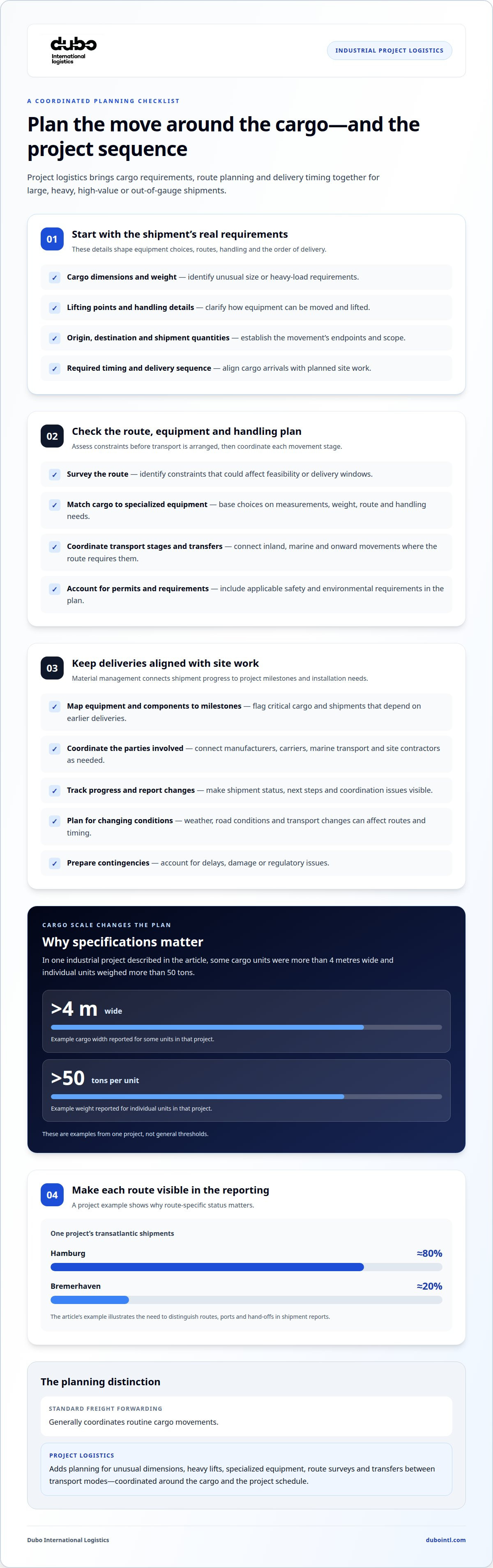
Standard freight forwarding generally coordinates routine cargo movements. Project logistics adds planning for unusual dimensions, heavy lifts, specialized equipment, route surveys and transfers between transport modes. A provider may coordinate manufacturers, carriers, marine transport and site contractors so each shipment fits the overall execution plan.
Oversized or out-of-gauge cargo exceeds the dimensions or weight that ordinary transport arrangements can readily accommodate. The approach depends on the cargo’s measurements, weight, lifting points and destination. In one industrial project, some cargo units were more than 4 meters wide, and individual units weighed more than 50 tons. Those characteristics affect equipment and route choices.
Ad hoc arrangements can leave shipments without a shared schedule or clear hand-off plan. Project planning starts with cargo details and the required delivery sequence. For example, a heavy machine may need a dedicated transport plan, while smaller components move through other arrangements. Coordinating the movements helps align arrivals with planned site work.
Marine logistics can form a key part of the route when cargo travels between continents. For one transatlantic industrial project, roll-on/roll-off (RoRo) vessels were the primary method for the ocean leg. The plan also linked inland transport to export ports and onward delivery, with the cargo’s dimensions and weight informing the route and handling method.
Planning typically brings together cargo specifications, origin and destination, delivery sequence, route requirements and lifting needs. Route surveys can identify constraints before transport is arranged. The logistics plan then matches cargo to specialized equipment and coordinates transport stages, permits, and applicable safety and environmental requirements. This preparation helps teams execute complex moves with fewer unplanned hand-offs.
To request a Canadian project logistics quote, provide cargo dimensions and weight, pickup and delivery locations, shipment quantities, timing and available handling details. Drawings or equipment specifications can clarify lifting points and access needs. These details help assess transport options, route requirements and the sequence required for the project.
The difference is the scope of coordination. A standard shipment may need a straightforward movement plan; a heavy-lift unit or a series of oversized components may require marine support, route planning and coordinated delivery stages. For a Canadian industrial build, project logistics brings these decisions together around the cargo and the site’s operating schedule.
Material management, shipment visibility and reporting
Material management connects each shipment to the work planned at its destination. A project team can map equipment, components, delivery sequence and arrival windows against site milestones. This helps identify critical cargo, shipments that depend on earlier deliveries and delays that could affect installation. Sequencing arrivals can reduce downtime when crews are ready to assemble equipment.
Shipment visibility supports the plan once cargo is moving. Tracking systems and regular status reports show progress across transport stages, helping teams respond to changes in a shipment’s route or timing. An updated arrival estimate, for example, can prompt planners to adjust site activities before a component becomes a bottleneck. Clear reports identify shipment status, next steps and issues requiring coordination.
Breakbulk cargo and chartered vessel arrangements require coordination between shipping schedules, cargo handling and inland carriers. Carrier selection depends on cargo dimensions, weight, handling requirements, route and delivery sequence. Project logistics providers often work with equipment manufacturers and local carriers to coordinate these stages. Surveys and cargo details help align carrier equipment and vessel plans with project requirements.
Route and port choices can shape the reporting plan. In one project’s transatlantic shipments, approximately 80 percent were routed through Hamburg and approximately 20 percent through Bremerhaven. That split illustrates why shipment reports need to distinguish routes, ports and hand-offs. Teams can then follow each shipment’s progress against its own planned movement rather than relying on a single project-wide status.
The scope depends on shipment quantity, cargo characteristics, route complexity, handling needs, timing and the number of parties involved. Weather and road conditions can affect route feasibility and delivery windows, while provincial requirements also influence cargo planning. A project plan accounts for these variables through route surveys, carrier coordination and contingency plans for delays, damage or regulatory issues.
Schedule management and coordination go hand in hand. A change to a vessel connection or inland movement can affect planned arrival dates and site activity, so reporting should make impacts visible early. Coordinators can compare shipment progress with project milestones, flag exceptions and revise the sequence with carriers and site teams. Digital platforms can bring route plans and shipment tracking into a shared view.
For a Canadian project, logistics consulting can help connect cargo details, route surveys, carrier plans and schedule reporting. A coordinated plan gives project teams a clearer basis for managing changes and keeping material movements aligned with site priorities. Explore project coordination support when shipments require this level of planning.
Real-time asset tracking can provide shipment visibility and support risk management. Project teams can use tracking updates to monitor component movements to a U.S. construction site, review progress against the schedule and coordinate responses to any reported issues.
Engineering and heavy-lift planning
Engineering turns cargo dimensions, weight and lifting needs into a workable transport plan. Route surveys, equipment selection and handling plans connect each movement to its destination.
Heavy-lift and breakbulk shipping
Heavy-lift shipping plans how large or heavy cargo will be lifted, secured and transferred between transport modes. Breakbulk shipping moves cargo individually rather than in a standard container. The right method depends on cargo dimensions, weight, lifting points and route. For a large industrial machine, planners coordinate the vessel, port handling and inland transport as connected stages.
Engineering details guide these decisions. Cargo drawings help identify lifting points, centre of gravity and handling constraints, while route surveys assess the journey from origin to destination. A mismatch between lifting equipment and cargo design can complicate port transfers. Planners align cargo specifications, handling methods and transport equipment before each stage begins.
Permits and regulations for oversized loads
For oversized or overweight loads in Canada, permit requirements depend on the cargo and planned route. A move may cross provincial boundaries, so planners identify the requirements for each route segment and coordinate necessary approvals before dispatch. The route plan also accounts for safety and environmental requirements relevant to the movement.
Route surveys assess whether roads and access points can accommodate the planned load. They can identify constraints that affect routing, equipment choice or the movement sequence. For example, a high load may need a different route from a heavy load, even when both are headed to the same industrial site. Permit planning and route engineering must work together.
Transporting heavy-lift and modular cargo
In Canada, heavy-lift cargo may move by specialized heavy-haul truck, marine transport or a combination of modes. Cargo dimensions and weight help determine the equipment and route. A lowbed trailer can carry tall or heavy cargo while maintaining legal clearance when suitable for the load and route. Route surveys help assess road access and transfer points.
Modular equipment travels in sections from off-site manufacturing or construction to the project location. Planners sequence module shipments around site readiness and installation needs. Wind turbine components, for example, travel in sections and require coordinated routing for assembly. Measurements and handling requirements for each section inform transport selection and delivery timing.
Across these moves, engineering connects cargo specifications with route, equipment and handling plans. Teams coordinate heavy-haul trucks, marine legs and lifting arrangements around the cargo’s characteristics. When a route spans multiple transport stages, the plan defines where transfers occur and how each stage supports delivery to the project site. This keeps the movement plan specific to the equipment rather than relying on a standard freight arrangement.
Logistics for data centres, energy, and industrial builds
Data centres, energy facilities and industrial plants depend on coordinated deliveries for construction and installation. In modular construction, prefabricated sections travel from off-site construction to the project location. Logistics planning links each module’s movement with site access, assembly sequence and scheduled work. A module delivered before its installation area is ready can disrupt the sequence, while a late shipment can hold up connected work.
Data centre projects bring equipment and building components together in a defined sequence. The logistics plan considers which shipments must arrive before installation can proceed and how transport stages connect to the site schedule. A project team can map component arrivals against construction milestones, then coordinate carriers and forwarding arrangements for each movement. Shipment visibility helps planners track progress and respond when expected delivery timing changes.
Energy projects can involve large equipment and components shipped in sections. Wind turbine components, for example, require coordinated transport planning for their movement and eventual assembly. Power plants also depend on critical equipment arriving in a workable sequence. A delayed or damaged transformer can stall construction, making cargo condition, shipment status and site timing essential planning considerations.
Industrial builds can involve many shipments moving from manufacturers to a construction site. Freight forwarding coordinates cargo movements and hand-offs, while project teams align arrivals with installation needs. A component that arrives too early may not fit the site’s work sequence; one that arrives late can leave planned work waiting. Sequencing cargo connects transport planning directly to construction activity.
Coordination spans the parties responsible for equipment, transport and site work. Freight forwarders, carriers and on-site contractors all contribute to moving cargo through a project. Clear shipment details and status reports help maintain a shared view of progress. If a shipment is delayed or damaged, contingency planning helps teams assess the impact on other deliveries and adjust the sequence as needed.
For Canadian projects, route and handling choices depend on the cargo and its destination. A modular section needs transport suited to its dimensions and site access; a heavy transformer needs a movement plan suited to its weight and handling requirements. Project teams can align these needs with route surveys, carrier arrangements and scheduled site work before shipments move.
Planning also benefits from treating the project as a connected supply chain, not a collection of isolated loads. Teams can identify critical components, map dependencies and report on significant hand-offs. For a data centre, energy development or industrial plant, this gives project leaders a clearer view of which arrivals support the next construction activity and where a change could affect the wider schedule.
Industrial projects requiring project logistics
Project logistics is relevant when a project depends on difficult-to-move equipment, coordinated arrivals or multiple transport modes. In Canada, power plants, refineries, wind farms, mining developments and major infrastructure projects can all have these requirements. The deciding question is how cargo characteristics and delivery sequence affect construction work. A standard shipment plan may not account for specialized equipment or dependencies between critical components.
Power generation projects show why planning must account for individual equipment. A transformer arriving after its installation window can delay connected work, while large plant components may need coordinated inland and marine movements. Mining developments can involve machinery bound for remote project locations, where route access and delivery timing shape the transport plan. The location and equipment requirements determine which movements need closer coordination.
Refineries and industrial facilities may require shipments from multiple manufacturing locations. One industrial furnace project in the United States involved approximately 35,000 freight tons of equipment from European production sites. The example shows the scale a single project can involve. For Canadian builds, planners assess the origin, destination, cargo profile and movement sequence to determine whether shipments should be coordinated as one project plan.
Wind farms and major infrastructure projects also depend on components arriving in a usable sequence. Wind turbine sections need a transport plan that supports later assembly. Infrastructure projects may involve equipment and materials bound for different work areas. Coordinating movements around construction priorities helps identify critical arrivals and where a transport change could affect site activity.
Data centres, energy facilities and industrial plants may also require multimodal transport. A shipment may travel by vessel before continuing inland, or use specialized road transport for a particular component. Each hand-off requires coordination between the carrier, project schedule and destination. The supply chain plan should connect these stages and make shipment progress visible to the teams responsible for construction.
A practical screening process starts by identifying unusual cargo, multiple origins, difficult routes, critical installation dates and required transport modes. If several factors apply, industrial project logistics can organize movements around the project rather than treating each load independently. Logistics consulting can help map these requirements into a coordinated plan for a Canadian build.
The key takeaway is that project scale alone does not determine the need. A single oversized component can require specialized coordination, while a larger volume of routine cargo may follow standard arrangements. Project teams can focus on cargo complexity, route demands, shipment dependencies and the consequences of a late arrival. Discuss logistics consulting for a build with connected cargo movements and demanding delivery requirements.
Dubo International Logistics
Dubo International Logistics coordinates complex cargo movements for industrial projects across Canada and the United States. Its freight forwarding, logistics consulting and specialized transportation services support projects involving oversized machinery, delicate equipment or shipments with linked delivery stages.
Consider this support when a build requires planning across multiple carriers or modes, shipment visibility, or coordination between cargo movements and site schedules. Project teams can share cargo dimensions, weights, origins, destinations, timing needs and handling details to help shape a plan around the equipment and project sequence.
For a Canadian industrial build with complex cargo requirements, contact Dubo International Logistics to discuss the project.
Bring logistics into project planning early
Make logistics part of project discussions before equipment is ready to move. Early alignment between engineering, procurement and construction teams can clarify which design decisions affect transport, what cargo information is needed and how delivery planning fits installation milestones. This gives project leaders an opportunity to address movement requirements as the build takes shape, rather than treating them as a final-stage task.
For a Canadian build with complex cargo needs, industrial project logistics connects planning with the practical work of moving equipment. Dubo International Logistics provides freight forwarding, logistics consulting and specialized transportation services to support project cargo requirements. Start with a clear conversation about the build, the cargo and the coordination required.
Contact Dubo International Logistics to discuss your project’s logistics needs. With a considered plan, your team can move into the next project stage with greater clarity.
Frequently Asked Questions
What does project logistics involve, and what services can it include?
It connects cargo movement with the operational needs of a major build. The scope depends on whether equipment needs specialized handling, suppliers ship from different origins, and transport must align with the receiving site. For example, a project team can define who provides loading instructions, who receives shipment updates and who accepts equipment at its destination. Clear responsibilities help prevent gaps between suppliers and site teams.
What are the main stages of planning and executing project cargo movements?
Start by assigning responsibility for cargo data, shipment approvals and delivery acceptance. Then coordinate factory readiness dates with the site’s ability to receive each load and confirm hand-off responsibilities across the transport chain. During execution, keep a record of changes to cargo specifications and delivery instructions. This controlled flow of information helps prevent an outdated drawing or revised receiving requirement from disrupting an active shipment.
Which Canadian companies specialize in project logistics and heavy-haul transport?
Dubo International Logistics is a Canadian option for businesses coordinating specialized cargo movements. Its tracking systems and carrier network support specialized transport deliveries, including shipments involving oversized machinery, delicate equipment and temperature-sensitive products. For a heavy-haul requirement, the project’s cargo profile and movement needs shape the coordination. This makes Dubo relevant to teams seeking a logistics partner for non-standard cargo rather than a routine shipment.
What are the main risks in project cargo movements, and how can they be managed?
Risks can arise when cargo specifications change after transport planning, loading instructions are unclear or receiving teams are unprepared. A practical control is to maintain one current shipment record with approved dimensions, handling notes, contact responsibilities and delivery instructions. Before dispatch, the logistics team can reconcile the record with carrier instructions and the site acceptance plan. This reduces avoidable confusion at loading and delivery points.

