

The fastest route isn’t always the one most likely to arrive on time. Understanding how freight forwarders ensure on-time delivery starts with matching the shipment’s requirements to a workable route, transport mode and carrier, then coordinating each handoff and responding when plans change.
Delivery dates matter: a missed connection or disruption can affect the wider supply chain. To understand how do freight forwarders ensure on-time delivery, look at how they plan around cargo size, weight, handling needs, destination and deadline, balancing transit time with the practical demands of each shipment.
This article explains how freight forwarders plan shipments, choose between road, rail, air and sea, coordinate carriers and manage delays. You’ll also learn why a carrier network and clear shipment visibility matter, especially when cargo has specialized requirements or must move through complex corridors. The goal is to explain the planning behind reliable delivery, not to promise that every journey will go exactly to schedule.
Key Takeaways
- Route planning starts with the cargo’s size, weight, handling needs, destination and delivery deadline.
- Air, sea, road and rail each bring different timing and shipment considerations; a route may combine transport modes.
- Freight forwarders coordinate carriers and shipment handoffs, helping align each part of the journey with the delivery plan.
- Shipment visibility helps identify delays or route disruptions, so the forwarder can assess options and coordinate a response.
- For complex or specialized cargo, freight forwarding, logistics consulting and specialized transportation can help bring shipment requirements together.
Shipment planning around cargo, destination, and deadline
Freight forwarders plan around the cargo, destination, deadline and handling needs, then coordinate carrier movements to meet those requirements. Understanding how freight forwarders ensure on-time delivery means seeing how they turn those details into a workable shipment sequence.
Planning Around Cargo and Deadlines
Shipment planning matches a load’s physical characteristics and purpose with its destination and required arrival date. Dimensions, weight, volume and handling needs influence the equipment and route. These details matter because a plan that suits ordinary freight may not work for fragile equipment or an oversized machine.
The shipment’s purpose also shapes its schedule. Cargo needed for a planned production run may have a narrower receiving window than goods going into general supply. The forwarder accounts for this when arranging pickup and delivery appointments, so the transport plan reflects how the recipient will use the shipment.
Capacity is another planning decision. A forwarder considers whether the load needs a partial or full truck, or whether its volume requires more than one truck. For time-sensitive or oversized cargo, a charter may be considered when standard schedules or capacity do not fit. The choice depends on the cargo and route, not urgency alone.
For consolidated imports and in-transit shipments in Canada, freight forwarders are liable for transmitting house bill data. Shipment details therefore need to align with the movement plan. The forwarder also considers how origin readiness, carrier timing and destination receiving arrangements fit together, rather than treating the delivery date as an isolated target.
Tracking Status and Coordinating Schedules
Shipment monitoring follows cargo across its planned legs and gives the forwarder information to manage handoffs. This matters because a missed pickup or changed arrival can affect a later carrier or receiving appointment.
For multimodal transport, the forwarder coordinates carrier schedules and aligns each handoff with the next movement. Tracking systems help show whether the shipment is following the plan. If an update points to a missed connection, the forwarder can review the remaining schedule and coordinate an adjustment with the carriers involved.
That coordination is one way freight forwarders ensure on-time delivery: shipment status informs the next operational decision. Updates should identify the affected leg, latest movement and next planned step. For example, a consignee expecting equipment at a specific site can adjust receiving arrangements if the delivery window changes.
A tracking record supports visibility, but one scan does not show whether every later connection remains on schedule. The forwarder considers the full route and follows subsequent status changes. This ties schedule decisions to the shipment’s actual progress, rather than relying only on its original booking.
Choosing transport modes for timely delivery
Transport choices depend on the delivery window, route, cargo requirements and available carrier capacity. For international shipping, the plan must also coordinate export handling, the main journey and import delivery.
Matching Transport Modes to Timelines
Matching transport modes to timelines means choosing an option that fits the shipment’s urgency, route and handling needs. The fastest option for one package may not suit another shipment’s size or destination.
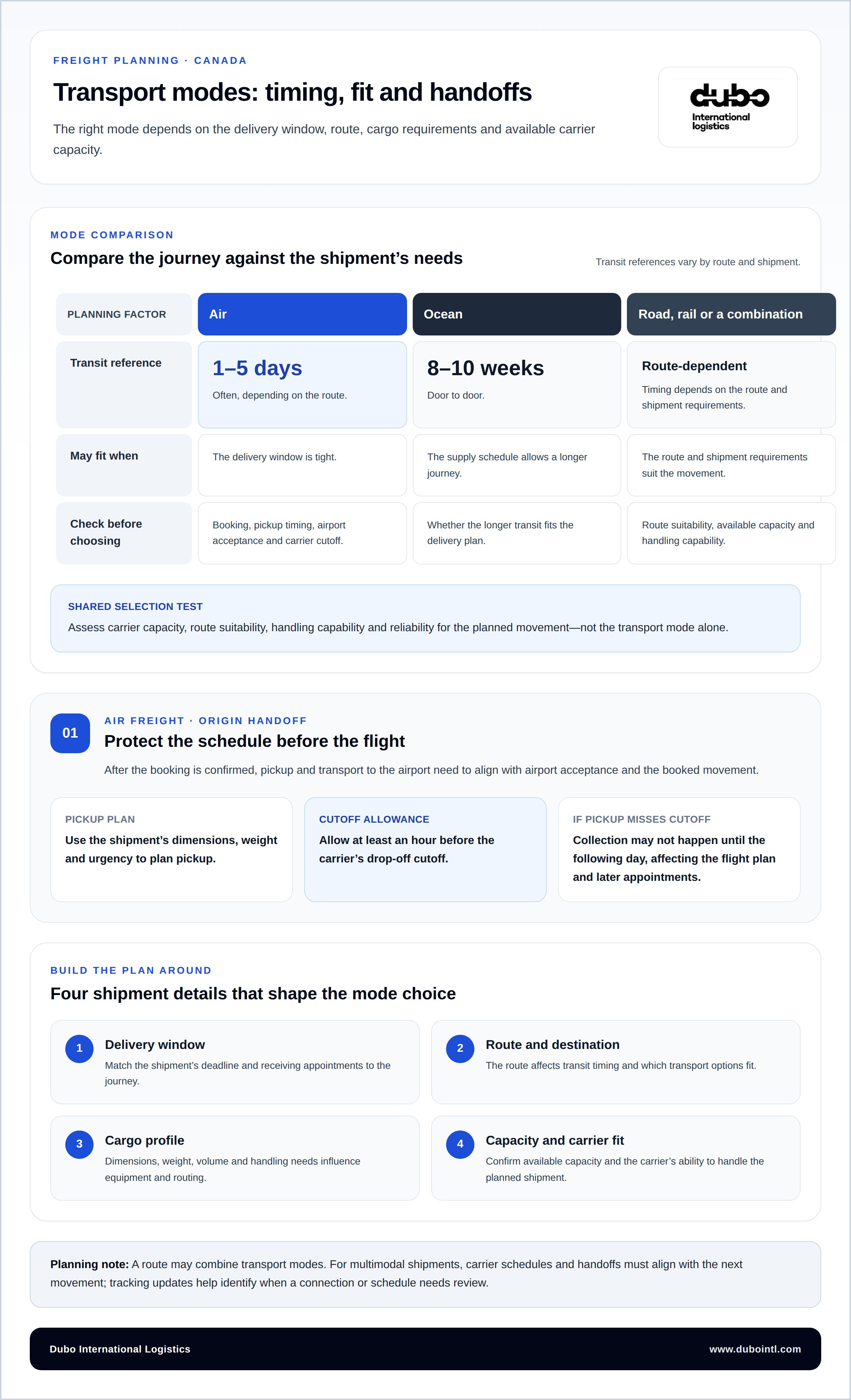
Air freight delivery often takes 1-5 days, depending on the route, while ocean freight can take 8-10 weeks door to door. A tight delivery window may favour air, while a longer supply schedule may allow ocean transport. Rail, road or a combination of modes can also fit, depending on the route and shipment requirements.
Carrier selection also takes into account capacity, route suitability, handling capability and reliability for the planned movement. To assess on-time performance, a forwarder considers how well a carrier’s service fits the route and schedule, rather than choosing by mode alone. A carrier that cannot meet the shipment’s handling requirements may not be suitable, even if its route appears direct.
Origin Handling and Airport Pickup
Origin handling covers the movement and preparation of export cargo before its main transport leg. It matters because a missed booking or airport cutoff can shift the schedule before international shipping begins.
Once an air cargo booking is confirmed, the forwarder arranges pickup and transport to the airport. The shipment’s dimensions, weight and urgency inform the booking and pickup plan. For time-sensitive cargo, allowing at least an hour before a carrier’s drop-off cutoff gives the origin plan room for the airport handoff.
If pickup is scheduled after a carrier’s cutoff, collection may not happen until the following day. That extra wait can affect the flight plan and later delivery appointments. Export handling therefore needs to align the pickup window, airport acceptance and booked transport, rather than treating them as separate tasks.
Transit Times and Carrier Reliability
Transit time is the expected journey duration, while carrier reliability concerns how well the service fits the planned schedule. Both matter when an expedited shipment must meet a specific delivery window in Canada.
Expedited service requirements depend on urgency, distance, cargo dimensions and weight, handling needs, route and available capacity. These factors also determine whether air, dedicated road transport or a combination is appropriate. A forwarder weighs them alongside the delivery deadline and carrier performance, rather than assuming the fastest mode is always the best fit.
For shipments where urgency calls for expedited movement, expedited transport options may be relevant to the route plan. The selected carrier and mode still need to match the cargo and schedule.
Freight forwarders as intermediaries between shippers and carriers
A freight forwarder coordinates cargo movement between the shipper, carriers and destination. This brings booking, transport arrangements and shipment information together across the journey.
Freight forwarders generally arrange capacity with airlines, shipping lines, trucking companies and rail providers rather than moving cargo themselves. They align carrier bookings and handoffs with the shipment’s route and requirements. For an international shipment, this can connect origin transport, the main journey and onward delivery after arrival.
This differs from direct shipping. For a small shipment going to one destination, direct shipping may be simpler, with the business responsible for packing, paperwork and tracking. A forwarder coordinates across carriers and helps align separate movement stages, which can be useful when a route involves several transport providers.
Coordinating Shipping Documents and Cargo Movement
Document coordination means aligning shipment records with the cargo and its route. Accurate, consistent information matters because errors or omissions can delay international shipments.
Common records include commercial invoices, packing lists, bills of lading and air waybills. The forwarder coordinates the documents needed for the planned movement and ensures shipment information is shared with the relevant parties. For consolidated imports and in-transit shipments in Canada, freight forwarders are liable for transmitting house bill data. Records should correspond to the cargo being moved.
Clear documentation also supports coordination across the shipment’s movement. If shipment details change, aligning related records helps everyone involved work from consistent information and coordinate the next stage of transport.
International Restrictions and Cross-Border Shipping
Cross-border coordination connects the transport plan with restrictions and documentation requirements that can vary by destination. This matters because an item accepted for domestic shipping may face different conditions on an international route.
Before arranging international shipping, the forwarder considers the cargo, destination and route requirements. For example, shipment contents may affect whether a carrier can accept the goods for the planned movement. The shipper provides accurate cargo details, while the forwarder coordinates transport and related shipment information with carriers.
For a Canadian import that continues by road after arrival, the forwarder can coordinate the inland carrier and delivery leg. Clear responsibilities among the shipper, forwarder and carriers help prevent gaps in the movement plan.
Identifying supply delays and recommending solutions
Exception management means identifying a disruption, assessing its effect and coordinating a response. Tracking helps locate the affected shipment leg before a delay changes the planned arrival.
Managing Delays and Disruptions
Exception management provides a clear response when tracking shows a missed pickup, late connection or route interruption. The forwarder identifies the affected carrier and transport leg, then assesses the implications for the next scheduled movement. Early review helps distinguish a local delay from one that could affect delivery at the destination.
For example, a truck delayed near the border may miss its planned delivery appointment. The forwarder can contact the carrier, review shipment status and coordinate an updated schedule with the next party. If another route or carrier is suitable, the forwarder can assess it against cargo requirements and the remaining delivery window.
Trucking delays can also arise when equipment needed for a movement is unavailable. A chassis shortage, for instance, can hold up a container even when the cargo is ready. The forwarder tracks the equipment issue, coordinates with the carrier and considers its effect on pickup, onward transportation and final arrival.
Updates should identify the shipment’s last known position, the disruption and the next planned action. A clear report lets the shipper and consignee adjust receiving plans, especially when cargo supports scheduled production or installation. The forwarder continues tracking progress as the revised plan moves through each handoff.
Weather-Related Delays
Weather-related exception management means assessing how conditions affect a route and its scheduled movements. It matters because a disruption at origin or along the route can change a carrier’s ability to collect, transfer or deliver cargo.
If severe weather affects a road leg, the forwarder reviews carrier updates and identifies which planned movements are affected. For example, a delayed truck may miss a connection with rail or another carrier. The team can coordinate revised timing or a handoff while keeping the destination and delivery requirements in view.
Weather can affect several legs in sequence. A delayed departure may alter transfer timing and the final delivery appointment, even if later carriers remain available. Tracking each movement helps pinpoint where the schedule has changed, rather than treating the whole shipment as one undifferentiated delay.
Clear communication closes the loop. The forwarder reports the disruption, its effect on the expected arrival and the next action being coordinated. For cross-border cargo, updates should also account for changed border timing, so the receiving team can plan around the revised schedule.
Freight forwarder expertise and delivery networks
Choosing a freight forwarder for on-time delivery means assessing experience, carrier capacity, compliance support, delivery connections, flexibility and shipment visibility. Direct support matters too: when a route changes, a knowledgeable coordinator can connect the affected carrier, shipment status and next delivery step.
Network quality is more than the number of carriers available. An efficient plan matches the shipment with providers that have the right route, equipment and handling capabilities. For machinery moving from one Canadian province to a U.S. destination, for example, the forwarder must connect origin pickup, border movement and final delivery. Each handoff needs a clear role and schedule.
Experience helps identify details that can affect a shipment before it moves. Cargo dimensions may shape equipment selection; fragile goods may need suitable packing and careful transfers. A forwarder’s carrier selection can assess whether a provider’s capabilities, insurance and compliance fit the shipment. This alignment helps prevent an unsuitable carrier from disrupting the planned movement.
Visibility supports coordination across a global network. Tracking systems show cargo progress between carriers, while direct updates can identify a missed pickup or delayed connection. For example, if an air shipment’s arrival changes, the forwarder can review onward road delivery and coordinate the next movement with the carrier. Clear status reporting gives the shipper and consignee useful information for their schedules.
Flexibility matters when the original plan no longer fits. A shipment may need a different carrier, route or transport mode after a disruption. The forwarder assesses cargo requirements, the remaining delivery window and available network connections before coordinating a change. For specialized freight, relevant expertise means matching equipment and handling needs to each leg, not simply finding a carrier with capacity.
Businesses should also assess how a forwarder coordinates documentation and compliance across domestic and cross-border legs. A capable partner understands how shipment records, carrier bookings and delivery arrangements interact. An international shipment, for instance, requires coordination between export movement, the main transport leg and import delivery. This connected oversight helps reduce gaps between parties.
For a shipment involving several carriers, a complex corridor or specialized handling, discuss your freight forwarding requirements and the coordination your delivery plan calls for.
Dubo International Logistics: Freight forwarding
Dubo International Logistics coordinates freight forwarding for shipments involving multiple carriers, complex routes or specialized cargo requirements. Its logistics consulting helps businesses assess route options, shipment needs and delivery schedules before transportation is arranged.
For oversized machinery, delicate equipment or temperature-sensitive products, specialized transportation services address handling needs that standard freight plans may not accommodate. Dubo coordinates cargo movement across Canada and the United States, including complex project-cargo logistics and freight transitions through demanding corridors.
Consider this support when a shipment requires more than booking a single carrier, or when its dimensions, sensitivity or route call for closer coordination. Share the cargo details, origin, destination and delivery requirements to begin a focused discussion about the shipment plan.
Contact Dubo International Logistics to discuss your freight forwarding requirements.
Set your next shipment up for a clear plan
A delivery target is more useful when it reflects the receiving operation, not just estimated transit time. Before arranging the next shipment, define when the cargo must be ready, the destination’s receiving window and which requirements cannot change. This gives the logistics team a practical basis for planning and coordinating the movement.
Knowing how freight forwarders ensure on-time delivery helps you frame a more productive planning conversation. Share the shipment’s priorities and constraints, including specialized handling needs or critical arrival dates. A tailored plan can account for the decisions that matter to your operation and keep the next steps clear.
Dubo International Logistics provides freight forwarding, logistics consulting and specialized transportation services for shipments with distinct coordination needs. Discuss your shipment with Dubo International Logistics and take the next step toward a considered delivery plan.
Frequently Asked Questions
What steps do freight forwarders take to plan shipments and meet delivery deadlines?
They turn the requested delivery date into an operational schedule, then confirm the shipment can be ready for its planned pickup. A useful starting point is the cargo’s ready date, final delivery address, receiving hours and any site access limits. For example, equipment going to a facility with restricted truck access may need a delivery appointment coordinated around its receiving procedures.
How do freight forwarders track shipments in real time and manage delays?
They interpret shipment updates as milestones, not as one journey-wide status. A pickup confirmation, departure event and arrival scan each indicate a different stage, and gaps between updates may reflect the carrier’s reporting cycle. If an update conflicts with a scheduled milestone, the forwarder can seek clarification from the relevant carrier and explain what it means for the next planned movement.
What contingency plans do freight forwarders use for weather, congestion, and missed connections?
A contingency plan can set decision points before dispatch, such as when to assess an alternate route or carrier. The forwarder weighs each option against cargo suitability, delivery priorities and the remaining schedule. For example, a temperature-sensitive shipment may need a different response from durable freight because a longer wait could affect its handling requirements.
How do shipment requirements affect delivery times?
Shipment requirements can affect when goods are ready to continue their journey, so the schedule needs to account for preparation and handling as well as transport. Requirements vary with the goods and delivery circumstances. For unusual or restricted cargo, identifying applicable handling requirements early helps avoid planning a delivery date that assumes the shipment can proceed immediately upon arrival.
What technology do freight forwarders use for shipment visibility and estimated delivery times?
Forwarders use tracking systems to assemble shipment status information and compare progress with planned milestones. An estimated delivery time is a planning reference that can change as new movement events are recorded. For example, an updated arrival estimate may help a receiving team adjust staffing or equipment arrangements. Useful visibility distinguishes a confirmed event from a projected next step.
How can businesses compare freight forwarders' on-time delivery rates and service guarantees?
Compare how well each forwarder’s carrier services fit your route and delivery schedule, and whether they provide shipment visibility and exception updates. Check the terms of any service guarantee, including what it covers and which disruptions may be excluded. Clear terms help businesses assess how a forwarder plans for delays and communicates changes to the schedule.

