

A heavy-haul shipment is often shaped by decisions made before dispatch. Heavy haul freight forwarding Canada involves more than finding a truck: cargo dimensions, weight, handling needs, route conditions and cross-border requirements all influence the plan. Missing a detail early can affect equipment selection or disrupt the move.
If you’re deciding what information to gather or whether to work with a freight forwarder instead of booking a trucking company directly, careful coordination can bring clarity. A freight forwarder connects shipment requirements with carrier coordination, documentation and tracking, helping keep the moving parts aligned across Canada and the United States.
This guide explains how freight forwarding supports complex heavy-haul moves and what to prepare before dispatch. You’ll learn which cargo details matter, what planning questions to address, and how route, equipment and handling considerations can affect a shipment. Dubo International Logistics coordinates freight forwarding and specialized transportation for complex North American cargo. Learn more at www.dubointl.com.
Key Takeaways
- Heavy haul freight forwarding Canada coordinates cargo movement, carriers and shipment documentation, rather than simply arranging a truck.
- Gather accurate cargo dimensions, weight, handling needs and delivery details before planning begins.
- Understand how freight forwarding differs from direct trucking so you can match the coordination approach to your shipment.
- Route and load requirements can shape the plan. Separate confirmed cargo facts from details that depend on the shipment and route.
- Dubo coordinates freight forwarding and specialized transportation for complex cargo moving across Canada, the United States and the broader North American market.
What Does Heavy Haul Freight Forwarding in Canada Involve?
A heavy-haul shipment needs a plan shaped by the cargo, route and full movement. In heavy haul freight forwarding Canada, a forwarder coordinates cargo movement, carrier arrangements and shipment documentation. The load may be unusually large or heavy, or need particular handling attention. There is no single process for every shipment: the cargo and its journey determine what coordination is needed.
Freight forwarding coordinates a shipment’s movement and related logistics; trucking is the physical transport of the cargo by a carrier. This distinction matters when planning. A truck and trailer move the load, while forwarding brings shipment requirements, carrier arrangements and documentation into a coordinated plan. For a general overview, see What is a Freight Forwarder?
Heavy-haul planning must account for how load characteristics relate to the route. Cargo dimensions and weight can influence transport arrangements, while the origin, destination and handling needs inform coordination. Requirements vary by load and route, so base the plan on the actual shipment rather than assumptions from a previous move.
How does freight forwarding differ from heavy-haul trucking?
A trucking company provides the vehicle and carrier service that physically moves cargo. A freight forwarder coordinates that movement, connecting shipment details with carrier arrangements and relevant documentation. Depending on the shipment, coordination may involve several logistics steps or transitions. The distinction is practical: trucking describes the transport itself, while forwarding describes the planning and coordination around cargo movement.
Which shipments may need specialized coordination?
Oversized machinery is one example. Delicate equipment and temperature-sensitive products may also need closer attention during planning. Their dimensions, fragility or environmental sensitivity can shape transport arrangements and the information shared with carriers. These characteristics do not prescribe one universal handling method. Instead, they inform a plan suited to the particular shipment.
Clear information supports effective coordination. A cargo profile should describe what is moving and include confirmed dimensions, weight and handling considerations. This helps distinguish known characteristics from requirements that depend on the route or transport arrangement. If details are incomplete or assumptions go unexamined, carrier planning and documentation may not reflect the cargo’s actual needs.
For complex cargo moving across Canada or between Canada and the United States, freight forwarding provides coordination beyond assigning a truck. It brings shipment details, carrier arrangements and documentation together so the movement can be planned as a connected logistics task. Understanding how this coordination works is a useful next step.
How Heavy Haul Freight Forwarding Coordinates an Oversized Shipment
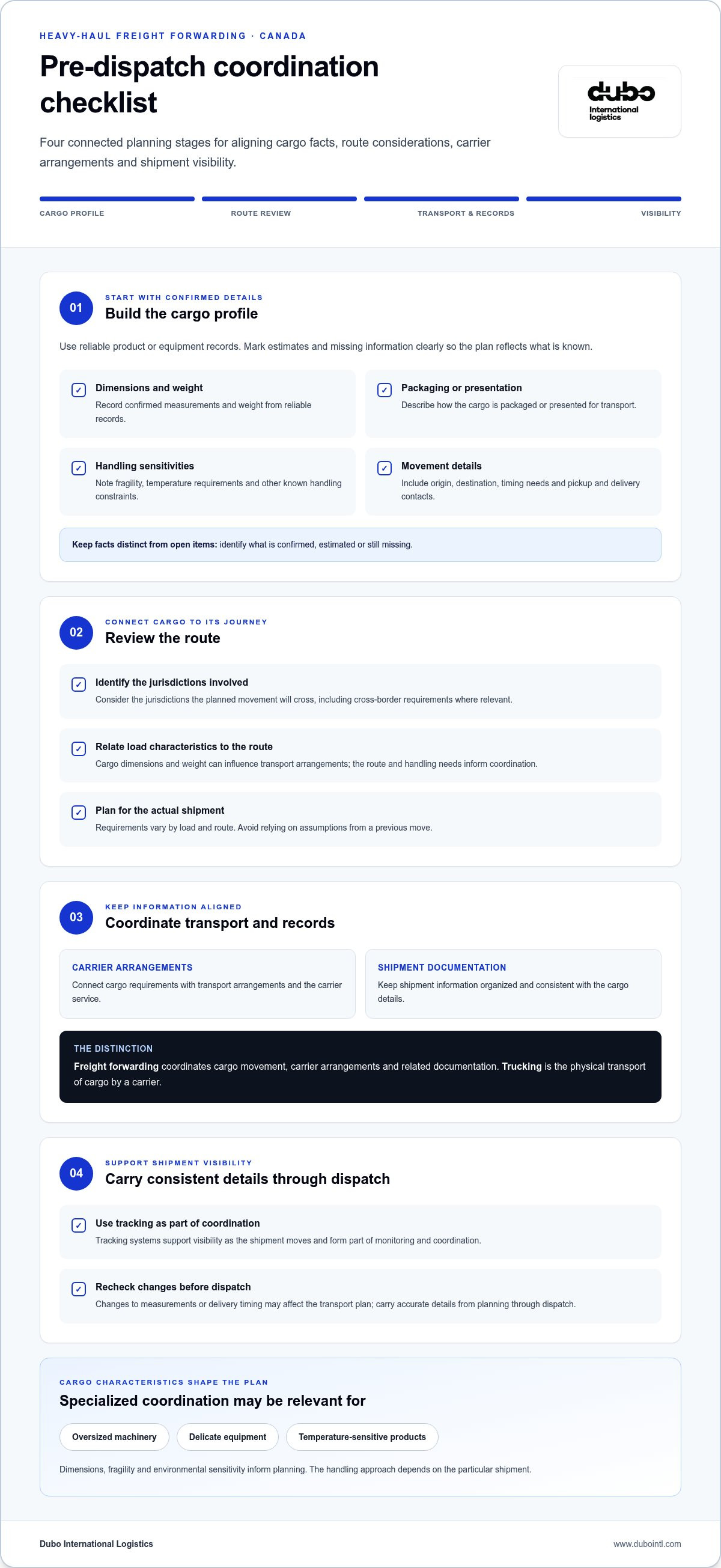
Coordination starts with cargo facts and connects them to carrier arrangements, route planning, shipment documentation and tracking. Each stage informs the next. A change to a load’s measurements or delivery timing, for example, may affect the transport plan. Accurate information should therefore carry through from initial planning to dispatch.
Accurate cargo details give the team coordinating a shipment a sound basis for aligning carrier arrangements, route considerations and documentation. This is especially relevant to heavy haul freight forwarding Canada, where a route may cross jurisdictions with different requirements. The plan should reflect the shipment’s actual characteristics and journey, not assumptions from a previous move.
What cargo information supports early planning?
Start with confirmed specifications, not estimates. Gather the cargo’s dimensions and weight from reliable product or equipment records, and note how it is packaged or presented for transport. Record relevant sensitivities, such as fragility or temperature requirements, along with the origin, destination, timing needs and contacts responsible for pickup and delivery. Clearly mark any information that is estimated or still missing.
For example, machinery and delicate equipment can call for different planning considerations, even when both travel by road. Temperature-sensitive products introduce another cargo characteristic to communicate early. Provide accurate details and explain known handling constraints so the plan can be developed around the specific load rather than a generic description.
How do carriers, documents, and tracking fit together?
Carrier coordination connects cargo requirements with transport arrangements. Documentation keeps shipment information organized across the parties involved, while tracking systems support visibility as the shipment moves. Keeping details consistent from planning through transport helps reduce avoidable confusion.
At a high level, the coordination sequence may include:
- Assemble the cargo profile: confirm dimensions, weight, sensitivities, origin, destination and timing.
- Review the route: identify the jurisdictions involved and the requirements that apply to the planned movement.
- Coordinate transport and records: align carrier arrangements and keep shipment documentation consistent with the cargo details.
- Support shipment visibility: use tracking systems as part of monitoring and coordinating the move.
Requirements can depend on the load, route and jurisdictions crossed. Before dispatch, consult current official transportation guidance for each relevant Canadian province or territory. For a cross-border move, review applicable official guidance on both sides of the border, including relevant state and federal sources in the United States. This keeps planning grounded in current, jurisdiction-specific information.
For complex moves, coordination continues beyond the initial booking. Dubo’s freight forwarding and logistics support connect cargo details, carrier coordination and shipment tracking for North American movements. Shippers planning specialized cargo can explore Dubo’s freight forwarding support as they prepare information for the planning process.
Freight Forwarding vs. Direct Trucking for Heavy Haul in Canada
The right approach depends on the coordination a shipment requires. Direct trucking centres on the physical move, while freight forwarding takes a wider view of cargo movement and related logistics. Neither approach is automatically right for every load. Consider whether the shipment can be managed as a straightforward transport booking or needs several elements coordinated together.
| Consideration | Direct trucking | Freight forwarding |
|---|---|---|
| Core role | A carrier provides transport and moves the cargo. | A forwarder coordinates cargo movement and related logistics. |
| Coordination scope | Centres on the carrier’s transport arrangements for the shipment. | Brings carrier arrangements and shipment documentation into a wider plan. |
| Useful shipment context | A defined move with clear cargo and transport requirements. | A move with multiple coordination needs, cargo sensitivities or cross-border details. |
Booking transport is only one part of a shipment when other requirements need to be aligned. In heavy haul freight forwarding Canada, coordination can help when cargo details, carrier arrangements and shipment records need to be considered together. It does not replace the carrier’s role. It connects that role with the wider movement plan.
When can direct trucking meet the shipment need?
Direct trucking may suit a straightforward move when the cargo is clearly defined, transport requirements are understood and the shipper can coordinate other shipment details. For example, a load with established specifications and a direct transport plan may need a carrier arrangement without a broader coordination role. The right approach depends on the shipment, not on a rule that every heavy load needs a forwarder.
When can freight forwarding provide a broader view?
A forwarder’s role can be useful when carrier coordination and shipment documentation need joined-up attention, or when cargo characteristics introduce additional planning considerations. Cross-border movement can involve details beyond the physical trip, making it valuable to keep the overall shipment organized. For further context, see cross-border freight forwarding between Canada and the United States.
Coordination adds value when shipment requirements extend beyond booking transport. Consider the scope of the move: Is the cargo profile clear? Are carrier arrangements and shipment records being managed as connected parts of the plan? Does the journey cross a border? These questions help show whether direct trucking addresses the need or a broader forwarding role is more suitable.
Dubo coordinates freight forwarding and specialized transportation for complex cargo moving across Canada and the United States. When the logistics extend beyond the truck movement, Dubo’s freight forwarding services provide a coordination-focused starting point.
How to Prepare a Heavy Haul Freight Shipment in Canada
Good preparation gives the planning team a clear picture of the shipment before dispatch. Use the sequence below to organize confirmed facts, identify open questions and connect cargo requirements with route and delivery coordination. This helps with heavy haul freight forwarding Canada without assuming every load follows the same process.
- Build a complete cargo profile. Record the cargo type, confirmed dimensions and weight using reliable specifications. Describe handling sensitivities, such as fragility or temperature requirements, and note how the cargo is presented for transport. Include pickup and delivery details, timing constraints and the best shipment contacts. Mark any estimated or missing detail clearly so it is not mistaken for a confirmed fact.
- Separate known facts from route-dependent requirements. Cargo identity, verified measurements and the shipment’s origin and destination are facts to assemble. Transport arrangements, documentation needs and other requirements may depend on the load and route. Keep these categories distinct so the planning team can see what is ready and what needs assessment for the specific movement.
- Align the route, carrier and shipment records. Treat these as connected planning tasks. The route informs the movement plan, cargo details guide carrier coordination, and consistent documentation keeps shipment information organized. For a cross-border move, assemble information for the full Canada-United States journey, including the origin, destination, cargo profile and coordination contacts. Do not assume a domestic plan covers every detail of an international movement.
- Review current official guidance and coordinate delivery. Requirements can vary with the cargo and the jurisdictions along the route. Consult current official transportation sources for the applicable provinces or territories, and relevant official sources for the U.S. portion of a cross-border journey. Confirm delivery arrangements and contacts as part of the plan, then establish how shipment tracking will support visibility during transit.
This sequence is not a substitute for route-specific planning. It gives the forwarder and carrier a shared starting point, while requirements that depend on the load and route can be reviewed against current guidance. For additional context on coordinating an oversized cross-border move, see planning oversized cargo transport across North America.
To bring cargo details, carrier coordination and delivery planning together, explore Dubo’s heavy-haul planning support.
How Dubo Coordinates Heavy Haul Freight Forwarding Across North America
Complex cargo needs more than a transport arrangement. Dubo International Logistics coordinates freight forwarding and specialized transportation for shipments across Canada, the United States and the broader North American market. The focus is on bringing cargo requirements, carrier coordination and shipment oversight together in a plan shaped around the move.
Coordination matters when cargo characteristics and journey details intersect. An oversized machine, delicate equipment and a temperature-sensitive product each present different planning considerations. The shipment’s origin, destination, handling sensitivities and operational priorities help inform how the movement is organized. Heavy haul freight forwarding Canada is not a one-size-fits-all process; the cargo and route guide the coordination.
What Dubo brings to specialized transportation coordination
Dubo works with a network of reliable carriers and uses tracking systems to support shipment oversight. Carrier coordination connects cargo requirements with transport arrangements, while tracking systems provide visibility as the shipment moves. Together, they support coordination throughout the movement.
Dubo is a member of the Canadian International Freight Forwarders Association (CIFFA). For shippers, this membership is one professional detail to consider when choosing a logistics partner. The company’s specialized transportation work includes oversized machinery, delicate equipment and temperature-sensitive products, with planning tailored to the cargo and movement.
Across a North American shipment, coordination helps keep key elements aligned as the cargo progresses. Clear shipment information gives the parties involved a shared reference point, while carrier arrangements and tracking support oversight along the journey. This approach is relevant when cargo has specific handling sensitivities or the shipment crosses between Canada and the United States.
Plan the next shipment with a clear starting point
A useful first step is to assemble the cargo details, origin, destination and operational priorities. Include confirmed dimensions and weight, the cargo type, known handling sensitivities, timing considerations and appropriate shipment contacts. If some information is estimated or still being gathered, identify that early so assumptions remain visible during planning.
From there, a logistics discussion can focus on the requirements of the particular move. Carrier coordination, shipment documentation, route considerations and tracking needs can be considered in relation to the cargo rather than treated as separate tasks. Dubo’s freight forwarding approach is consultative, with a logistics solution tailored to the shipment’s details and priorities.
Share your shipment information and planning priorities with Dubo International Logistics to discuss specialized transportation. Visit www.dubointl.com to get in touch. Notre équipe peut vous aider à planifier une solution fiable, efficace et adaptée à vos besoins.
Set Your Next Shipment Up for a Clear Start
Before dispatch, make the shipment plan a shared reference for the people responsible for the cargo, transport and delivery. Confirm who owns each decision, which details are final and where questions about the route or handling requirements will be addressed. This helps keep planning conversations focused as the move takes shape.
For heavy haul freight forwarding Canada, bring your cargo profile and operational priorities into one discussion. This gives the logistics team a practical foundation for coordinating around the shipment, rather than relying on assumptions or a one-size-fits-all plan.
When you’re ready to discuss an upcoming move, plan your next shipment with Dubo International Logistics. Share the cargo details, origin, destination and priorities that will guide the plan. A clear starting point can make a complex shipment easier to organize. Visit www.dubointl.com to discuss your next shipment with Dubo.
Frequently Asked Questions
What is heavy haul freight forwarding in Canada?
Heavy haul freight forwarding in Canada is a planning approach for cargo that needs coordination tailored to its characteristics and journey. There is no single cargo profile that defines every move, so the term describes a logistics challenge rather than one fixed procedure. Its practical value is a plan that reflects the shipment at hand instead of applying a standard freight template.
How is a freight forwarder different from a heavy-haul trucking company?
The roles differ in who organizes the wider shipment and who performs the road movement. Consider who will coordinate communications if a pickup detail changes, a document needs revision or a delivery handoff shifts. If your team can manage those connections, a direct carrier arrangement may be suitable. If not, broader coordination can help keep responsibilities clear.
What information is needed to plan an oversized shipment?
Alongside the basic cargo profile, prepare supporting material that clarifies the load: a current product specification sheet, photographs where useful, and notes on how the cargo is packaged or assembled for transport. Identify the people authorized to approve changes and the contacts at pickup and delivery. If specifications change after planning starts, share the revised information promptly and identify which earlier details it replaces.
Can heavy haul freight forwarding coordinate shipments between Canada and the United States?
Yes. Dubo coordinates freight forwarding across Canada and the United States, including shipments that cross the border in either direction. Establish who is responsible for communicating with each party involved and keep the shipment description consistent across the records used for the journey. Border-related requirements depend on the shipment, so consult current official sources for applicable guidance rather than relying on assumptions from another move.
How do cargo dimensions and weight affect heavy-haul planning?
Dimensions and weight help planners assess whether the transport plan fits the cargo as it will actually travel. A late change, such as adding an attachment or changing packaging, can make earlier assumptions unreliable. Keep measurements tied to the shipment’s final transport-ready configuration, and flag revisions before dispatch so planning decisions can be reviewed against the updated details.
What documents may be needed for a heavy-haul shipment?
There is no universal document set for every heavy-haul move. Keep the versions used by the shipper and logistics parties aligned, especially when cargo descriptions, shipment references or delivery instructions change. Retain a clear record of revisions and who authorized them. For formal documents required by a particular route or shipment, follow current official guidance and the instructions applicable to that movement.
Can freight forwarding support shipments involving delicate or temperature-sensitive equipment?
Yes. For sensitive cargo, obtain written handling guidance from the manufacturer or responsible technical team and share it with the parties planning the move. State known restrictions in clear operational terms, and identify who should be notified if planned conditions cannot be maintained. This gives the logistics team practical instructions without assuming all delicate or temperature-sensitive items need the same treatment.
