

What if the strongest freight bid isn’t the right choice for your operation? A proposal can look attractive on paper yet fall short of shipment requirements, service commitments or the coordination needed to keep freight moving. For Canadian businesses, freight procurement consulting brings those priorities into carrier selection from the start.
Comparing tender responses consistently takes time, especially when teams must assess more than the proposed terms. Equipment suitability, delivery windows, cargo handling and execution risks all matter. A decision based mainly on one part of a proposal may create challenges once shipments are underway. A structured approach helps align carrier decisions with business priorities and practical operating needs.
This article explains how to set procurement criteria, review carrier proposals against service requirements and plan the transition from selection to ongoing freight coordination. It also explores how Dubo International Logistics connects logistics consulting with freight forwarding and transportation coordination for complex shipments across Canada and North America. Learn more at www.dubointl.com.
Key Takeaways
- Use freight procurement consulting to connect carrier decisions with shipment requirements, service commitments and operational priorities.
- Build tender documents around lanes, modes, volumes, timing, equipment and cargo needs so carrier proposals are easier to assess consistently.
- Compare proposals on service fit, capacity, compliance, cargo handling, visibility and implementation, not on bids alone.
- Prepare for the transition after carrier selection by documenting responsibilities, operating procedures, reporting and review timing.
- Dubo connects logistics consulting with freight forwarding and specialized transportation coordination. Learn more at www.dubointl.com.
Why freight procurement consulting must look beyond carrier bids
A carrier bid is only as useful as the requirements behind it. If a tender focuses on proposed terms but leaves service expectations, cargo handling, compliance needs or contingency planning unclear, the responses may not reveal which carrier can support the operation reliably.
Freight procurement consulting is structured advice for sourcing, evaluating, negotiating and implementing freight arrangements around a business’s shipment requirements. It connects carrier decisions to the broader work of supply chain management, where transportation choices affect continuity across domestic and cross-border movements. Requirements can vary with the route, mode, shipment profile and applicable operating obligations. Assess each proposal for its fit with those requirements, rather than treating it as a line on a bid sheet.
Procurement consulting is distinct from routine freight booking and day-to-day coordination. It shapes how a business defines its needs and assesses its options. Freight forwarding coordinates cargo movement; procurement advice helps determine the requirements and carrier arrangements that support that movement. The two activities can connect, but they serve different purposes.
What does freight procurement consulting cover?
The work can begin with a review of freight requirements, current provider arrangements, tender documents and selection criteria. A consultant can help clarify what each bid must address, such as service commitments, cargo characteristics and operational responsibilities. Support may cover the full procurement cycle or a specific stage, from preparing bid materials to reviewing proposals or planning implementation. The advisory work informs the decision; it does not itself transport the cargo.
When should a business review its freight procurement process?
A review is useful when shipment profiles change, service becomes inconsistent or carrier commitments are difficult to interpret. It can also help businesses preparing a tender, reassessing arrangements or planning operational changes. Start early enough to document lane, timing, equipment and cargo needs before inviting bids. This reduces the risk of receiving proposals that answer different questions or omit essential requirements.
For example, oversized machinery, delicate equipment and temperature-sensitive products can require different handling and equipment considerations. A comparison that overlooks those details may appear complete while leaving practical execution questions unresolved. Dubo’s logistics consulting connects procurement planning with freight forwarding and specialized transportation coordination across Canada and North America. Learn more at www.dubointl.com.
How a structured freight procurement process works
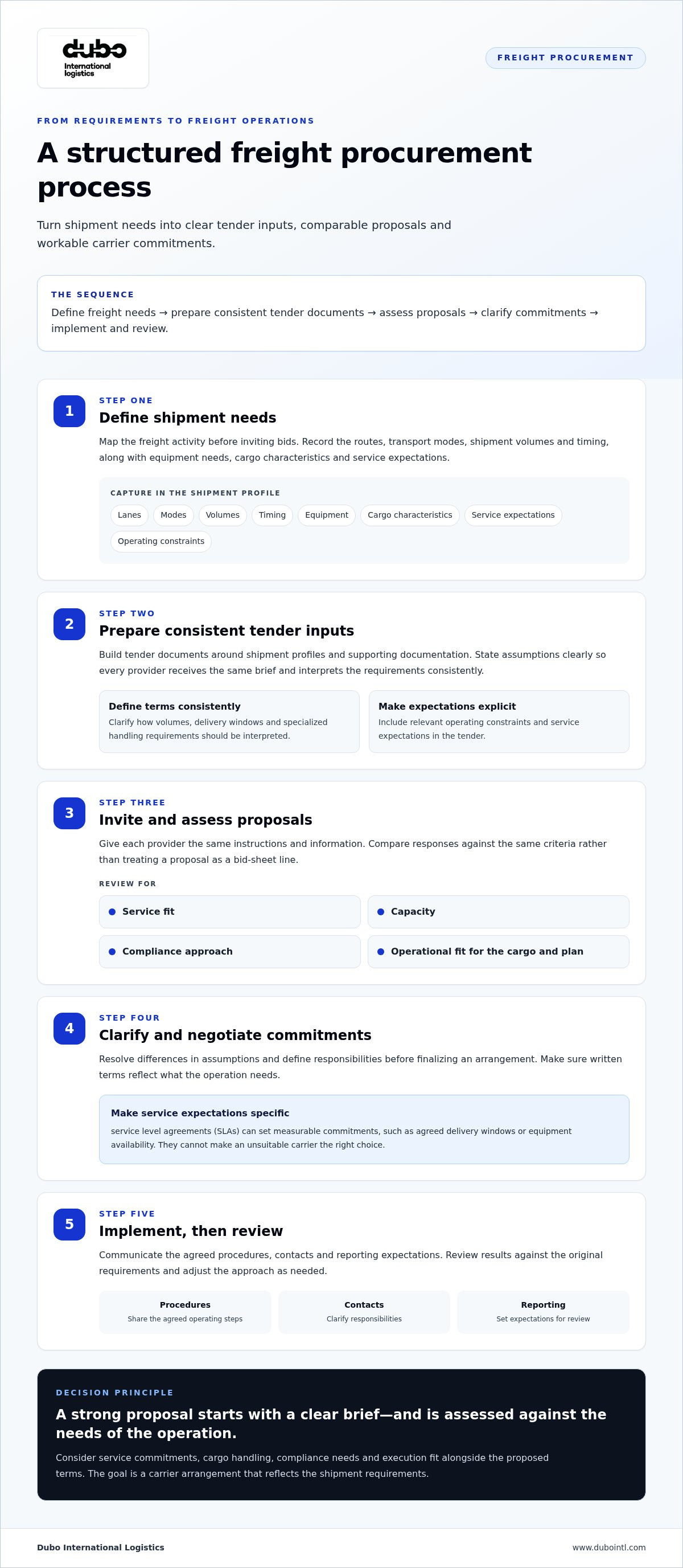
A sound process turns shipment requirements into clear tender inputs, comparable proposals and workable carrier commitments. The sequence matters: decisions made before bids arrive determine whether the responses will help your team choose a suitable operating arrangement.
A structured freight procurement process defines shipment needs, prepares consistent tender documents, evaluates and negotiates proposals, implements the selected arrangement, then reviews performance.
- 1. Define shipment needs. Map lanes, modes, shipment volumes and timing. Record equipment needs, cargo characteristics and service expectations. Include relevant operating constraints so the tender reflects actual freight activity.
- 2. Prepare tender inputs. Create shipment profiles and supporting documentation, and state assumptions clearly. Define terms consistently, including how volumes, delivery windows and specialized handling requirements should be interpreted.
- 3. Invite and assess proposals. Give each provider the same instructions and information. Compare proposed service, capacity, compliance approach and operational fit against the same criteria.
- 4. Clarify and negotiate commitments. Resolve differences in assumptions and define responsibilities before finalizing an arrangement. Carrier contract negotiation can help make service expectations and operating terms explicit.
- 5. Implement and review. Communicate the agreed procedures, contacts and reporting expectations. Then review results against the original requirements and adjust the approach as needed.
How should a business prepare freight requirements and tender documents?
Start with a clear picture of the freight: where it moves, how often, by which mode, within what timing, and with what equipment or cargo needs. State service expectations and relevant operating constraints in the tender. Document shared assumptions so providers respond to the same brief. Resources from Supply Chain Canada can also help supply-chain professionals build their knowledge of procurement practice.
How can teams evaluate bids and negotiate carrier agreements?
Use consistent criteria to assess service, capacity, compliance approach and fit for the cargo and operating plan. service level agreements (SLAs) can set measurable commitments, such as agreed delivery windows or equipment availability. They cannot make an unsuitable carrier the right choice. Clarify assumptions and responsibilities during negotiation so the written commitments reflect what the operation needs.
Dubo’s logistics consulting supports procurement planning alongside freight forwarding and specialized transportation coordination. Find out more at www.dubointl.com.
How to compare freight procurement approaches and carrier proposals
A useful comparison framework tests each proposal against the same operating requirements. It also helps separate what a carrier has offered on paper from its ability to support the shipment profile consistently over time. A well-aligned bid needs both suitable terms and a practical execution plan.
Use a shared scorecard to make differences visible, record the evidence behind each assessment and identify gaps to clarify before selection.
| Criterion | What to assess | Execution question |
|---|---|---|
| Service fit | Mode, lanes, timing and service expectations | Does the proposal match the required operating pattern? |
| Capacity | Ability to support expected shipment profiles and volumes | Can the proposed arrangement support demand over time? |
| Compliance | The carrier vetting process, including safety, insurance, compliance and capabilities | Is the review supported by clear, relevant information? |
| Cargo handling | Equipment and handling approach for the shipment characteristics | Does the approach suit the cargo being moved? |
| Visibility | Tracking, reporting and communication about exceptions | How will the team see progress and receive updates? |
| Implementation | Responsibilities, operating procedures and transition requirements | Can the proposed arrangement be put into practice clearly? |
Which criteria belong in a carrier proposal comparison?
Match each proposal to the shipment profile: mode, equipment, cargo characteristics, service expectations and reporting needs. Then assess whether the carrier’s stated capacity and compliance approach fit the work. Tracking visibility matters, as does the process for communicating delays, exceptions or performance concerns. Supply Chain Canada offers professional resources relevant to procurement and logistics. A consistent internal scorecard keeps the evaluation grounded in your own requirements.
How do freight needs change the right procurement approach?
Recurring standard freight may suit a repeatable tender structure built around regular lanes and predictable shipment patterns. Oversized machinery, delicate equipment or temperature-sensitive products may call for closer assessment of equipment, handling and coordination. Specialized transportation is a distinct planning consideration, not a default for every shipment.
An LTL freight shipping framework may suit consolidated freight requirements where shipments can move within a shared-capacity arrangement. The right approach depends on the cargo, service expectations and operating plan. A bid may still leave a mismatch if its assumptions don’t account for equipment, visibility or implementation needs. Freight procurement consulting helps teams assess those differences before award, so they can judge a proposal against both its stated terms and its practical fit.
How to turn procurement decisions into dependable freight operations
Carrier selection is only the handover point. The new arrangement needs clear ownership, operating procedures and reporting so everyone involved understands how freight will move and how performance will be assessed. A practical transition plan gives internal teams and carriers a shared reference before the first shipment is tendered.
What should a carrier transition plan include?
Assign internal owners for carrier communication, shipment coordination and performance monitoring. Before freight moves, review the agreed assumptions together, including shipment details, service expectations, information-sharing methods and who should be notified when an exception arises. Set out escalation pathways so staff know where to direct questions or operational concerns.
Use this post-award checklist to prepare the handover:
- Responsibilities: Name the internal and carrier contacts for booking, coordination, reporting and issue follow-up.
- Operating procedures: Document how shipments are requested, what information is shared and how agreed service requirements are applied.
- Reporting: Establish what updates and performance information teams will review, and how exceptions will be recorded.
- Review timing: Schedule an initial review of early shipment activity, then set a recurring review cadence suited to the operation.
This preparation helps uncover gaps before they become routine. If the tender assumed a specific delivery window or equipment arrangement, for example, make sure the people coordinating shipments understand the commitment and know how to flag a variance.
How can businesses monitor procurement performance over time?
Review results against the original tender assumptions and service level agreements (SLAs). Track the service measures the parties agreed to, such as delivery-window performance or equipment availability where relevant, and record recurring exceptions consistently. Discuss patterns with the carrier, identify whether operating procedures are being followed and document any agreed changes.
Procurement decisions can also become less suitable as shipment patterns change. New lanes, different volumes, altered timing or cargo with distinct handling needs may call for a fresh review of carrier fit. This ongoing cycle connects sourcing with end-to-end freight management: the award informs daily coordination, while operational evidence helps guide later procurement decisions.
Freight procurement consulting can help businesses link selection, transition planning and performance review without treating the award as the finish line. Learn how Dubo’s logistics consulting can support freight coordination.
How Dubo connects freight procurement consulting with freight coordination
Carrier decisions work best when they reflect the cargo and the operation they need to support. Dubo connects logistics consulting with freight forwarding and specialized transportation, helping businesses relate procurement planning to the practical requirements of moving freight across Canada and North America.
As a member of the Canadian International Freight Forwarders Association (CIFFA), Dubo brings an industry-focused perspective to logistics planning. Its North American carrier coordination, together with tracking systems used for specialized transportation deliveries, helps connect carrier arrangements with shipment coordination and visibility. This is particularly relevant when a business needs to plan for cargo with specific handling or equipment requirements.
What can an integrated freight procurement discussion address?
An integrated discussion can connect shipment profiles, operating priorities and service expectations to the carrier requirements in a procurement plan. A business can consider whether proposed transportation arrangements suit its shipment patterns, what information needs to be shared for coordination and what visibility the team requires during transit.
Consulting and freight forwarding have distinct roles, but they can inform one another. Procurement planning establishes what the arrangement must support; freight forwarding coordinates cargo movement within the selected operating framework. Dubo’s logistics consulting helps businesses consider these needs together, with attention to practical coordination rather than a bid in isolation. The aim is a well-aligned plan, not a promise of savings or guaranteed performance.
When should a business discuss specialized transportation requirements?
Bring specialized requirements into procurement planning before assessing carrier proposals. Out-of-gauge machinery, delicate equipment and temperature-sensitive products can require careful consideration of equipment, handling, tracking and carrier capabilities. Setting out those needs early gives the review a clearer basis for assessing whether proposed arrangements fit the shipment.
Specialized transportation is not a default for every load. It is a distinct planning consideration when cargo characteristics call for a specific approach. Dubo coordinates specialized freight across North America, using a carrier network and tracking systems for these deliveries. Businesses planning complex or sensitive moves can explore the specialized transportation information available from Dubo.
For freight procurement consulting that connects planning with freight coordination, discuss your requirements with Dubo.
Build a freight plan that works beyond the tender
Carrier selection is only the start. Effective freight procurement consulting aligns shipment requirements with carrier proposals, then carries those expectations into clear operating procedures and ongoing performance reviews. Comparing service fit, capacity, compliance and cargo handling alongside the other terms helps teams make decisions that support real operating needs, not bids alone.
For Canadian businesses coordinating domestic and cross-border freight, planning should account for shipment profiles and the service commitments that keep operations on track. Dubo connects logistics consulting with freight forwarding and specialized transportation support across North America. Its membership in the Canadian International Freight Forwarders Association (CIFFA), along with tracking systems and a carrier network for specialized transportation deliveries, supports a considered approach to freight coordination.
Make your next procurement decision with a clear view of both requirements and execution. Discuss your freight procurement requirements with Dubo. With a structured plan and a knowledgeable logistics partner, your team can move forward with greater clarity and confidence.
Frequently Asked Questions
What does freight procurement consulting include?
Freight procurement consulting supports the structured sourcing, evaluation, negotiation and implementation of freight arrangements. It can include reviewing shipment profiles and existing provider arrangements, setting selection criteria, preparing tender inputs and assessing carrier proposals against operational requirements. Support may cover the full process or a specific stage. The aim is to help businesses make informed carrier decisions that reflect service expectations, cargo needs and operating priorities.
How is freight procurement consulting different from freight forwarding?
Freight procurement consulting helps a business define what it needs from its freight arrangements and assess carrier options. Freight forwarding coordinates cargo movement through transportation providers and related shipment processes. The activities are distinct but connected: procurement planning can clarify the requirements that freight coordination needs to carry out. Dubo provides logistics consulting and freight forwarding, linking strategic planning with practical cargo coordination across North America.
When should a company review its freight procurement process?
Review the process when shipment profiles change, service becomes inconsistent, carrier commitments are unclear or the business is preparing a tender. Operational changes can also affect the right carrier arrangement, including shifts in lanes, timing, volume, mode or cargo requirements. Starting early gives teams time to document needs and align internal stakeholders before inviting proposals, making it easier to compare responses against the same operating expectations.
How should businesses compare freight carrier bids?
Compare proposals against consistent criteria, not just the terms presented. Assess service fit, capacity, compliance approach, equipment, cargo handling, tracking visibility and implementation needs. Check whether each proposal addresses the same shipment assumptions and service expectations. A proposal that appears favourable may still leave operating gaps if it doesn’t suit the cargo, required timing or coordination process. Record unanswered questions and clarify them before making a selection.
What is a service level agreement in freight procurement?
A service level agreement (SLA) is a documented commitment that defines expected service performance, delivery windows or equipment availability. In freight procurement, clear measures help businesses and carriers understand what will be monitored and reported. An SLA supports accountability, but it doesn’t replace careful carrier selection. Teams should ensure the agreed commitments match shipment requirements and establish how exceptions will be communicated and reviewed during ongoing freight coordination.
Can freight procurement consulting support specialized cargo?
Yes. Procurement planning can account for cargo-specific needs such as oversized machinery, delicate equipment and temperature-sensitive products. These shipments may require particular consideration of equipment, handling, carrier capabilities and tracking. Defining those needs before evaluating proposals helps businesses assess whether a carrier’s approach fits the shipment profile. Dubo coordinates freight and specialized transportation support across North America, using tracking systems and a carrier network for specialized transportation deliveries.
How can a company make a freight tender easier to evaluate?
Give every invited provider the same shipment information, instructions and assumptions. Describe relevant lanes, modes, volumes, timing, equipment, cargo characteristics and service expectations, then use a consistent scorecard to review responses. Clearly identify the information and commitments each proposal should include. This structure makes differences and gaps easier to spot before selection. For further information about Dubo’s logistics support, visit www.dubointl.com.
