

Better freight decisions start with a clear view of how shipments move. Expert freight consulting services assess carrier performance, review transportation requirements, and identify practical ways to improve routes, consolidate shipments, and align delivery plans with your operation. The right approach depends on your cargo, service needs, and shipping patterns.
When carrier performance varies or shipment planning becomes difficult to coordinate, choosing the next step can be challenging. This article explains how consultants assess carriers, examine logistics processes, optimize routes, and evaluate consulting firms. You’ll gain a clearer understanding of the decisions involved and how structured planning can support dependable freight operations across Canada.
Key Takeaways
- Assess carrier options against both service performance and your freight requirements.
- Review shipment records and process delays together to locate operational bottlenecks.
- Use route planning and shipment consolidation to align capacity with delivery schedules.
- Evaluate consulting firms by their project experience, industry knowledge, technology, and communication.
- Connect logistics advice with freight forwarding or specialized transportation when shipment requirements call for coordinated support.
Carrier selection and negotiation
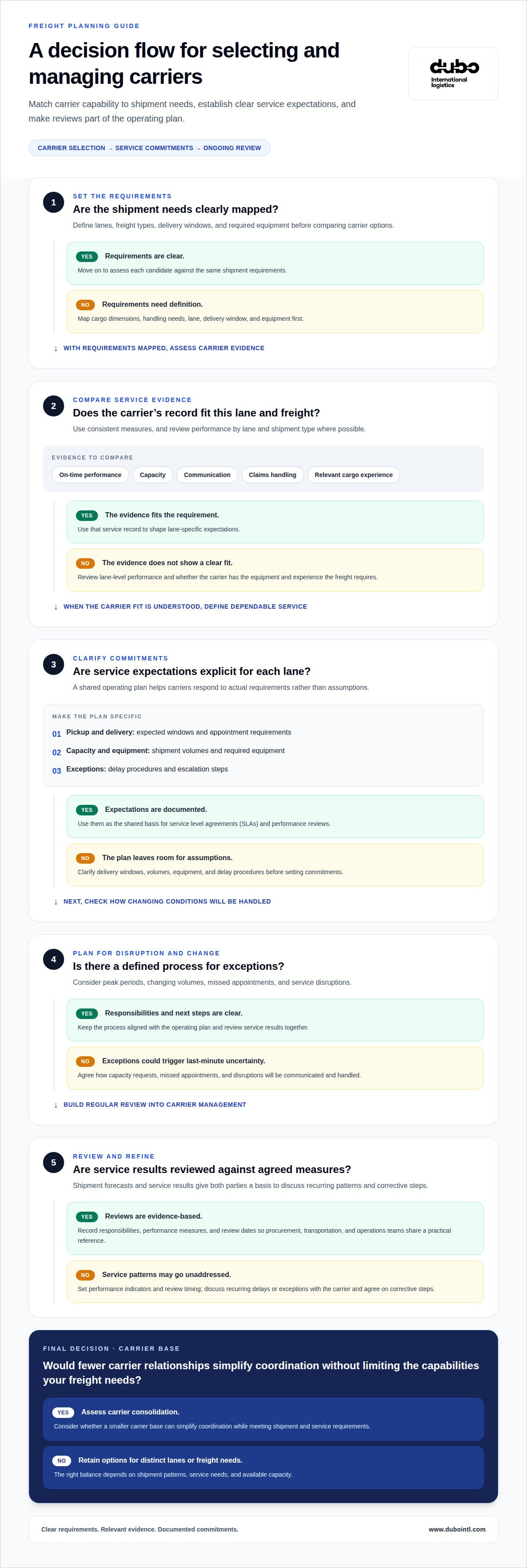
Carrier selection should match shipment requirements and service expectations. Start by mapping the lanes, freight types, delivery windows, and equipment your transportation program needs. A manufacturer shipping machinery between provinces, for example, may need different capabilities than a retailer moving regular palletized freight between distribution points. Clear requirements make carrier comparisons more meaningful.
Assess each candidate against consistent measures. Compare on-time performance, capacity, communication, claims handling, and experience with the relevant cargo. Review performance by lane and shipment type where possible. A carrier that performs well on frequent regional movements may not suit an occasional load requiring specialized equipment. Performance data helps distinguish broad promises from a service record relevant to your operation.
Before negotiating, define what dependable service means for each lane. Set out expected pickup and delivery windows, shipment volumes, equipment needs, and procedures for delays. These details help carriers respond to the actual operating plan rather than assumptions. They also provide a shared basis for discussing service level agreements (SLAs), contractual commitments that define service performance, delivery windows, or equipment availability.
- Match capability to freight: Identify cargo dimensions, handling needs, and required equipment.
- Compare service evidence: Review lane-level performance and communication practices.
- Clarify commitments: Document delivery expectations, capacity, and escalation steps.
- Set review measures: Agree on performance indicators and when to revisit them.
Negotiation extends beyond initial service discussions. Clarify how the carrier manages peak periods, changing volumes, missed appointments, and service disruptions. For example, a shipper with seasonal demand can discuss how capacity requests will be communicated and handled. A defined process helps reduce last-minute uncertainty and supports consistent planning across the shipping team.
Businesses considering expert freight consulting services can use data-driven communication to strengthen carrier relationships. Share shipment forecasts and review service results together, then identify recurring causes of delays or exceptions. If a carrier regularly misses a delivery window on one lane, discuss the pattern and agree on corrective steps. Regular reviews make negotiations an ongoing operational conversation, not a one-time contract event.
Carrier consolidation can also be part of the discussion. Fewer carrier relationships may simplify coordination, while a broader base can provide options across distinct lanes or freight requirements. The right balance depends on shipment patterns, service needs, and available capacity. Expert freight consulting services can help assess that balance against the shipper’s operating priorities.
Record decisions in clear terms, including responsibilities, performance measures, and review dates. This creates a practical reference for procurement, transportation, and operations teams. With defined expectations and evidence-based reviews, carrier negotiations can support reliable service and disciplined freight planning.
Businesses can assess carrier candidates using performance metrics and pricing, weighing service evidence against commercial terms. A manufacturing firm in the case study reduced freight costs by 25% after consolidating its carrier base and negotiating better rates.
Transportation consultants can help improve carrier and vendor relationships through data-driven communication. This approach gives parties a basis to discuss performance evidence and pricing, identify concerns, and strengthen ongoing working relationships.
Identifying logistics bottlenecks and cost drivers
A freight audit reveals where time, capacity, and charges accumulate across a transportation network. Consultants examine shipment records, operating steps, and performance measures, then connect recurring problems with practical changes.
Freight consultants primarily assess and advise on network performance; brokers typically arrange transportation between shippers and carriers. In contrast, full-service providers such as Aerowave Air Travel and Logistics Ltd handle broader freight logistics management and execution directly, while a consultant’s role centres on analysis and recommendations. The distinction matters when a client needs an independent review rather than shipment execution.
A network and transportation audit follows a clear sequence. Consultants map freight flows, review shipment and invoice data, measure service performance, locate process delays, and recommend changes aligned with business objectives. This process can connect a recurring issue, such as missed pickups on a particular lane, with its operational cause.
Start by mapping how goods move between suppliers, facilities, and customers. A shipment profile can group freight by origin, destination, mode, frequency, and cargo requirements. This view may reveal that one location creates repeated partial loads, or that several routes serve the same destination on different schedules. Those patterns help focus further analysis.
Next, compare planned activity with actual performance. Useful indicators include transit time, on-time delivery, tender acceptance, claims, and shipment exceptions. A lane with frequent delivery delays may point to scheduling, handoff, or capacity issues. Consultants can define key performance indicators (KPIs) that reflect the operation’s priorities, then use consistent reporting to track changes.
Invoice review adds another layer. Freight cost management should account for accessorial charges, hidden fees, and surcharges as part of total freight cost. Consultants can group charges by lane, shipment type, and cause, then compare them with shipping records. For example, repeated charges linked to incomplete shipment details may indicate a process problem, not simply a carrier issue.
- Map flows: Trace origins, destinations, modes, and shipment patterns.
- Review performance: Compare delivery, exceptions, and claims against defined KPIs.
- Reconcile charges: Match invoices with shipment records and identify recurring fees.
- Prioritize fixes: Connect each bottleneck to an operational action and measure.
Finally, identify whether systems or processes limit visibility. Transportation management systems can streamline freight processes and improve shipment visibility. An audit may recommend system upgrades, clearer data capture, or revised workflows when teams rely on disconnected records. Recommendations should address a specific gap, such as delays in seeing shipment exceptions, rather than add technology without an operational purpose.
Consultants can then rank findings by business impact, feasibility, and alignment with service needs. A documented action plan assigns each change an owner, a measure, and a review point. This gives the client a practical way to assess whether revised workflows or system changes address the original bottleneck.
Route planning and shipment consolidation
Route planning connects shipment schedules, delivery windows, and available capacity. Consolidation assesses whether compatible shipments can move together without disrupting service.
Route Planning
A route-planning review compares available paths with traffic patterns, weather conditions, and delivery windows. It also considers pickup timing, delivery sequence, and each shipment’s handling needs. For example, a route with fewer kilometres may still be a poor fit if its arrival time conflicts with a receiving appointment.
Consultants can use demand forecasting and route optimization to identify more efficient transportation plans. They examine shipment origins and destinations, recurring demand, and the timing of customer orders. A manufacturer shipping from multiple facilities, for instance, may find that coordinated departures suit its delivery schedule better than separate, unplanned movements.
Review the full route, not just its distance. A practical assessment considers likely traffic, weather exposure, delivery windows, and how a missed handoff could affect the next stop. Teams can compare planned routes with actual shipment results and adjust schedules when recurring delays appear. This process helps balance route efficiency with dependable service.
Cross-Border Freight Optimization
Canadian businesses can optimize freight between Canada and the United States by coordinating pickup schedules, border handoffs, delivery windows, and shipment information across the full route. A plan should account for the cargo, destination, timing, and each party’s role in the transition.
For a shipment moving from Ontario to a U.S. destination, for example, teams can align the origin pickup with the receiving schedule and planned border transition. Consistent shipment details help keep communication clear between the parties handling each stage. Reviewing exceptions after delivery can reveal whether timing, handoffs, or route choices need adjustment.
Consolidation can reduce separate trips when shipments share compatible destinations, schedules, and handling requirements. Consultants assess load configurations and delivery plans to determine whether combining freight makes operational sense. A fuller vehicle can reduce trips and fuel use, but consolidation should not create missed delivery windows or unsuitable handling conditions.
- Group compatible freight: Align destinations, schedules, and handling needs.
- Check capacity: Review load configurations against shipment requirements.
- Protect delivery timing: Confirm that consolidated movements fit receiving windows.
- Review results: Use shipment outcomes to refine routes and schedules.
Demand patterns also matter. Forecasting can help identify where shipments might be combined or scheduled more effectively, while route optimization can account for traffic, weather, and delivery commitments. A retail operation with frequent deliveries, for example, can assess whether adjusted routes and load configurations better match its replenishment needs.
Measure the revised plan against clear outcomes, such as route adherence, delivery performance, and vehicle capacity. This gives transportation teams evidence to refine schedules and consolidation decisions. The strongest plan fits actual freight patterns while maintaining the required service and handling conditions.
Choosing a consulting firm
A suitable freight consulting firm should understand your industry, shipment profile, and operating goals. Its recommendations should connect transportation analysis with practical implementation, not stop at a report. For a Canadian manufacturer shipping machinery across provincial borders, relevant experience may include unusual cargo requirements, delivery coordination, and North American routes.
Review the firm’s project track record, industry specialization, technological capabilities, and client communication. Ask how its team would approach a defined challenge, such as recurring delays between a supplier and a production facility. A clear explanation of the analysis, proposed measures, and reporting process helps you judge whether its working style fits your organization.
Technology matters when a consultant needs to interpret shipping and performance data. Ask how the firm assesses existing systems, handles data quality, and presents findings to transportation and finance teams. A useful analysis, for example, should connect shipment records with delivery performance and invoice details, rather than rely on an isolated dashboard or a general industry benchmark.
Agree on the scope before work begins. Define the lanes, facilities, shipment types, and business objectives under review. Then establish expected outputs, such as a network assessment, prioritized recommendations, or performance measures. A focused review of Canadian outbound freight differs from an assessment of cross-border movements between Canada and the United States.
Canadian freight requirements depend on the cargo, mode, route, and trading arrangements. A consultant should identify the applicable transportation and safety requirements, shipment documentation, and border procedures for the specific movement, including any dangerous-goods considerations.
For cross-border freight, ask how the consultant accounts for customs documentation and origin records when relevant. CUSMA certification concerns whether goods qualify for preferential treatment under CUSMA. The consultant should identify when origin information matters to the shipment and its records, without assuming every product qualifies.
- Check relevant experience: Look for projects involving similar cargo, routes, or service challenges.
- Review the method: Understand how data, technology, and performance measures inform recommendations.
- Set a defined scope: Specify facilities, lanes, shipment types, and desired deliverables.
- Include compliance needs: Tie transportation and border considerations to actual cargo and routes.
Communication should remain clear throughout the engagement. Decide who receives updates, how findings will be explained, and how operational teams can raise questions. For example, a recommendation to change a delivery schedule needs to reach the people coordinating production, receiving, and transportation. This alignment helps turn analysis into an actionable plan.
Finally, distinguish advice from implementation responsibilities. The firm should explain which recommendations it will develop and which decisions remain with your organization. A well-scoped engagement gives your team a usable basis for comparing options, assigning owners, and tracking whether changes address the original business need.
Consultant selection criteria
A sound hiring decision protects operational knowledge and keeps recommendations tied to business needs. Assess a consultant’s project track record, industry specialization, technological capabilities, and client communication. For example, a company shipping fragile equipment should look for relevant cargo experience, not just general transportation analysis.
The main risks include recommendations that don’t fit your network, unclear responsibilities, weak data handling, and disruption during implementation. Reduce them by defining the project scope, agreeing on how information will be handled, and setting review points before work begins.
Start with a defined business problem. A manufacturer might need to understand delivery delays between a supplier and a production site, while a retailer may need a clearer view of changing shipment patterns. Ask the consultant to explain how the proposed work addresses that specific issue, what information it needs, and how it will present its findings.
Examine the project track record for work that resembles your operation. A consultant familiar with parcel networks may not have the same experience as one assessing specialized equipment movements. Look for examples that describe the challenge, the analysis performed, and the resulting recommendations. This helps distinguish relevant experience from broad claims about industry knowledge.
Technology and data practices also deserve close review. Clarify which systems the consultant expects to use, what information it will access, and how it will share results with your team. If the project involves shipment records and invoice details, agree on who can view those files and how the analysis will be returned. A defined process reduces confusion about sensitive operating information.
Implementation creates another point of risk. A route or scheduling change can affect receiving teams, suppliers, and production plans. Ask the consultant to identify affected processes, set out dependencies, and describe how progress will be reported. For instance, a proposed departure-time change should account for the people coordinating pickups and receiving appointments.
- Confirm project fit: Match past work to your cargo, network, and business challenge.
- Define the scope: Record objectives, information requirements, deliverables, and responsibilities.
- Agree on communication: Set update intervals, decision-makers, and a process for raising concerns.
- Plan implementation: Identify operational impacts and measures for reviewing changes.
Before the engagement begins, document the work boundaries and decision process. Specify which recommendations require internal approval, who owns implementation, and how teams will review outcomes. This prevents an advisory project from drifting into tasks your organization didn’t plan to assign.
Keep the evaluation evidence-based. Compare each consultant’s proposed method with your defined objectives, then assess whether its experience and communication approach suit the people responsible for freight decisions. A clear scope, agreed data practices, and named project responsibilities give your team a practical foundation for a sound working relationship.
Dubo International Logistics: Freight forwarding
Dubo International Logistics helps Canadian shippers connect freight planning with coordinated movement across North America. Its logistics consulting can support businesses reviewing carrier options, routes, or shipment processes, while freight forwarding coordinates domestic and cross-border cargo movement.
Turn to Dubo when standard freight plans do not fit the shipment, such as moving oversized machinery, delicate equipment, or temperature-sensitive products. Specialized transportation services address cargo requirements that call for careful planning and coordination across complex routes. The right approach depends on the shipment, its handling needs, and the movement involved.
For a discussion about your freight requirements and logistics plans, contact Dubo International Logistics.
Turn freight insight into a practical next step
Freight decisions shape more than transportation activity. They influence how teams plan shipments, coordinate operations, and respond when supply-chain conditions change. A useful next step is to identify the decision your organization needs to make, then define what information would support it.
Engaging expert freight consulting services can bring structure to that work, especially when shipment requirements cross departments or involve complex cargo movements. Clear priorities give the discussion a practical starting point and help keep recommendations connected to your operating needs.
Dubo International Logistics can discuss how its logistics support may fit your freight requirements. Contact Dubo International Logistics to start a conversation about your shipping plans and operational priorities.
A considered plan can make your next freight decision easier to assess. Take the next step with confidence and keep your logistics decisions moving forward.
Frequently Asked Questions
What services do freight consulting firms provide?
Freight consulting firms provide analysis and recommendations to improve how a business plans and manages transportation. Depending on the engagement, they may review network design, shipping processes, technology, carrier arrangements, or performance reporting. For example, a company entering a new Canadian market could seek advice on coordinating shipments from suppliers with its production schedule. The scope should reflect the business challenge and clarify whether the consultant advises or also supports implementation.
How can a freight consultant reduce shipping and logistics costs?
A freight consultant can identify avoidable expenses by examining how a business plans, books, and manages shipments. For example, a review might reveal repeated corrections to shipment details that create extra administration, or schedules that cause missed receiving appointments. The consultant can recommend process changes and define measures for assessing their effect. Results depend on the actions taken and operating conditions, so track changes against the original problem rather than assumptions.
How do I choose a freight consulting firm in Canada?
Choose a firm whose experience matches your cargo, routes, and business needs in Canada. If shipments cross into the United States, look for familiarity with cross-border coordination as well as domestic movements. Ask for a clear description of the proposed work, the information required, the expected deliverables, and how findings will be shared with your team. A defined scope helps you compare consulting approaches using relevant criteria, rather than broad claims alone.
What qualifications and certifications should freight consultants have?
Look for relevant freight experience, sound analytical skills, and familiarity with transportation requirements tied to your cargo and routes. Industry membership, such as membership in the Canadian International Freight Forwarders Association (CIFFA), can be a useful professional signal, but consider it alongside applicable project experience and clear methods. Ask how the consultant’s background fits your shipment profile and how its recommendations will address your specific operational needs.
