

The right freight option depends on the cargo, distance, delivery timeline and required service level. Effective freight cost management starts with comparing the full shipment requirements, not simply choosing a transport mode. Road, rail, ocean and air each involve different trade-offs in flexibility, transit time and handling.
It’s understandable to focus on the carrier’s offer: comparing quotes can be difficult when providers use different service terms or list additional services separately. A like-for-like comparison makes those differences clearer and helps you assess each option against the shipment’s requirements.
This article explains how to review freight spend, compare estimates with actual charges, choose a suitable transport mode and plan shipments with cost control in mind. You’ll also learn how to check invoices for discrepancies and use consistent shipment data to make better decisions across Canadian and North American routes.
Key Takeaways
- Review shipment activity by mode, carrier, lane and service type to find patterns in how your freight moves.
- Use consistent shipment details when comparing carrier proposals, then assess how completed shipments matched the original plan.
- Select transport modes and schedules according to cargo requirements, distance and delivery timing.
- Monitor delivery performance and review invoice records to identify errors or unexpected service changes.
- For complex cargo or shipment planning needs, freight forwarding and logistics consulting can help coordinate requirements across the journey.
1. Freight spend breakdowns by mode, carrier, and charge type
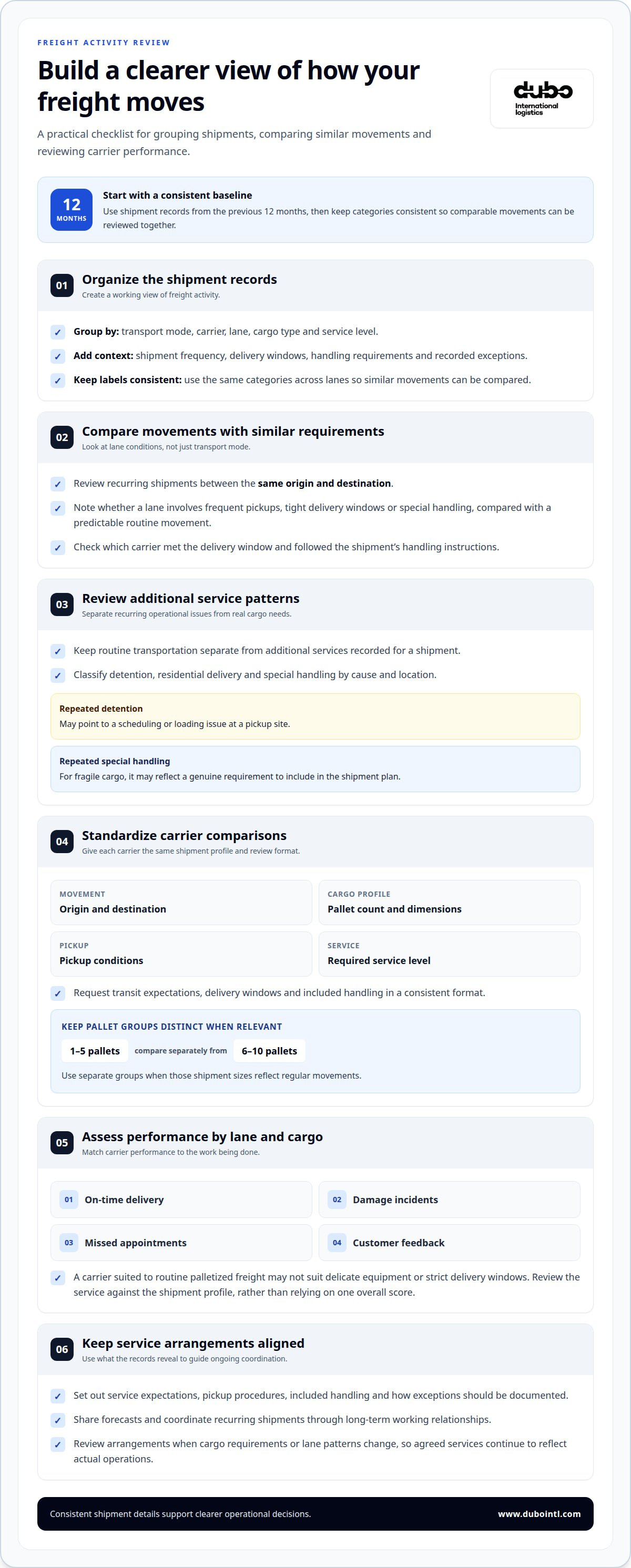
Begin with shipment records from the previous 12 months. Organize them by transport mode, carrier, lane, cargo type and service level. Add shipment frequency, delivery windows, handling requirements and recorded exceptions. This creates a working view of how freight moves through the network and which operating patterns deserve closer review. Keep the categories consistent so a shipment on one lane can be compared with a similar movement elsewhere.
Look at lanes as well as modes. A route with frequent pickups, tight delivery windows or special handling may need a different carrier arrangement from a predictable, routine movement. For example, compare recurring shipments between the same origin and destination, then note which carrier met the delivery window and followed handling instructions. This reveals operational differences without treating every shipment as interchangeable.
Separate routine transportation charges from additional services recorded for a shipment. Classify items such as detention, residential delivery and special handling by cause and location. Repeated detention at one pickup site may point to a scheduling or loading issue. Repeated special handling for fragile cargo may instead reflect a genuine requirement to include in the shipment plan, much like how specialized furniture and relocation carriers such as anspachremovals.com.au build protective handling and dedicated access into their transport quotes.
Compare carrier proposals using the same shipment profile. Provide each carrier with matching details, including origin, destination, pallet count, dimensions, pickup conditions and required service level. Request service information in a consistent format, including transit expectations, delivery windows and included handling. For example, compare proposals for 1-5 pallets separately from those for 6-10 pallets when those sizes reflect your regular shipments.
Assess carrier performance alongside the shipment profile. Track on-time delivery, damage incidents, missed appointments and customer feedback by lane. A carrier that performs well on routine palletized freight may not suit delicate equipment or strict delivery windows. These measures support decisions based on the work each carrier performs, rather than a single overall score.
Use these patterns in contract discussions. Specify service expectations, pickup procedures, included handling and how exceptions should be documented. Long-term working relationships can make it easier to share forecasts and coordinate recurring shipments. Review arrangements as cargo requirements or lane patterns change, so agreed services continue to reflect actual operations.
2. Shipment price queries and estimated-versus-actual cost comparison
A useful freight quote starts with accurate shipment details. Before requesting an estimate, record the cargo’s measured weight and dimensions, packaging type, pickup and delivery locations, access requirements and required service level. Give each carrier the same information. If one quote assumes standard dock access while another includes a different pickup or delivery arrangement, the totals aren’t directly comparable.
Weight and dimensions matter because carriers use shipment characteristics to assess how cargo occupies transport capacity. Measure the packed shipment, not just the product, and include pallets, skids or protective packaging. For multiple pieces, record each piece separately and provide the total count. This gives the carrier a clearer basis for its estimate and helps you compare the final invoice.
Freight class also affects some shipment quotes. Confirm the classification used for the cargo and check that it matches the shipment description and packaging details. A mismatch between the class on the quote and the one applied during billing can create a difference between estimated and invoiced charges. Keep the quote, shipment details and measurement records together to maintain a clear audit trail.
When the invoice arrives, compare it with the original estimate line by line. Check the carrier, route, shipment reference, billed weight, dimensions, classification, service level and any accessorial charges. Then identify exactly what changed. For example, if the final bill includes a special-handling charge, compare it with the shipment instructions and delivery record before accepting the difference as valid.
Shipment consolidation can reduce duplicated handling and make better use of vehicle capacity. Review orders with the same origin and destination and compatible delivery windows, then assess whether combining them is practical. For container shipments, compare cargo volume, departure timing and delivery requirements before deciding whether to combine loads into a full container. Balance capacity use against inventory needs and the cost of waiting for more cargo.
Route analysis adds another layer to the comparison. Map the planned origin and destination, identify avoidable detours or extra transfers, and assess whether a direct route better suits the cargo. For repeat shipments, compare route performance and invoice differences over time. Effective freight cost management uses this analysis to distinguish a genuine service change from a preventable discrepancy and make future quotes more precise.
3. Cost control, visibility and process improvement
Freight visibility turns shipment records into practical decisions. Track planned and actual delivery dates, carrier, route, service level, fuel surcharge and accessorial charges in one system. A dashboard can flag recurring delays on a lane or extra charges linked to specific delivery conditions. Review these patterns regularly, then assign an owner and corrective action to each recurring issue.
Controlling shipping costs also supports cash-flow planning and helps businesses understand freight’s share of procurement activity. Use a freight cost ratio, calculated by dividing freight costs by total procurement volume, as one management indicator. Compare it across periods and product groups. If the ratio rises for a product line, examine shipment frequency, load utilization and service choices before changing delivery commitments.
Fuel surcharges and accessorial fees add charges beyond a carrier’s base rate. Fuel surcharges expose shipments to fuel-price changes, while accessorial fees can arise from services such as detention or residential delivery. Compare the charge basis and applicable conditions with shipment records, then use clear contract terms to manage fuel-price volatility.
For freight cost management software in Canada, businesses can use a transportation management system, ERP tools, carrier portals or structured spreadsheets. These tools can organize shipment data, compare planned and actual charges, and flag exceptions. Choose an approach that fits your shipment volume and existing workflows. Even a spreadsheet can support useful analysis when staff enter consistent lane, carrier and invoice details.
The lowest-cost freight option carries risks if its service doesn’t match the cargo or delivery requirement. A slower service can disrupt production, while unsuitable handling can increase the risk of damage. A quote may also exclude accessorial services needed at pickup or delivery. Compare the full service scope and performance record, not just the base rate.
Contract terms should make rate changes and service expectations clear. Define the pricing structure, fuel surcharge method, included services, accessorial conditions and process for resolving invoice disputes. For example, a contract can specify how fuel surcharges are calculated and which delivery conditions trigger additional charges. Compare actual shipments with these terms to identify exceptions before they become recurring expenses.
Negotiation works best with evidence. Bring lane volumes, shipment profiles, service results and recurring charges to carrier discussions. Consider flexible contract terms for demand fluctuations rather than committing to assumptions that no longer reflect shipping patterns. Long-term carrier relationships can support better pricing agreements, while a diversified carrier base can reduce reliance on one option. Reassess the arrangement as routes, cargo and business priorities change.
4. Planning lead times and steady lane volumes
Advance planning gives transportation teams more choices. Share forecast shipment dates, origins, destinations, cargo dimensions and expected volume with carriers. This helps them plan trucks, drivers and available capacity around recurring lanes. A regular schedule also helps identify shipments that can travel together instead of booking each load separately.
Start route planning with the delivery requirement, then compare road, rail, ocean and air options. Road offers flexibility for short- to medium-distance freight and can avoid intermediate handling. Rail can move large volumes, but often needs road transportation for final delivery. Multimodal logistics combines modes when doing so better balances transit time, reliability and cost.
Canadian sea ports can shape a route’s full journey, not just its ocean leg. The Port of Montreal is 1,600 kilometres from the Atlantic Ocean, so inland transportation forms part of a shipment plan. The Port of Vancouver handles over 140 million tons of cargo annually. The Port of Halifax is the deepest container port on North America’s East Coast. Choose a gateway by considering cargo origin, destination, sailing schedule and onward transport.
Cross-border planning should account for duties, taxes and applicable shipment requirements when assessing total landed expenses. The goods, their origin and destination, and the required documentation all affect planning and clearance steps. Build these considerations into shipment timing and route selection, rather than treating border processes as separate from transportation.
Load management starts with matching the vehicle to the shipment profile. Combine compatible orders travelling along the same corridor, and review the load plan for unused capacity. For recurring lanes, track shipment volume and pickup patterns to schedule dependable consolidation. A full load can reduce separate movements, while unsuitable consolidation may add handling or delay a time-sensitive delivery.
Backhaul planning can help carriers make productive use of return trips instead of accumulating empty miles. Provide advance notice of future loads and consider pickup windows that suit the carrier’s network. For example, the planning guidance suggests offering pickup between 6-12 p.m. so a carrier may be able to use the freight as a backhaul. Match that window to the shipment’s readiness and delivery commitments.
Review lane plans against actual shipment records. Compare planned route, mode, volume, transit time and delivery performance, then adjust schedules when demand changes. For example, a manufacturer with predictable weekly movements can share forecasts early, consolidate compatible freight and reassess the chosen port or mode when its receiving schedule shifts. Regular review helps optimize transportation decisions without compromising delivery requirements.
5. Automated freight invoice checking and discrepancy detection
Freight invoices can contain errors that are difficult to spot during manual review. Freight billing errors are estimated to affect 3-7% of total freight spend. Set a consistent review process that compares each invoice with its quote, shipment record and agreed terms. This gives accounts payable a clear basis for flagging differences before payment and helps keep supply chain records aligned.
Start with the shipment identifiers: reference number, carrier, origin, destination and delivery date. Then compare the billed rate, fuel surcharge, weight, dimensions and service details with the approved shipment information. A mismatch in one field can affect the total. For example, an invoice tied to the wrong shipment reference may appear to include an unexplained charge until it is matched with the correct record.
Automated checks can sort invoices into matched records and exceptions for human review. A transportation management system, ERP or structured spreadsheet can store agreed rates and shipment details alongside invoice fields. Set rules to flag missing references, rate differences, duplicate invoices or unexpected accessorial charges. Staff can then investigate exceptions instead of reviewing every line with the same level of manual effort.
Fuel surcharge errors can affect 2-8% of an invoice. Compare the surcharge calculation with the method and terms in the carrier agreement, then record the outcome. Accessorial charges add 8-15% to a typical freight invoice, making them another useful focus for automated flags. If an invoice includes detention, for example, compare the charge with the shipment’s pickup and delivery records and the agreed conditions.
Keep a discrepancy log with the invoice number, shipment reference, exception type, disputed amount and resolution. Review the log regularly to identify recurring patterns across carriers, lanes or charge categories. If several invoices show the same rate mismatch, check the rate table and contract data used in the audit. If duplicate charges recur, refine the matching process to catch repeated invoice numbers or shipment references.
Automation supports control, but clear ownership remains essential. Assign a reviewer to examine flagged exceptions, document the decision and retain supporting records with each invoice. Use a defined escalation path for unresolved differences, including the responsible team and the response deadline agreed internally. A monthly review of exception trends can reveal whether the issue is inaccurate shipment data, outdated rates or inconsistent billing practices.
For a practical starting point, select one carrier or lane and compare its invoices with shipment records and contract terms. Refine the checks based on the exceptions found, then expand the process across the carrier network. This staged approach makes it easier to assess data quality and build an audit routine suited to the organization’s freight volume.
Dubo International Logistics: Freight forwarding
Dubo International Logistics helps businesses coordinate freight forwarding for shipments involving complex routes, specialized cargo or multiple transport requirements. Its logistics consulting supports decisions about shipment planning, carrier coordination and how freight requirements fit the wider supply chain. For oversized machinery, delicate equipment or temperature-sensitive products, specialized transportation services address cargo needs that standard freight plans may not accommodate.
Consider this support when your team needs to align shipment details, service requirements and route planning, or coordinate a project across Canada and the United States. Clear planning can help you compare options and manage shipment transitions with greater precision.
To discuss freight forwarding or logistics planning for your shipment, visit www.dubointl.com.
Build a freight plan that keeps improving
Effective freight cost management is an ongoing discipline, not a one-time rate review. Give someone clear ownership of freight decisions and set a regular time to assess whether the plan still supports your operational priorities. As shipment patterns change, revisit the assumptions behind your approach and make adjustments deliberately.
A useful next step is to choose a lane or shipment type for focused review. Define what success means for that movement, document the decision-making process and use the results to guide future planning. This creates a practical basis for steady improvement without changing established processes all at once.
For shipments that call for coordinated freight forwarding, logistics consulting or specialized transportation, Dubo International Logistics can help you consider the requirements involved. Contact Dubo International Logistics to discuss your logistics needs and identify a suitable next step. A clear plan can bring greater confidence to your freight decisions.
Frequently Asked Questions
Which is the most cost-effective freight transport option?
The most cost-effective option is the mode that meets delivery and cargo requirements with the fewest unnecessary steps. For a compact shipment needing quick arrival, dedicated courier services such as sscourier.co.uk or parcel options may suit better than a slower mode. For large, non-urgent volumes, rail or ocean freight may be worth comparing. Consider handling needs, delivery timing and onward transport together, especially when a route combines modes.
Can small businesses save on freight?
Yes. Small businesses can improve freight decisions by grouping orders with similar destinations, comparing quotes using consistent shipment details and reviewing repeat lanes. For example, a business sending several orders to the same customer could compare separate dispatches with a combined shipment. A simple record of shipment dates, service choices and invoice differences can reveal patterns, even without specialized software or a large transport team.
How to reduce freight costs?
Begin by matching the service to the need: avoid expedited transport for cargo that can meet its deadline through a regular service. Then review packaging dimensions, shipment frequency and opportunities to combine compatible orders. For a recurring lane, examine whether delivery schedules allow consolidated departures. Keep cargo protection and service requirements in view, since an unsuitable mode or reduced packaging can lead to damage, delays or replacement expenses.
What Makes a Comprehensive Freight Cost Analysis?
A useful analysis connects each shipment’s full movement with its business purpose. Include mode, carrier, route, cargo profile, service level, invoice adjustments and delivery performance. Then compare similar shipments across periods or destinations. For example, a retailer can separate store replenishment from direct-to-customer parcels because their delivery requirements and handling patterns differ. The analysis should identify actionable causes, not just rank lanes by total spend.
What is effective freight cost management?
Effective freight cost management is the ongoing practice of planning shipments, assessing transport choices and controlling freight spend without losing sight of service needs. It connects purchasing, logistics and finance data so decisions reflect the shipment’s full requirements. For instance, a manufacturer can assess whether a delivery window allows a slower mode before approving expedited movement. Regular review helps keep freight decisions aligned with changing business priorities.
What are the main components of freight costs in Canada?
Freight costs can include transportation, fuel, driver compensation, equipment, packaging and handling. Cross-border shipments may also involve customs and import or export fees. Applicable costs depend on the cargo, route and service arrangement. For example, fragile equipment may need protective packaging and careful handling, while a shipment crossing a border has additional documentation and clearance considerations. Review the complete movement, not just its transport leg.
How can Canadian businesses reduce freight costs without affecting service?
Protect service by addressing avoidable process inefficiencies before reducing delivery commitments. A business could align order cut-off times with dispatch schedules, improve shipment data at booking and coordinate deliveries to compatible destinations. Track delivery performance alongside freight spend after each change. If results worsen, adjust the process rather than accepting a lower service level. This lets teams pursue operational improvements while keeping customer and production requirements in view.
How do LTL, FTL, intermodal, and parcel shipping costs compare in Canada?
Each mode suits a different shipment profile, so there is no fixed ranking for every Canadian route. LTL freight shipping shares trailer capacity, while FTL uses a full truck for a shipment. Intermodal combines modes, such as rail and road, and parcel serves smaller packages through parcel networks. Compare shipment size, distance, handling, delivery timing and final-mile needs to determine the best fit.

