

A fast shipment isn’t always a time-critical one. Critical shipment logistics in Canada means planning freight around a specific delivery deadline, while expedited shipping simply prioritizes arrival sooner than a standard service. Ground expedite can suit regional or interprovincial freight when a direct road route is practical and shipment control matters.
That distinction matters when a delayed part could interrupt production, a service team is waiting for equipment, or urgent inventory must reach its destination. Speed alone doesn’t determine the right approach. The shipment’s dimensions, weight, ready time, delivery deadline and handling needs all shape the plan.
This guide explains how ground expedite works, when dedicated road transport may suit a shipment better than shared freight, and what information helps coordinate an urgent move. It also covers practical challenges that can affect deliveries across Canada, including vehicle capacity, changing weather, route disruptions and communication from pickup through delivery.
Key Takeaways
- Set the delivery deadline first, then assess whether direct ground transport or shared freight better fits the shipment’s urgency and handling needs.
- Prepare the cargo dimensions, weight, origin, destination, ready time, deadline and any special requirements to support a clear transport plan.
- Compare service options by route, shipment type and required level of control, not speed alone.
- Build contingency plans around weather, capacity constraints and route disruptions, with clear communication at each stage.
- Choose a logistics partner whose freight coordination and specialized transport expertise match the shipment’s complexity.
Dedicated, direct road transport versus shared freight
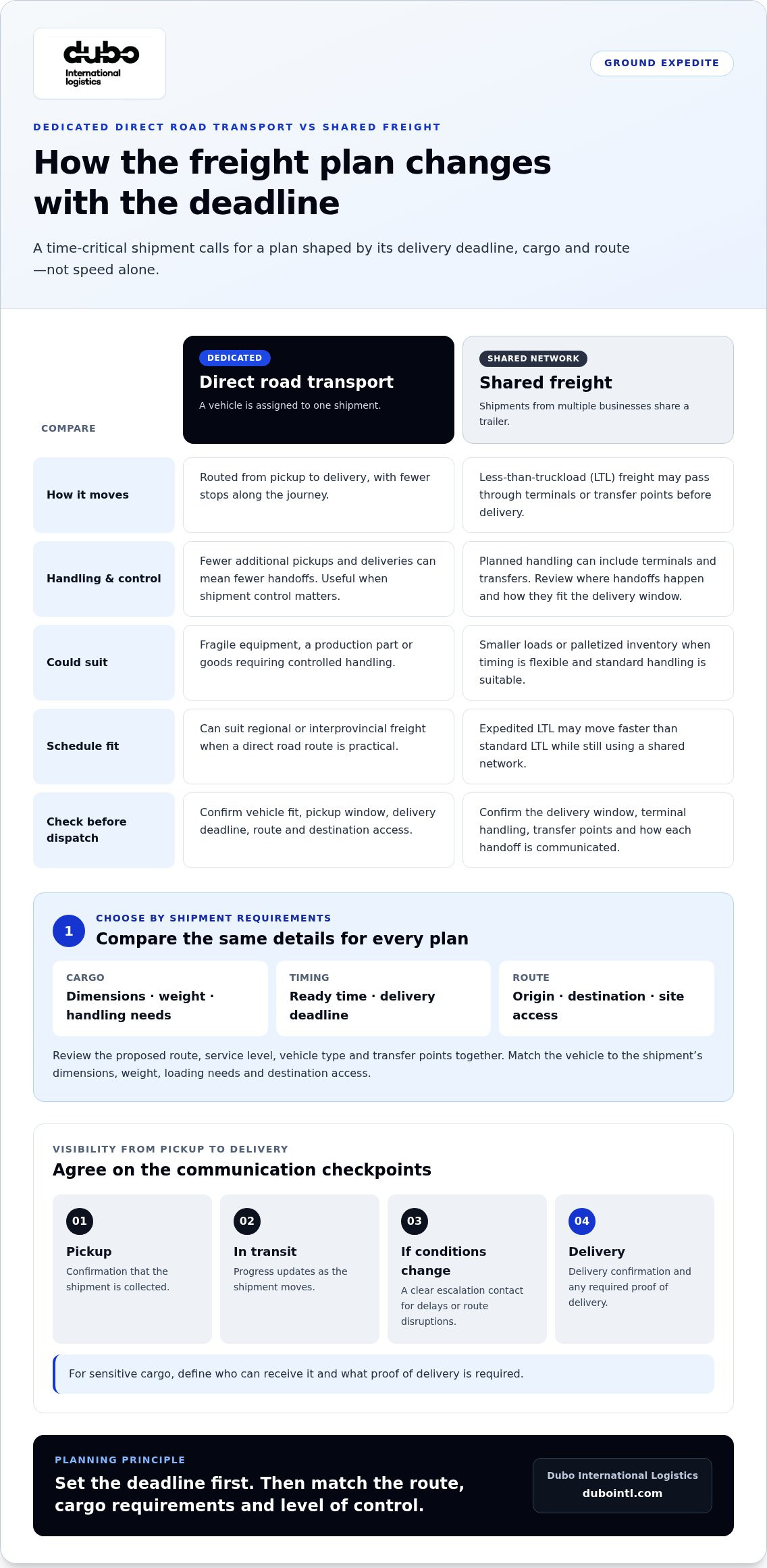
A tight deadline changes how freight should move. Dedicated, direct road transport assigns a vehicle to one shipment and routes it from pickup to delivery with fewer stops. It can suit regional or interprovincial freight when direct travel is practical and shipment control matters. For example, a production line waiting for a replacement component may benefit from fewer additional pickups and deliveries than shared routes involve, reducing handoffs along the journey.
Shared freight combines shipments from multiple businesses in the same trailer. With less-than-truckload freight, cargo may pass through terminals or transfer points before delivery. This can work for smaller loads when the schedule allows planned handling. Expedited LTL may move faster than standard LTL while still using a shared network. Compare the delivery window, terminal handling and route structure to understand how the shipment will move and where transfers may occur.
Choose based on the cargo and deadline. A dedicated vehicle may suit fragile equipment, a production part or goods requiring controlled handling. Shared freight may fit palletized inventory with flexible timing and standard handling needs. Air freight can be relevant for long-distance or international moves. Direct road transport can be practical when airport handling and final-mile delivery affect the schedule. Match the vehicle to the shipment’s dimensions, weight, loading needs and destination access.
Visibility also matters. Before dispatch, agree on pickup confirmation, progress updates, escalation contacts and delivery confirmation. For sensitive cargo, define who can receive it and what proof of delivery is required. Healthcare shipments may need chain-of-custody records and tracking for regulatory compliance. A clear communication plan identifies who shares updates when conditions change, such as after a delayed pickup or route disruption.
For Canadian businesses, lane length and conditions shape the choice. A shipment between two cities may suit direct road transport, while an international move can involve more transport legs. Consider the deadline, cargo requirements and destination access together. Clear delivery instructions help plan the final approach, particularly when a receiving site has limited hours or specific unloading arrangements.
Compare transport plans using consistent shipment details: dimensions, weight, origin, destination, ready time, deadline and special handling needs. Review the proposed route, service level, vehicle type and transfer points. For example, a premium expedited plan for sensitive equipment should explain how the cargo will be handled and how delivery will be recorded. These details help determine whether the service fits operational requirements and set clear arrival expectations for the receiving team.
What are the main types of time-critical shipping services?
Time-critical services match a shipment’s deadline and handling requirements to an appropriate transport mode. Temperature-controlled freight needs a defined range and suitable monitoring, while hazardous cargo requires correct identification, handling instructions and applicable transport documentation.
Transportation Modes for Deadlines
Start with the delivery deadline, then compare available routes and handoffs. Ground expedite commonly uses a cargo van, straight truck or tractor-trailer; team drivers may suit longer urgent routes. Air options include commercial cargo, charter aircraft, air-ground combinations and next-flight-out service. A customized plan should account for cargo dimensions, weight, pickup readiness and destination access.
Next-drive-out ground transportation is a direct-road approach: dispatch a suitable vehicle on its next available departure and route the shipment toward delivery. It can fit urgent regional freight where road travel is practical. Confirm the pickup window, delivery deadline, vehicle fit and route plan together. If the freight needs several transfers, those handoffs can affect timing and visibility.
Domestic Air and Ground Transport
For domestic Canadian shipments, compare door-to-door timing rather than travel time alone. Air freight can serve long-distance moves, but airport handling and final-mile recovery also shape the schedule. Ground transport may be practical for regional or interprovincial lanes. A courier can suit smaller consignments, while larger, heavier or specialized freight may need a different vehicle and handling plan.
Distribution plans should account for where freight transfers between transport legs. A cross-dock transfer moves cargo between vehicles with limited dwell time, but it still adds handling and coordination steps. Ask how each handoff fits the deadline, who records receipt, and how the next movement is communicated. For example, medical equipment moving by air and ground needs a clear connection plan.
Shipment type affects service requirements. Temperature-sensitive pharmaceuticals need handling aligned with their specified conditions—a priority for brands moving sensitive stock or custom formulations from contract manufacturers like harmonypharmalab.com—while fragile instruments may need protective packaging and careful loading. Hazardous goods require accurate cargo details so the transport plan can address applicable classification, packaging, labelling and documentation requirements. Establish these details before dispatch, not during a transfer.
Choose the mode by balancing the deadline, route, cargo needs and likely delay points. Air may help over long distances, while direct ground movement can reduce transfers on suitable lanes. Shipment size, handling needs, pickup time and destination access also affect the choice. Clear instructions at booking help align transportation, distribution and delivery steps.
Contingency planning for urgent shipments
Plan urgent freight around the delivery deadline, route conditions and a defined fallback. Critical shipments can connect major Canadian cities and remote communities, but the route, transport mode and access conditions shape how each destination is served.
Dispatch and Handoff Planning
Dispatch planning sets the pickup sequence, vehicle requirements and communication points before freight moves. Share the shipment’s dimensions, weight, ready time, destination and special handling needs to help match cargo to capacity. Minimize transfers where possible, since each handoff adds coordination and may introduce delay. For example, identify who receives the freight at a transfer and who records its onward movement.
Route and Distance Planning
Across Canada, distance is only one route factor. Seasonal weather, road conditions, remote access and driver hours can affect the practical schedule. Plan the route with current conditions and alerts in mind, then define an alternate path or service approach for likely disruptions. A longer route with workable access may be more dependable than a shorter route affected by closures.
Critical Shipment Coverage Areas
Shipments may connect urban hubs such as Toronto, Montréal, Vancouver, Calgary and Halifax with smaller or remote destinations. Remote northern communities can require additional coordination around road access, transfer points and available transport modes. Coverage is therefore a lane-level question: origin, destination, cargo requirements and seasonal access determine the workable plan, rather than a city list alone.
Build a contingency plan before dispatch, not after a delay. Record the primary route, alternate routing options, backup carrier arrangements and the person authorized to approve a change. Establish a weather-delay protocol that defines when teams share updates and how revised delivery information reaches the receiving site. These steps give dispatchers a clear response when conditions shift.
For example, when a shipment travels from Winnipeg to a remote work site, confirm final road access and receiving arrangements before loading. If weather restricts the planned route, the team can assess alternate routing, revised timing or a different transfer point. The shipment’s dimensions and equipment needs also affect whether another vehicle can take over.
Tie communication to decision points. Confirm dispatch, report route changes, and record arrival and proof of delivery. For interprovincial or remote freight, prepare applicable labels and permits alongside shipment documents. A structured plan helps teams act faster when disruptions occur while preserving visibility and accountability from pickup to final receipt.
Capacity, weather, and communication challenges
Priority freight still depends on available vehicles, equipment and viable routes. During holiday congestion, weekend closures or severe weather, capacity can tighten and routine schedules can shift. A shipment requiring a specific trailer may have fewer suitable options than standard freight. Before dispatch, match the load’s dimensions, weight and handling needs to available equipment, then identify a backup for the same lane.
Weather planning needs to account for conditions along the full route, not only at pickup. Clear weather at departure does not guarantee clear roads near the destination. Use weather alerts and road-condition updates to identify possible slowdowns, closures or safer alternate routes. Set a decision point for changing the plan, such as a closure affecting the primary corridor, and communicate revised timing promptly.
Capacity risks also vary by lane and timing. A remote destination, specialized equipment requirement or peak shipping period can limit practical choices. For example, a replacement component needed at a northern work site may require coordination between the long-haul route and final access leg. Confirm vehicle suitability and receiving arrangements together so available capacity can serve the entire movement, not just its first segment.
Communication should follow clear operational milestones. Agree on who provides dispatch confirmation, transit updates, delay notices and delivery confirmation. Name a primary contact for the shipper and receiver, and define who can approve a route or timing change. If a missed connection disrupts a shipment moving through a terminal, a prompt update helps the receiving team adjust its schedule and prepare for arrival.
Build an escalation plan before freight moves. Record the primary route, alternate carrier options, weather protocol and the point when teams reassess the delivery plan. For a shipment crossing several provinces, specify which party shares updates at each handoff. This creates a consistent record and reduces the risk of conflicting instructions when dispatch, drivers and the destination team respond to the same disruption.
Cross-border freight between Canada and the United States adds coordination steps. A border delay can affect the planned arrival, so align shipment documentation, crossing details and delivery communications before dispatch. Keep the receiving contact informed if the estimated arrival changes. For domestic moves, focus updates on route conditions, vehicle progress and destination readiness rather than sending messages without an operational purpose.
Use a concise update format: current shipment status, location or completed milestone, issue affecting progress, next action and revised arrival estimate when available. For example, “weather closure on primary route; alternate route under review; next update after route decision” gives dispatch and receiving teams useful information. Clear updates support sound decisions, protect delivery priorities and keep everyone aligned as conditions change.
Which Canadian couriers and freight companies offer critical or emergency shipping?
In Canada, urgent shipments can be arranged through courier services, expedited ground carriers, air cargo providers and freight forwarders. The right fit depends on the deadline, shipment size, route, handling needs and required delivery coordination. A small replacement electronic may suit a courier, while oversized machinery needs specialized transport planning.
Courier services can handle smaller parcels and documents, including urgent parts for a field technician. Ask how the service handles pickup, route progress and proof of delivery. A parcel moving between nearby cities has different requirements from medical equipment travelling across provinces. Match the delivery commitment to the receiving site’s hours and ability to accept the shipment.
Expedited ground carriers may arrange a dedicated van, straight truck or tractor-trailer for direct movement. This can fit manufacturing parts, prototypes, field service tools or emergency inventory. For a longer route, team drivers may be an option, subject to applicable hours-of-service requirements. Confirm the planned vehicle, routing approach, transfer points and delivery window before dispatch.
Air cargo providers can offer commercial airline cargo, charter aircraft, air-ground combinations or next-flight-out service. These options may suit long-distance shipments where air movement supports the deadline. Plan beyond flight time: cargo acceptance, airport handling and final delivery all affect the end-to-end schedule. A shipment that reaches an airport quickly still needs a coordinated final leg.
Freight forwarders coordinate shipment movement across transport legs and can help organize specialized cargo requirements. This approach can suit shipments involving oversized equipment, temperature-sensitive products or complex corridors. For cross-border freight between Canada and the United States, coordinate commercial shipment information and border processing requirements as part of the movement plan. The Canada Border Services Agency provides guidance on commercial importing, including release preparation, business numbers and classification.
Assess a provider by the details of its operating plan, not by the word “emergency” alone. Provide dimensions, weight, origin, destination, ready time, deadline and special handling instructions. Then clarify who provides status updates, how route disruptions are escalated, and what delivery confirmation is supplied. For temperature-sensitive or hazardous freight, share cargo-specific handling and documentation needs before dispatch.
Compare proposals using the same shipment facts. Check that the proposed mode, equipment, route and handoffs align with the deadline. Ask how a missed connection or weather disruption would affect the plan, and who communicates revised timing. For complex or specialized freight, review expedited freight coordination options as part of your planning.
Dubo International Logistics: Freight forwarding
Dubo International Logistics helps businesses coordinate complex freight movements through freight forwarding, logistics consulting and specialized transportation services. Turn to the team when an urgent shipment involves multiple transport legs, unusual cargo requirements or a route that needs careful coordination across Canada and the United States.
For example, oversized machinery, delicate equipment and temperature-sensitive products can require transport planning tailored to cargo dimensions, handling needs and destination access. Freight forwarding coordinates the movement, while logistics consulting can help assess the route, service requirements and operational risks before dispatch.
If your shipment needs a coordinated plan rather than a standard freight move, contact Dubo International Logistics or visit www.dubointl.com.
Turn the deadline into a workable shipment plan
Start with a clear operational brief: cargo details, origin, destination, delivery deadline and any special handling requirements. This gives your logistics team a practical basis for aligning the shipment with the right route and transport approach. Critical shipment logistics in Canada works best when the delivery need is translated into decisions everyone involved can act on.
Dubo International Logistics offers freight forwarding, logistics consulting and specialized transportation services for businesses coordinating complex cargo movements. These services can help shape a plan around shipment requirements, particularly when cargo needs specialized handling or multiple transport legs.
For a considered next step, contact Dubo International Logistics to discuss your shipment requirements. With a clear brief and coordinated planning, your team can move forward with greater confidence.
Frequently Asked Questions
What are time-critical shipments?
Time-critical shipments are goods that must arrive by a defined deadline because a delay could affect an operation or obligation. For example, a replacement component may need to reach a service site before scheduled maintenance begins. The deadline guides the transport plan, while cargo type, destination access and receiving arrangements shape the details. Identify what depends on the delivery so the shipment’s priority and communication needs are clear.
What is the difference between time-critical shipping and expedited shipping?
Time-critical shipping is organized around meeting a specific delivery deadline; expedited shipping prioritizes faster delivery than a standard service. A shipment tied to scheduled equipment repair, for instance, needs a plan built around the repair window. An expedited move may simply reduce transit time without a fixed arrival requirement. Define whether the shipment has a firm deadline or a preference for faster transit before selecting a service.
What does critical shipment logistics mean in Canada?
Critical shipment logistics in Canada means coordinating freight around a tight delivery requirement and the conditions that affect its movement. The plan considers cargo needs, route, transport mode and receiving arrangements. For a replacement part serving a remote work site, for example, the receiving team’s access and unloading readiness are part of the delivery plan. Clear responsibilities help everyone act on shipment updates and arrival changes.
What are the costs of expedited, same-day, and next-flight-out shipping in Canada?
Expedited, same-day and next-flight-out describe different service approaches. Expedited ground transport can suit direct road movement, while same-day service focuses on arrival within the day’s schedule. Next-flight-out uses an available air departure, with airport handling and final delivery forming part of the journey. Select an option by matching the deadline, origin, destination, cargo requirements and receiving arrangements.
What customs rules and documents apply to urgent shipments entering or leaving Canada?
Cross-border commercial shipments need accurate documentation and shipment details to support border processing. Common information can include a commercial invoice, HS codes and importer details. For imports, the Canada Border Services Agency provides guidance on release preparation, business numbers and classification. Prepare records alongside dispatch planning, and ensure the cargo description and shipment details are consistent across documents to help prevent avoidable processing delays.
What are the risks and service limitations of critical shipment logistics in Canada?
Urgent shipments remain exposed to changing road conditions, severe weather, capacity limits, terminal delays and missed connections. Remote destinations or specialized cargo can also narrow practical transport options. Commercial road movements must account for applicable hours-of-service rules when planning long routes. A useful contingency plan identifies who can approve a route change, how the receiving team will be informed and what alternate arrangements could keep operations moving.

