

What if the most reliable freight option isn’t the one that simply gets a truck booked first? For businesses moving cargo across Canada or into the United States, choosing B2B freight shipping solutions Canada businesses can rely on starts with the shipment’s requirements, then coordinates carriers, handoffs and delivery expectations around them.
Keeping those details aligned takes time. Unclear responsibilities can leave gaps between shipment stages, while oversized machinery, delicate equipment, temperature-sensitive products and cross-border documentation add operational complexity. A well-planned approach brings the moving parts together before they become avoidable disruptions.
This guide explains how freight forwarding supports business shipping, how to match cargo requirements with a suitable transport approach, and what to plan for clear communication and accountability. It also covers how specialized transportation fits within broader freight coordination across Canada and North America. Dubo International Logistics coordinates these requirements through freight forwarding, logistics consulting and specialized transportation. Learn more at www.dubointl.com.
Key Takeaways
- Understand how freight forwarding coordinates carriers, shipment information and transport documentation from planning through delivery.
- Choose an approach that reflects your cargo profile, whether it involves recurring freight, LTL freight shipping or specialized transport.
- Prepare cargo details, dimensions, weight, handling needs, timing and delivery access to support clearer shipment planning.
- Compare B2B freight shipping solutions Canada businesses can use by considering cargo requirements and coordination needs, not just the transport mode.
- Learn how Dubo coordinates freight forwarding and specialized transportation across Canada and North America at www.dubointl.com.
What B2B freight shipping solutions in Canada actually coordinate
A business shipment involves more than moving cargo from a pickup point to a destination. It requires a plan that connects the cargo’s characteristics, timing, handling needs, carrier arrangements and delivery expectations. B2B freight shipping solutions Canada businesses rely on bring these details into one coordinated process, whether the shipment follows a regular schedule or supports a specific project.
Freight forwarding is the strategic coordination of domestic and cross-border cargo movement. A freight forwarder organizes shipment information, transport documentation and carrier arrangements around the cargo’s requirements. The forwarder coordinates the movement without necessarily being the carrier that physically transports the goods.
Freight forwarding connects shipment requirements to the people and transport arrangements needed to move cargo. That differs from using a self-serve platform to compare options or booking one carrier for a single leg. A platform can help manage transactions, and a carrier can move freight along its route. Managed coordination focuses on how the shipment fits together, including handoffs and communication across stages.
A coordinated plan typically clarifies:
- The cargo details and handling requirements that inform transport planning.
- Which carrier arrangements support the planned movement.
- What shipment information and documentation need to accompany the cargo.
- Who communicates updates and manages expectations at each stage.
Clear ownership matters. If pickup, transit and delivery responsibilities are vague, a business may not know who is following up when plans change or an update is needed. A defined communication process gives the shipping team, receiving team and logistics partner a shared understanding of progress, next steps and delivery expectations. Timely updates also help teams plan around the shipment rather than relying on assumptions.
Where coordination adds value beyond booking transport
A coordinated plan links the shipment’s requirements to carrier arrangements and the handoffs between them. For example, cargo with specific handling needs requires those requirements to be understood before transport is arranged, not passed along as an afterthought. With clear responsibilities and timely updates, teams can prepare for pickup and receiving, respond to changes and keep internal operations aligned with the shipment’s progress.
Which businesses benefit from freight coordination?
Manufacturers, distributors, importers and exporters can all benefit when moving goods depends on dependable coordination. Recurring shipments may call for a repeatable process, with consistent shipment information and clear communication. A one-off project may need more planning around its cargo, equipment or delivery conditions. Businesses moving oversized machinery, delicate equipment or temperature-sensitive products also need those requirements built into the transport plan. The right approach reflects the shipment, not simply the booking method.
How freight forwarding connects shipment planning to delivery
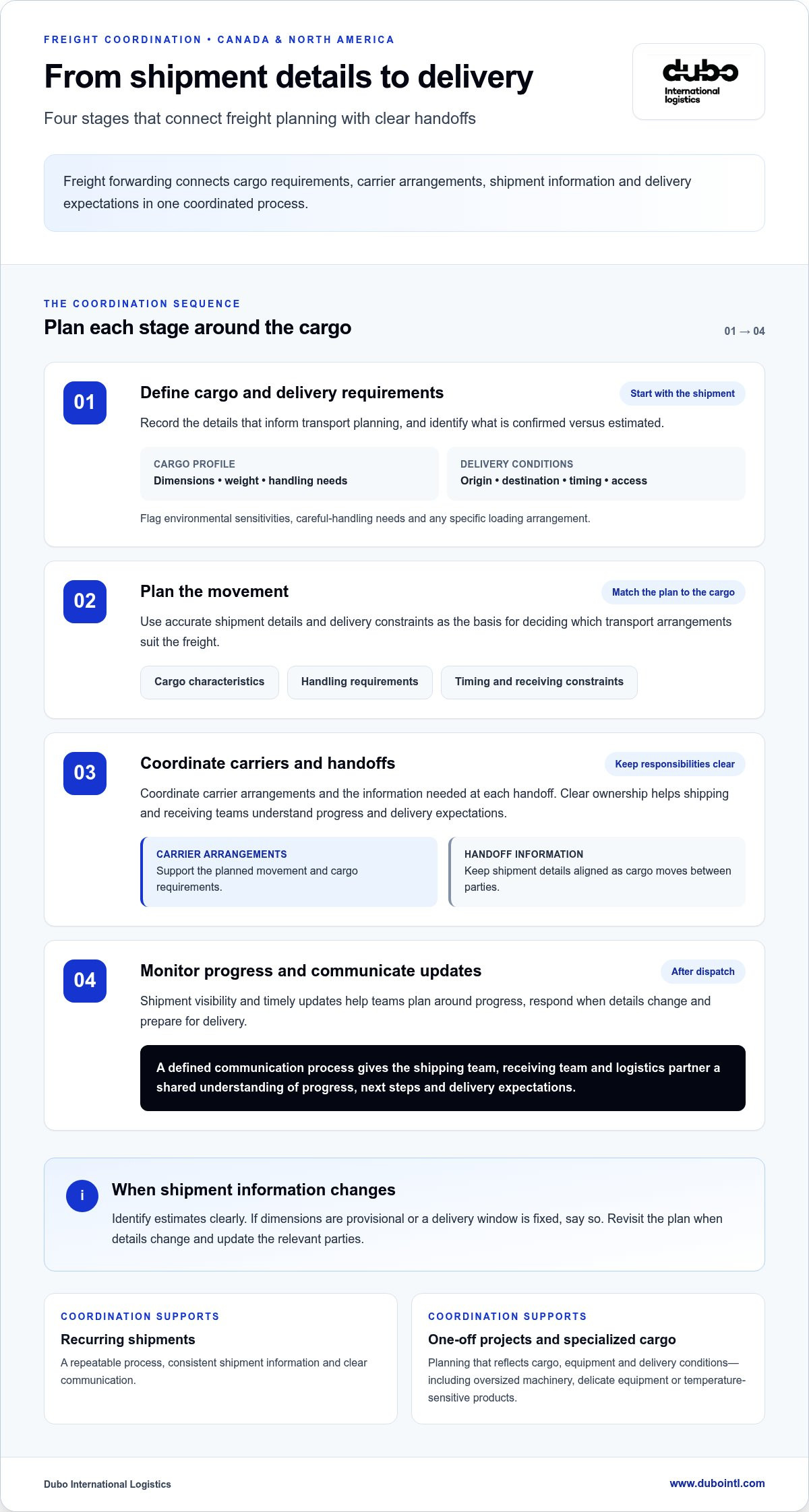
A dependable shipment takes shape before cargo is collected. Freight forwarding turns shipment information into a practical sequence: define requirements, plan the movement, coordinate carriers and monitor progress. Each stage informs the next, helping prevent an overlooked detail from becoming a problem during a handoff.
Accurate shipment information gives every party a clearer basis for reliable coordination. Dimensions, weight, handling needs and delivery constraints help determine which transport arrangements suit the cargo. If details are incomplete or change, the plan may need to be revisited before the shipment proceeds.
For businesses assessing B2B freight shipping solutions Canada can support, the process is more than a booking workflow. It connects decisions about cargo and timing with carrier arrangements, documentation and shipment visibility, while giving the shipping and receiving teams a shared view of what to expect.
Start with cargo and delivery requirements
Begin by recording what is confirmed and flagging what remains an estimate. Include dimensions, weight, handling instructions and any environmental sensitivities, along with the origin, destination and preferred timing. Delivery access and receiving constraints matter too. For example, identify equipment that needs careful handling or a specific loading arrangement during planning, not after transport has been organized.
Separating firm details from provisional ones helps the coordinator identify where a change could affect the plan. If the shipment’s dimensions are estimated, say so. If the delivery window is fixed, make that clear. This gives the team a sound basis for planning and a prompt to update relevant parties if information changes.
Coordinate carriers, documentation and shipment visibility
With requirements defined, the coordinator matches them to suitable carrier arrangements and organizes the information needed for each handoff. Complete, consistent documentation helps keep shipment details aligned as cargo moves between parties. The Canadian International Freight Forwarders Association (CIFFA) is a Canadian industry resource for freight forwarding and logistics information.
Monitoring adds visibility after dispatch. Tracking systems and carrier updates can help the business understand a shipment’s progress and communicate with teams preparing to receive it. Updates do not replace planning, but they can make changes easier to identify and address. If timing or another shipment detail shifts, proactive communication gives the people affected an opportunity to adjust before the change disrupts operations.
- Define: Gather cargo, handling, route and delivery information, marking estimates clearly.
- Plan: Use those details to shape transport arrangements and anticipate handoffs.
- Coordinate: Align carriers and shipment documentation with the agreed movement plan.
- Monitor: Follow available updates and share relevant changes with the people responsible for shipping and receiving.
For businesses coordinating freight across Canada and North America, Dubo brings freight forwarding and logistics consulting together to plan around shipment requirements. More information is available through Dubo’s freight coordination support.
Match Canadian freight shipping solutions to the shipment
The right transport arrangement depends on what is moving, how often it ships and what must happen at pickup and delivery. A recurring shipment may benefit from a repeatable plan, while a one-off project can call for more detailed coordination. Use the comparison below as a starting point, then assess the cargo’s actual dimensions, handling needs and delivery constraints.
| Shipment profile | Planning priority | Coordination considerations |
|---|---|---|
| Recurring freight | Consistency across repeat shipments | Align shipment information, pickup and receiving expectations, and schedules. Review changes in volume or requirements so the plan stays relevant. |
| LTL freight shipping | Fit cargo into shared trailer capacity | Consider shipment dimensions, compatibility with other freight, handling expectations, consolidation and schedule coordination. |
| Project or specialized cargo | Match transport arrangements to cargo and delivery conditions | Assess dimensions, weight, fragility, environmental sensitivities, equipment needs and any project-specific handoffs. |
These categories can overlap. A project shipment may include freight that can move within an LTL framework, while recurring shipments may still include items that need individual handling instructions. The right choice follows the cargo and operating requirements, rather than a fixed rule that one arrangement suits every business. Supply chain professionals can explore broader Canadian industry resources through Supply Chain Canada.
Recurring freight and LTL freight shipping
Recurring freight gives businesses an opportunity to establish consistent shipment information and communication routines. With LTL freight shipping, multiple shippers share trailer capacity, so planning should account for consolidation, handling expectations and schedules across the shipment’s movement. Consider how the cargo will be prepared and received, and communicate any special handling needs clearly. This keeps the plan aligned even when shipment details vary.
Specialized cargo and project requirements
Oversized machinery, delicate equipment and temperature-sensitive products can require tailored planning. Dimensions may shape the transport arrangement; fragility can affect handling expectations, while environmental sensitivities may call for specific shipment instructions. Project cargo can also involve coordinated handoffs that need to be considered as part of the overall movement. Dubo coordinates specialized transportation alongside broader freight planning. Related information is available through specialized freight coordination.
To compare B2B freight shipping solutions Canada businesses may need, begin with the cargo profile and delivery conditions. Then consider whether repeatable coordination, shared trailer capacity or project-specific planning best fits the shipment. Dubo provides freight forwarding and logistics support across Canada and North America through www.dubointl.com.
Prepare a freight shipment with fewer surprises
A clear shipment brief gives freight coordination a dependable starting point. It helps the logistics team understand what is moving, what the cargo requires and what the receiving site can accommodate. Before planning begins, assemble the details below and identify who can confirm changes or make operational decisions.
Build a clear shipment brief
Describe the cargo in practical terms, then verify its dimensions and weight rather than relying on estimates when accurate measurements are available. Flag fragile components, temperature sensitivities, handling instructions and any equipment requirements. These details can affect transport planning and should be visible to everyone involved in the shipment.
Include the origin and destination, preferred timing and delivery priorities. Describe receiving-site restrictions, such as limited access, appointment requirements or specific unloading arrangements, if they apply. Keep confirmed information distinct from estimates so the plan can account for details that may change.
Use this checklist to organize the shipment information:
- Cargo: Clear description, dimensions, weight, quantity and packaging details.
- Handling: Fragility, environmental sensitivities and special instructions.
- Movement: Origin, destination, preferred timing and any delivery constraints.
- Receiving: Site access, scheduling needs and unloading considerations.
- Contacts: A named shipping contact, receiving contact and decision-maker for operational changes.
- Documents: Shipment records and supporting documents that match the cargo details and movement plan.
Assign one point of contact to receive updates and coordinate decisions with the appropriate internal teams. This does not mean one person must manage every task. It means there is a clear route for questions, changes and approvals, reducing the chance that different parties act on conflicting information.
Plan for exceptions and changing requirements
Even a well-prepared shipment can change. Cargo dimensions may be revised, pickup timing may shift or a receiving constraint may emerge after planning starts. Identify likely pressure points early, especially details that could affect equipment arrangements, handling or delivery timing. For Canada-US movements, keep shipment information and documentation aligned with the cross-border plan, and establish who is responsible for communicating changes across the parties involved.
Agree on how updates will be shared and who can approve adjustments. If a detail changes, communicate what changed, when it changed and which shipment or delivery requirement it affects. Early notice gives the logistics team more room to adjust carrier coordination and communicate revised expectations. Waiting until a change affects pickup or delivery can leave fewer options for responding smoothly.
For B2B freight shipping solutions Canada businesses can plan with greater confidence, accurate cargo information and clear ownership are practical foundations. Dubo’s freight forwarding and logistics consulting help coordinate shipment requirements across Canada and North America. Learn about Dubo’s freight coordination services.
How Dubo supports B2B freight shipping across Canada
Business freight calls for more than a carrier booking. Dubo International Logistics works as a freight forwarding and logistics coordination partner, organizing shipment requirements and carrier arrangements around the cargo and the business’s operating needs. This approach supports standard freight as well as shipments that require additional planning, with nationwide coverage across Canada and logistics support across North America.
Each shipment has its own considerations. Cargo dimensions, handling requirements, timing and delivery conditions all inform the coordination plan. A recurring movement may call for a consistent process, while a project shipment may involve distinct equipment or handoff needs. Dubo’s logistics consulting helps businesses consider these factors as part of freight planning, rather than treating every load as interchangeable.
A coordinated approach for standard and specialized freight
Dubo coordinates specialized transportation for cargo such as oversized machinery, delicate equipment and temperature-sensitive products. These shipments may call for tailored planning based on size, fragility or environmental needs. Carrier networks and tracking systems support specialized transport deliveries, helping coordinate movement and provide shipment visibility. Dubo is a member of the Canadian International Freight Forwarders Association (CIFFA), a professional connection relevant to its freight forwarding work.
Coordination matters for standard freight too. Clear shipment information and defined responsibilities help align carrier arrangements with pickup and delivery expectations. For specialized cargo, the plan can account for particular handling or transport requirements. In both cases, freight forwarding links the details of the shipment to its movement across Canada or North America.
Discuss the shipment and establish next steps
A useful first discussion begins with the cargo: what it is, its dimensions and weight, any handling requirements, the planned timing and the destination. Include delivery access details or other receiving constraints that could affect coordination. Sharing confirmed information and identifying details that may still change gives the logistics team a clearer basis for understanding the shipment’s needs.
From there, the conversation can clarify the coordination requirements and information needed to plan the movement. The appropriate approach depends on the shipment and its operating context; one transport arrangement will not necessarily suit every situation. This is especially useful when cargo characteristics, timing or delivery conditions need careful alignment.
For businesses assessing B2B freight shipping solutions Canada can support, Dubo brings freight forwarding, logistics consulting and specialized transportation together in a coordinated approach. Review Dubo’s freight forwarding services.
Set your next shipment up for confident coordination
Freight planning is also a chance to strengthen continuity across your business. Consider how shipping decisions connect with production schedules, customer commitments and the teams responsible for receiving cargo. When those priorities inform the coordination plan early, your logistics partner can understand what matters most and where careful attention is needed.
The right B2B freight shipping solutions Canada businesses choose should reflect the shipment in front of them and the wider operational demands around it. Dubo International Logistics brings a considered, partnership-focused approach to freight forwarding and specialized transportation, supported by CIFFA membership and carrier networks and tracking systems for specialized deliveries across Canada and North America.
Start a conversation about your cargo, timing and delivery requirements to discuss a suitable coordination approach. Discuss your freight shipping requirements with Dubo.
Frequently Asked Questions
What are B2B freight shipping solutions in Canada?
They coordinate business cargo movements around a company’s operational needs, rather than treating each shipment as an isolated booking. For example, a manufacturer sending production components may need the arrival plan aligned with the receiving team’s work schedule. The shipment approach should reflect the cargo, handling needs, timing and destination. Comparing B2B freight shipping solutions Canada businesses can use starts with identifying what the delivery needs to support.
How does freight forwarding work for Canadian businesses?
Freight forwarding organizes transport arrangements around the shipment’s requirements. A useful first step is to identify who supplies the cargo details, who approves changes and who needs progress updates inside your business. For a shipment with several handoffs, that clarity helps teams direct questions to the right person and keeps operational decisions from being delayed while responsibilities are sorted out.
Can a freight forwarder coordinate specialized cargo across Canada?
Yes. A freight forwarder can organize transport planning around cargo that needs particular equipment, handling or environmental consideration. For a delicate machine, for instance, identify vulnerable components and any handling instructions before arranging the movement. Share project constraints as well as cargo details, including dependencies between delivery and installation or production activity, so coordination can account for the broader requirements.
What information is needed to arrange a business freight shipment?
Provide a cargo description, dimensions, weight, origin, destination, timing and any handling or environmental requirements. Add relevant pickup and delivery access details, plus the names of people who can answer questions or approve operational changes. Where possible, use measured dimensions for the packed shipment, not estimates for the unprepared item. Mark provisional information so it can be updated before it affects planning.
What is LTL freight shipping, and when might a business use it?
LTL freight shipping is a transport arrangement in which multiple shippers share trailer capacity. It may suit a shipment that does not require the full trailer, provided its cargo and handling needs fit the plan. Consider whether the goods can travel alongside other freight, whether handling instructions are clear, and whether the schedule aligns with receiving requirements.
How can businesses keep freight shipments visible during transit?
Set expectations for which shipment milestones matter to your operation and who needs to know when they occur. For example, a receiving team may need notice before a delivery is ready so it can coordinate staff and site access. Agree on how to report exceptions, such as a timing change or missing information. The process should give stakeholders useful visibility without assuming updates arrive at a fixed frequency.
Is a freight forwarder the same as a carrier?
No. A carrier physically transports cargo, while a freight forwarder coordinates transport arrangements and shipment information. A movement may involve more than one carrier, making it useful to clarify who is coordinating each handoff and where updates should go. Before a shipment begins, document the main contact for operational questions and the person authorized to approve changes. This helps prevent gaps when responsibilities shift between stages.

